Yen-Yen Chiu has been in public education since 2001, teaching multiple levels of English and math at the middle school and high school levels in California and New Jersey. She holds credentials in English, math, and introductory music, as well as a doctorate in Educational Leadership. She has a passion for creating interdisciplinary curricula with student choice and assessments that highlight diverse learning styles and applications of knowledge.
Ready-to-Use Activities for Your First Weeks
Activities for your first weeks include low-prep, engaging lessons and activities that help 9-12 teachers build community and routines.
Explore this Guide
Your First Week, Made Easier
Welcome back, 9-12 teachers! New to climate topics or years in, this guide helps you connect them to the courses you already teach. This guide is designed to help you connect environmental content to the courses you're already teaching. Inside, you'll find resources across every subject area, from science and ELA to economics and math. Everything is ready to use in the first weeks of school when you're building community, setting rules, and setting the tone for the year. Everything here fits naturally into existing courses with little setup required. These are fun back-to-school activities high school teachers can use from day 1!
Quick and Easy
Low-prep and ready for day one, these back-to-school activities give high school students something relevant and engaging right away, with little to no setup required. Each one works well as a first-week warm-up or discussion opener across a range of subject areas.
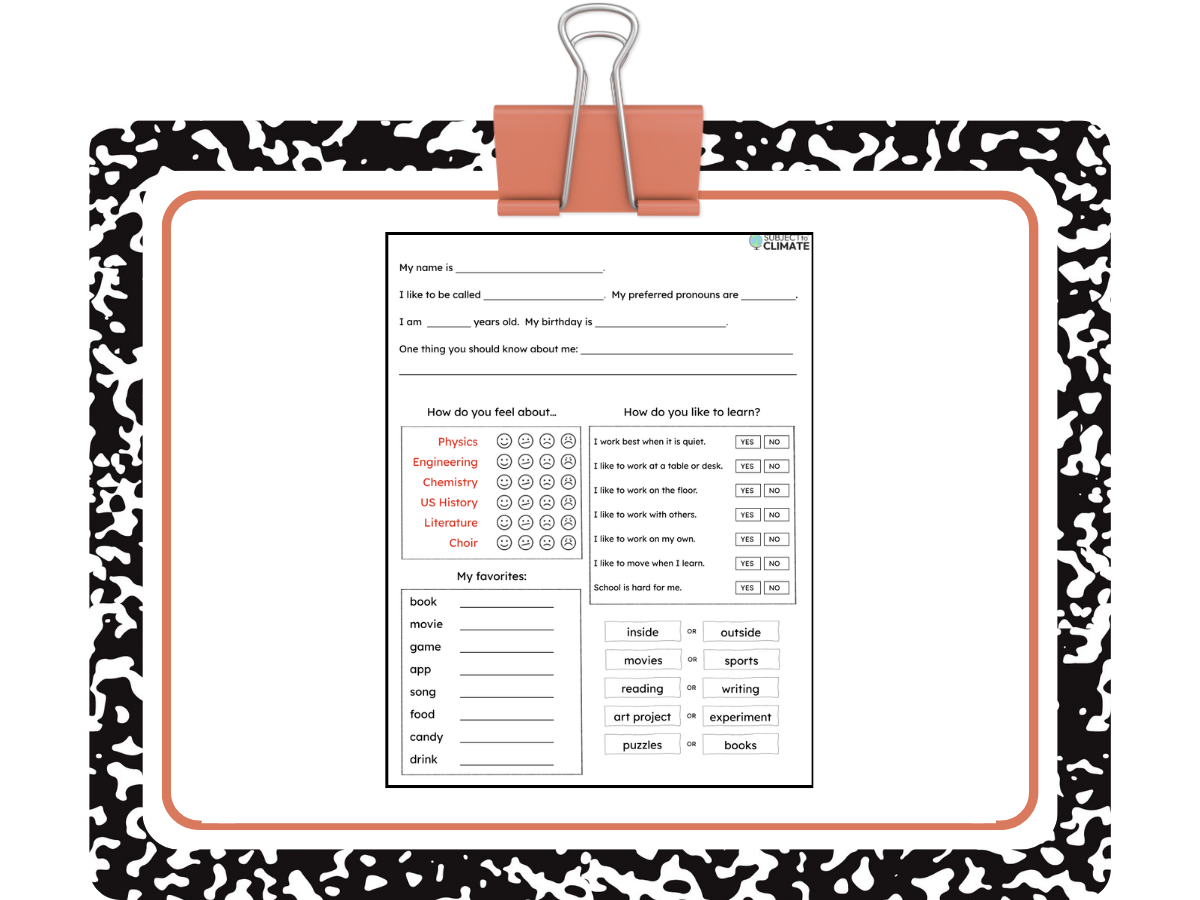
Back to School Activities
This collection includes writing prompts, goal-setting sheets, a student survey, and printable pages to help students reflect on summer and set intentions for the year. Everything is ready to use and easy to adapt, making it a solid first-week resource for advisory, homeroom, or any high school course.
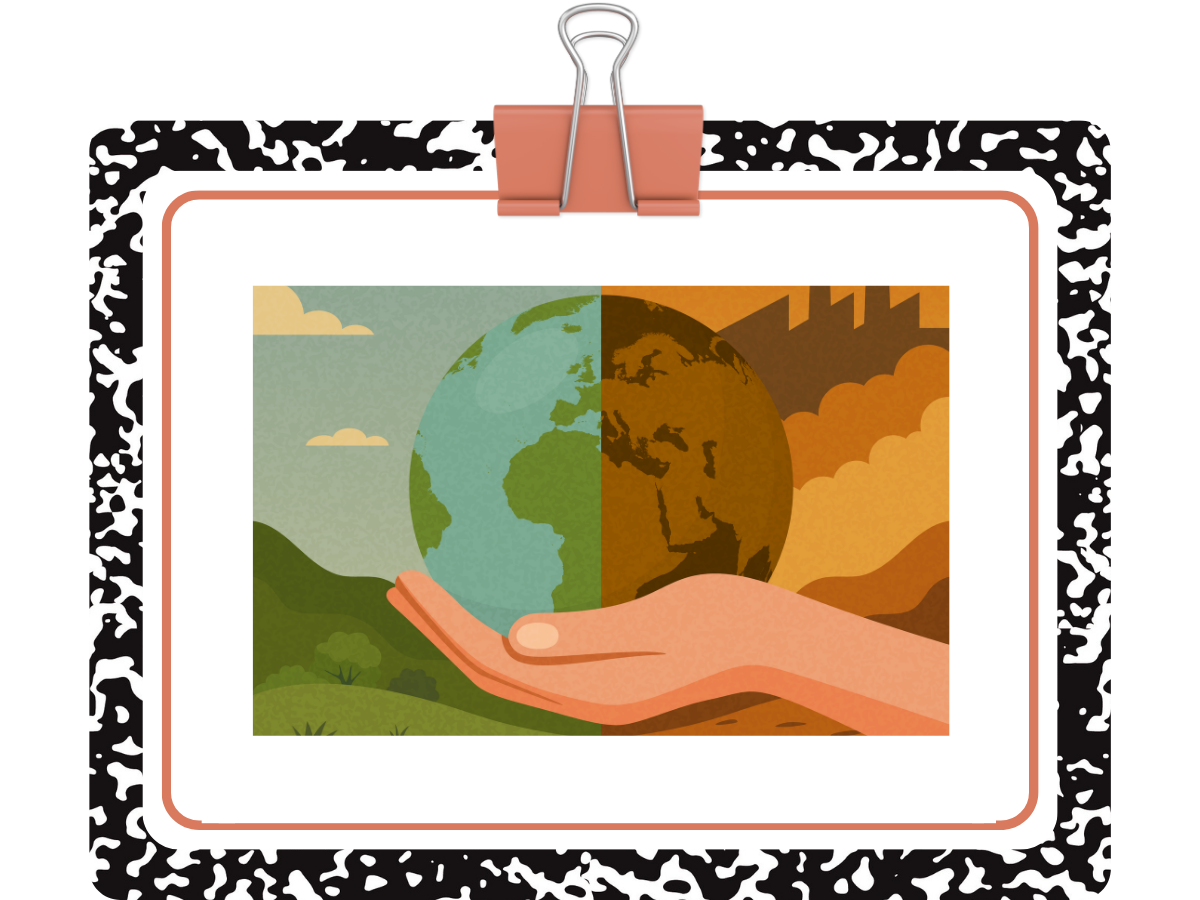
Solutions for Climate Change
Students explore real climate solutions and answer questions to discover which approaches align with their own values, opening a genuine conversation about trade-offs and collective action. This interactive, no-prep activity works well as an opening discussion in any course.

Economics and Greenwashing Game
Students watch company advertisements, decide whether they would purchase each product, and then learn about greenwashing and the four types of consumer decision-making. It is a natural first-week activity that connects marketing, sustainability, and critical thinking.
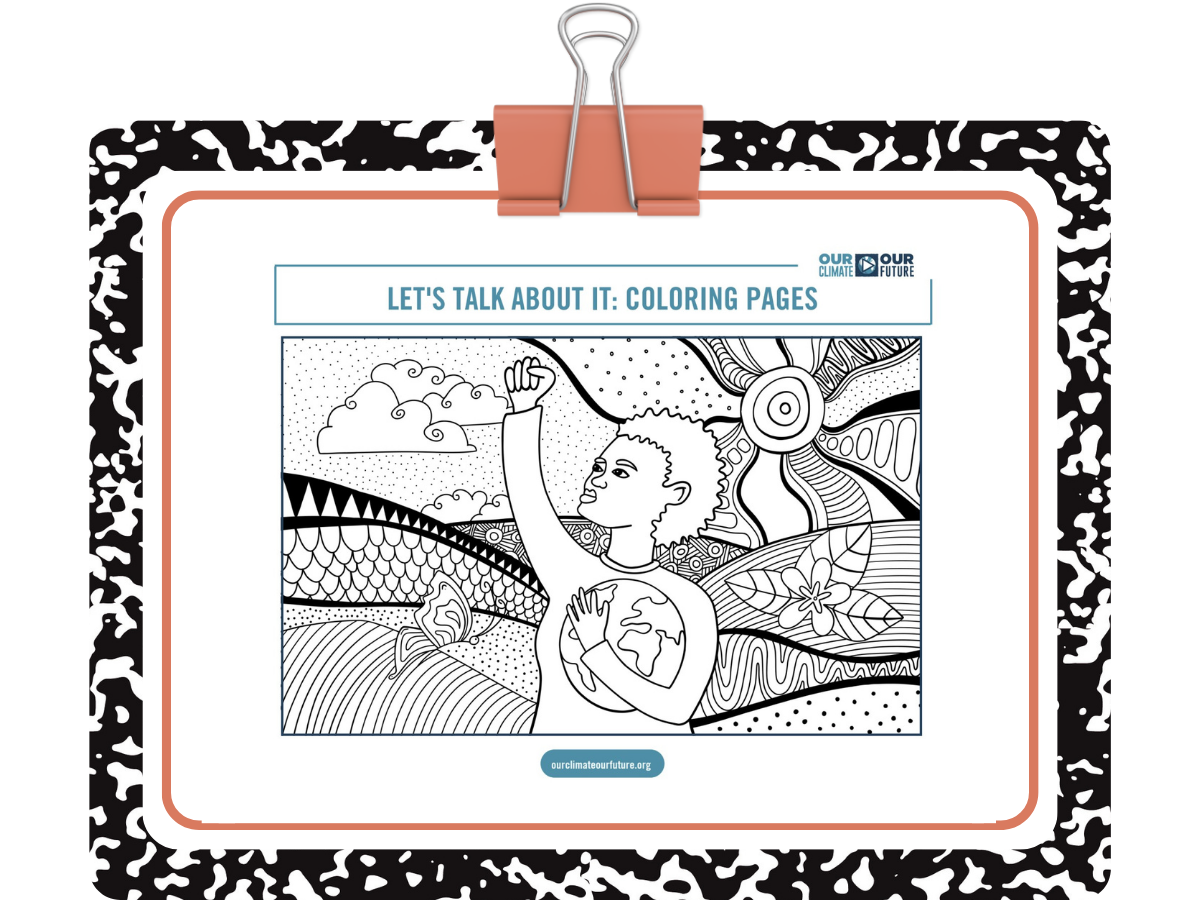
Let's Talk About It Coloring Pages
These printable coloring pages invite students to reflect on their feelings about climate change and open honest conversation about climate anxiety and emotional responses. They work well in advisory, ELA, or psychology, or as an entry point for any course.
Watch & Listen
These videos and podcasts bring the science and human dimensions of climate change directly to your students, offering compelling content to anchor discussion and inquiry from day one. Each one works well as a first-week opener or homework assignment and fits naturally across a range of courses, from AP Environmental Science and biology to health and ELA.
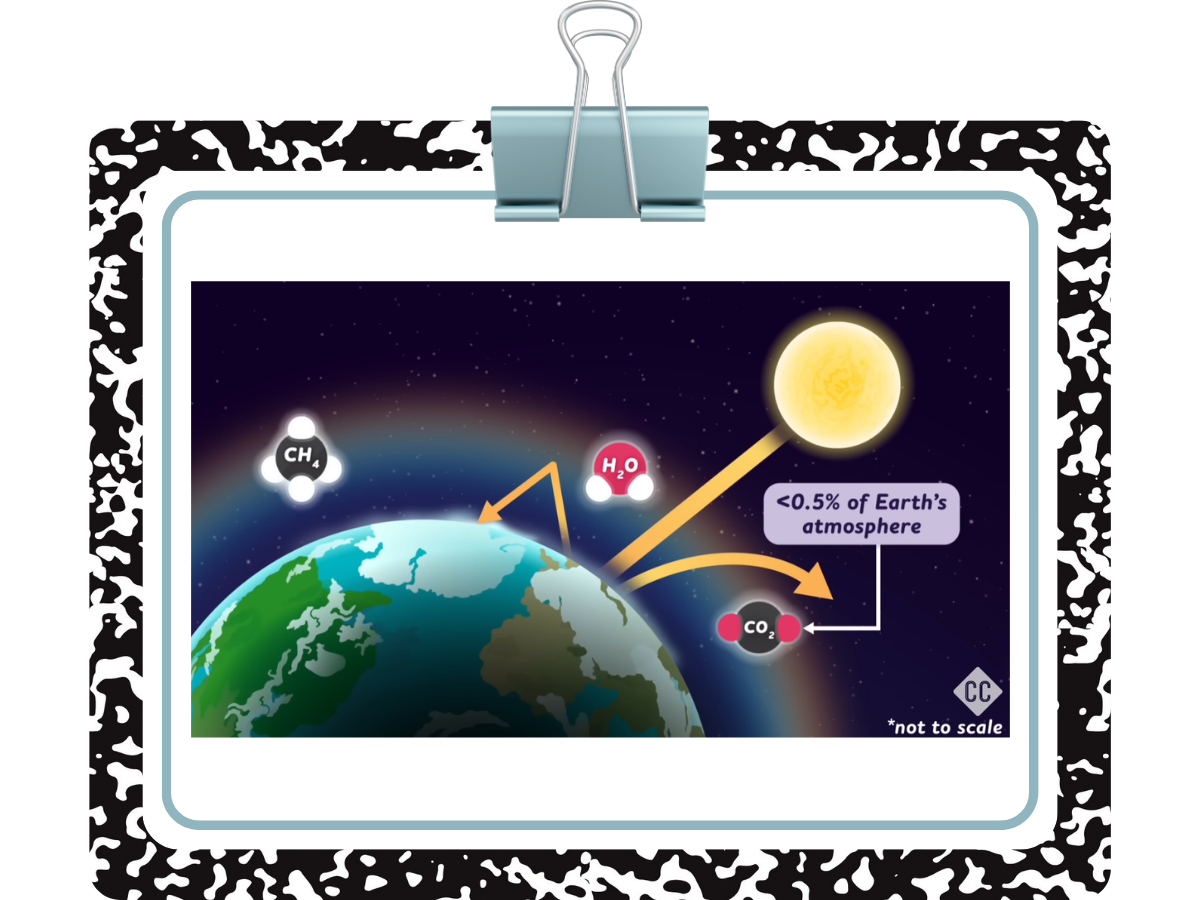
What is Climate Change?
This CFR Education video traces the origins of fossil fuel use back to the 18th century and explains how greenhouse gas emissions are warming the Earth, covering key approaches to solving the climate crisis. A downloadable transcript and linked lesson plan are included.
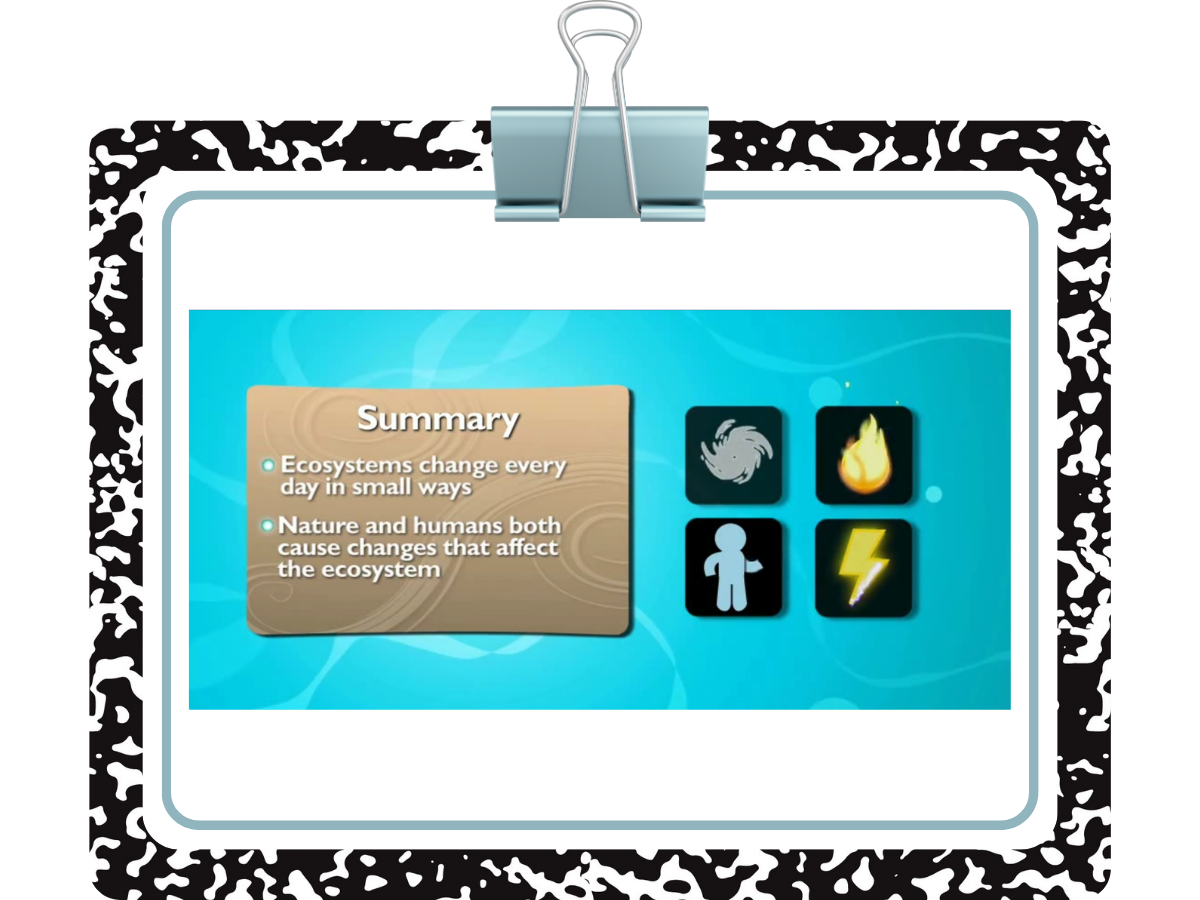
Changes in Ecosystems
In this Khan Academy video, students learn about five ways human activities disrupt ecosystems: habitat destruction, pollution, invasive species, overexploitation, and climate change. A transcript, key vocabulary, and quiz are included.
Learning from Animals
In this podcast, young people share what animals have taught them about compassion and harmony with nature, and two naturalists discuss lessons learned from working closely with turtles. It works well as a discussion starter in biology or ELA.
Connecting With Nature
In this podcast, students from around the world share their perspectives on the positive effects of nature on teen mental health and the importance of spending time outside. It's a compelling opener for health, ELA, or advisory.
STEM Lessons
These hands-on lessons and activities for your first weeks give high school science students the chance to investigate real climate issues through research, field work, and design thinking. Each one connects to core science practices and introduces environmental topics students will engage with all year long.
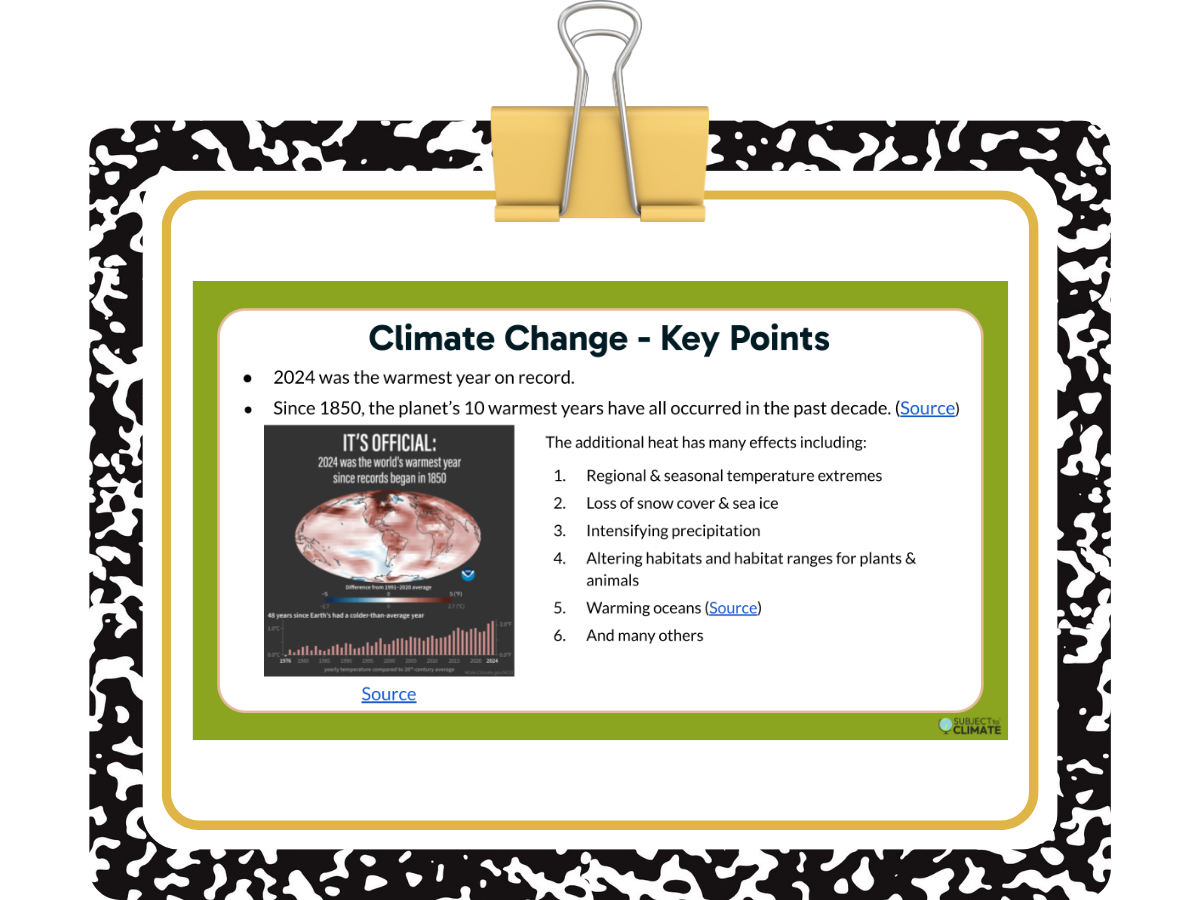
Climate Solutions & Project Drawdown
Students brainstorm challenges posed by climate change, then research two solutions from the Project Drawdown database and collaborate to create a poster presenting their findings. This lesson gives science students a hopeful, evidence-based framework for climate action.
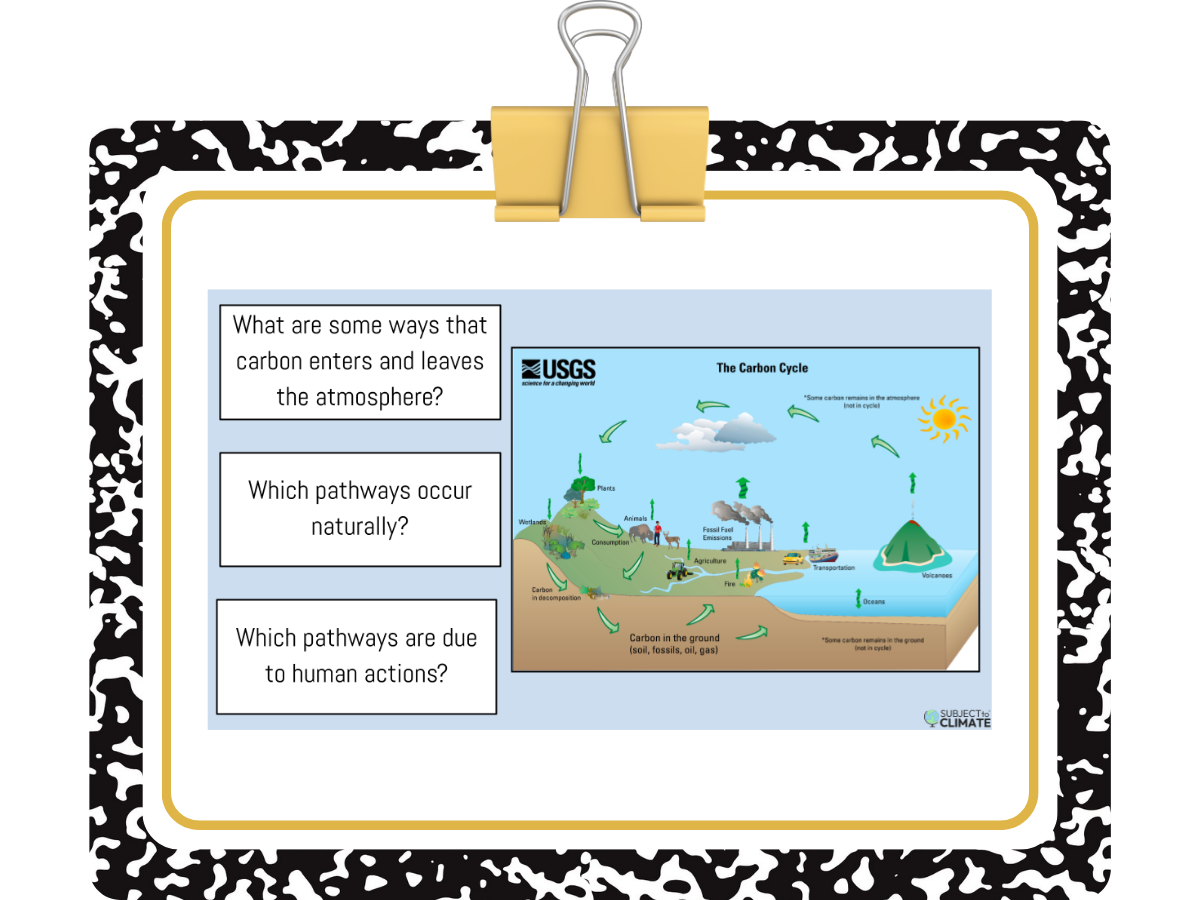
Carbon Removal Technology
Students review the carbon cycle and carbon sinks, then research and compare different carbon dioxide removal technologies by examining methods, resource requirements, risks, and benefits. Finally, students recommend a CDR technology for a specific community.
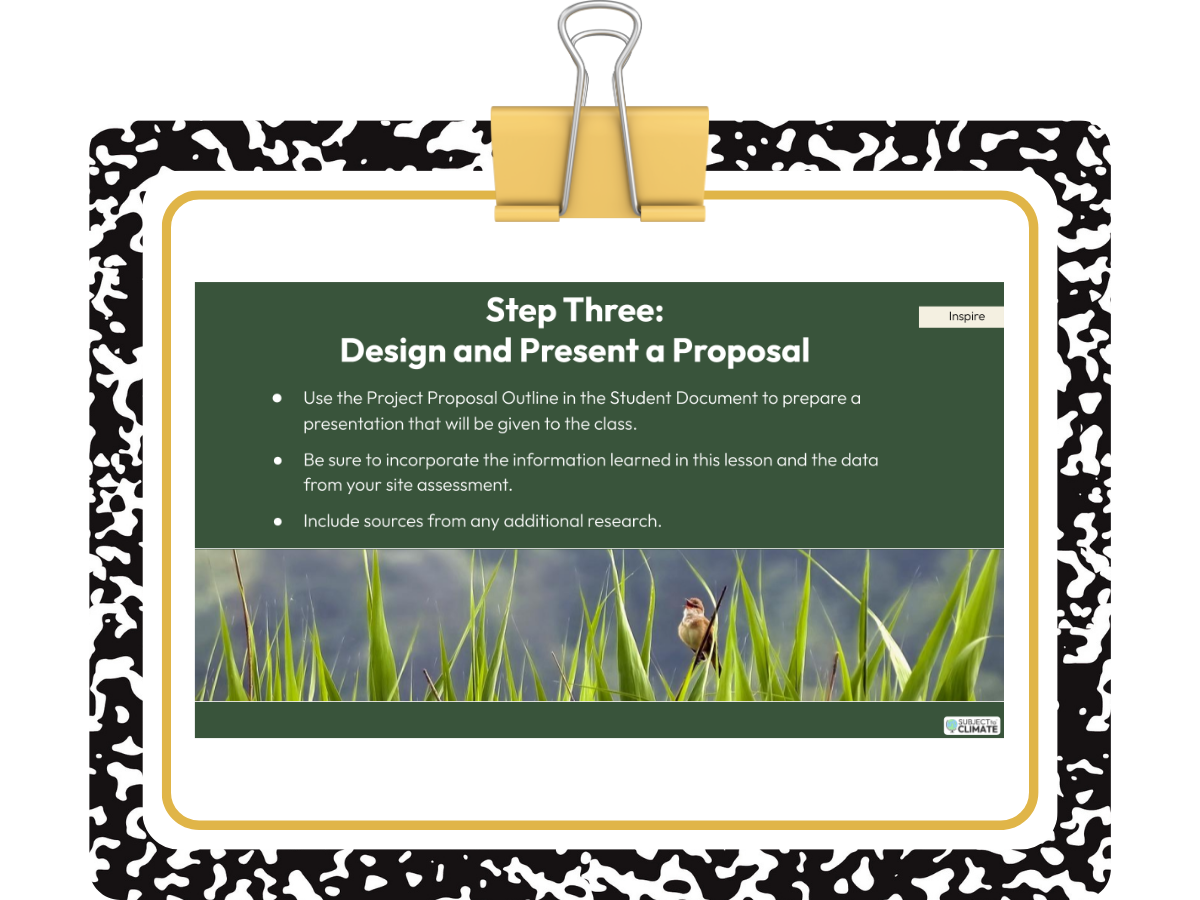
Design Thinking Solutions for Birds
Students research the threats climate change poses to migratory birds, then use a design thinking framework to develop a place-based proposal to improve bird habitats. This lesson gives students an authentic design challenge grounded in real ecological data.
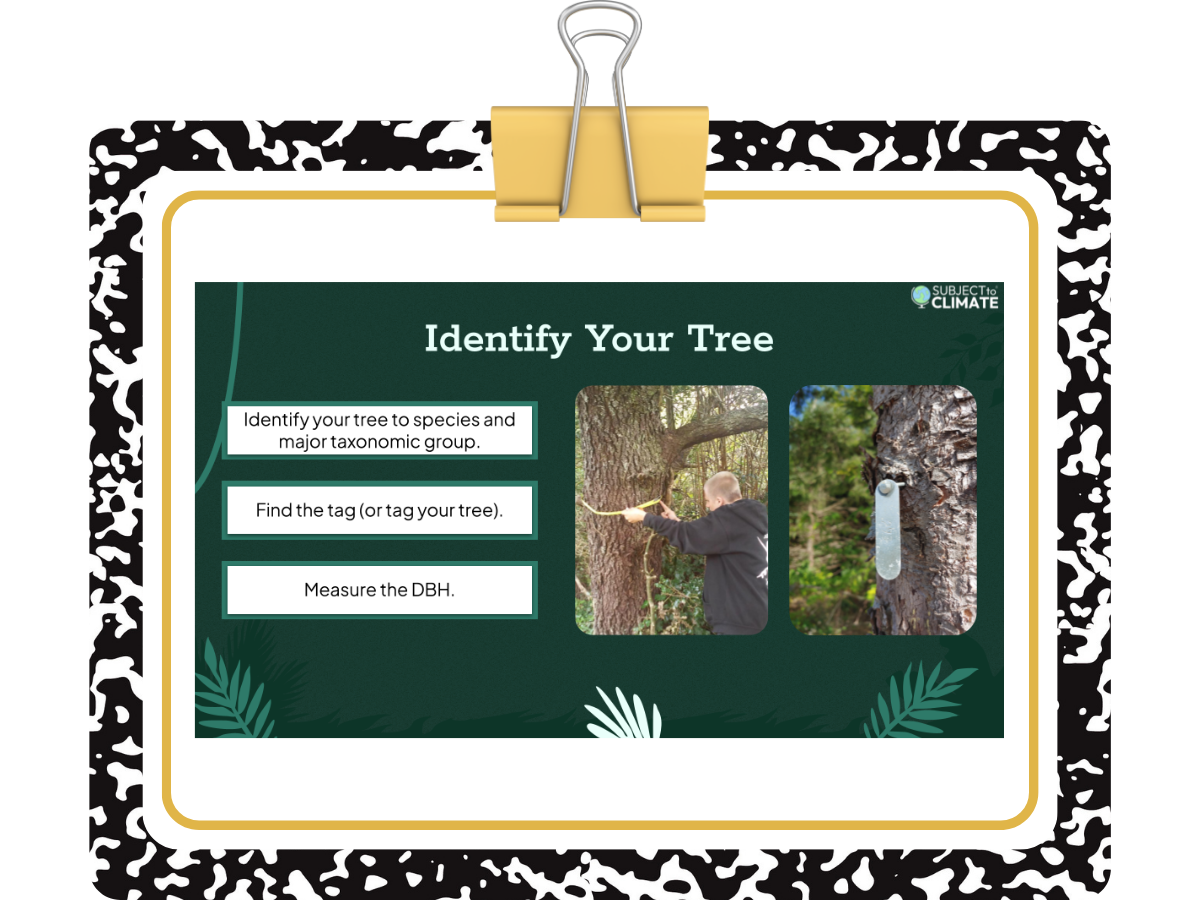
Science Lesson: Carbon Sequestration
Students go outside to measure campus trees and calculate how much carbon each one stores, building an understanding of photosynthesis and the role forests play as carbon sinks. The lesson also invites reflection on the cultural significance of local trees.
ELA Support
These writing and literacy activities bring environmental topics into your English classroom from day one. Each one gives students something relevant and thought-provoking to read, discuss, and write about. Help your high school students build core writing skills with content that connects to the complex, real-world issues young people are ready to engage with.
Climate Fiction Lesson
Students read and analyze cli-fi short stories by young Maine authors, examining how each author develops a theme and narrative around climate change. Using what they have learned about the genre, students then plan their own place-based cli-fi story about surviving and thriving in a changing world. It works well in any ELA class as a creative writing unit focused on climate.
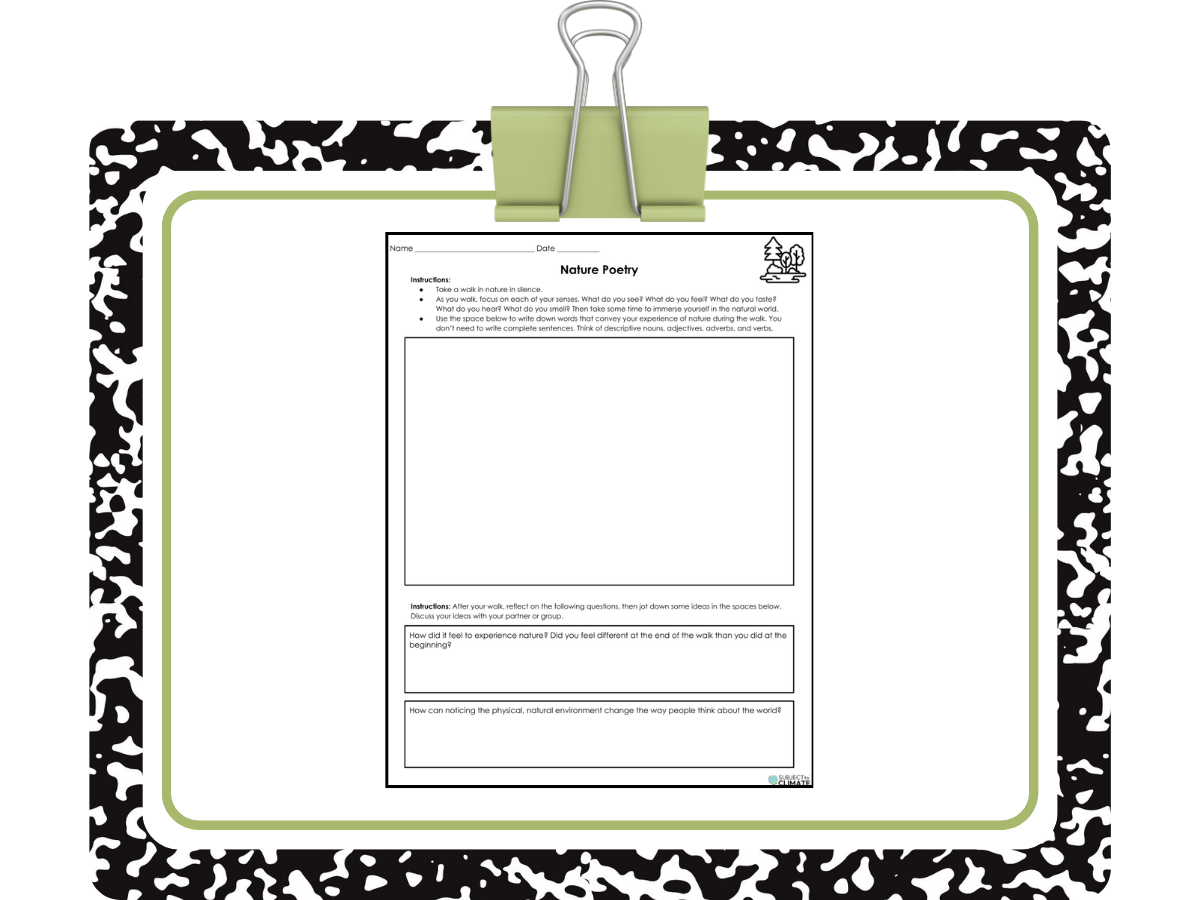
Nature Walk Poetry Activity
Students step outside to observe and connect with the natural world around their school, then explore poetry as a form of climate action and advocacy. After reflecting on nature as both a subject and a catalyst for writing, students compose original poems inspired by what they noticed on the walk. This 45-minute activity fits well as a first-week creative writing piece in any ELA class.
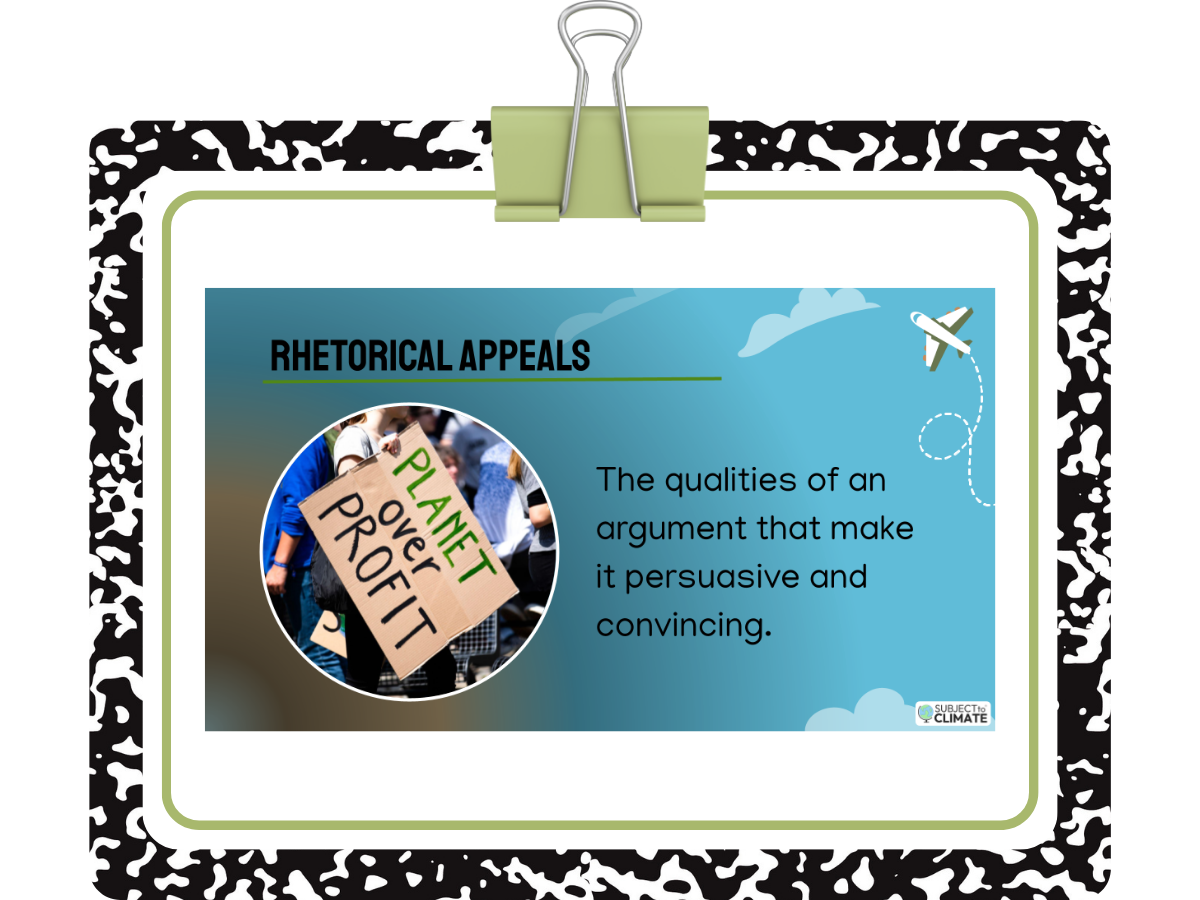
Rhetorical Appeals and Tourism
Students analyze tourism ads and oil company artwork to identify rhetorical appeals and explore how the travel industry shapes perceptions of place while contributing to carbon emissions. They then design a postcard from the future using their own rhetorical appeals. This lesson fits naturally into AP Language or any ELA course that covers argument and persuasion.
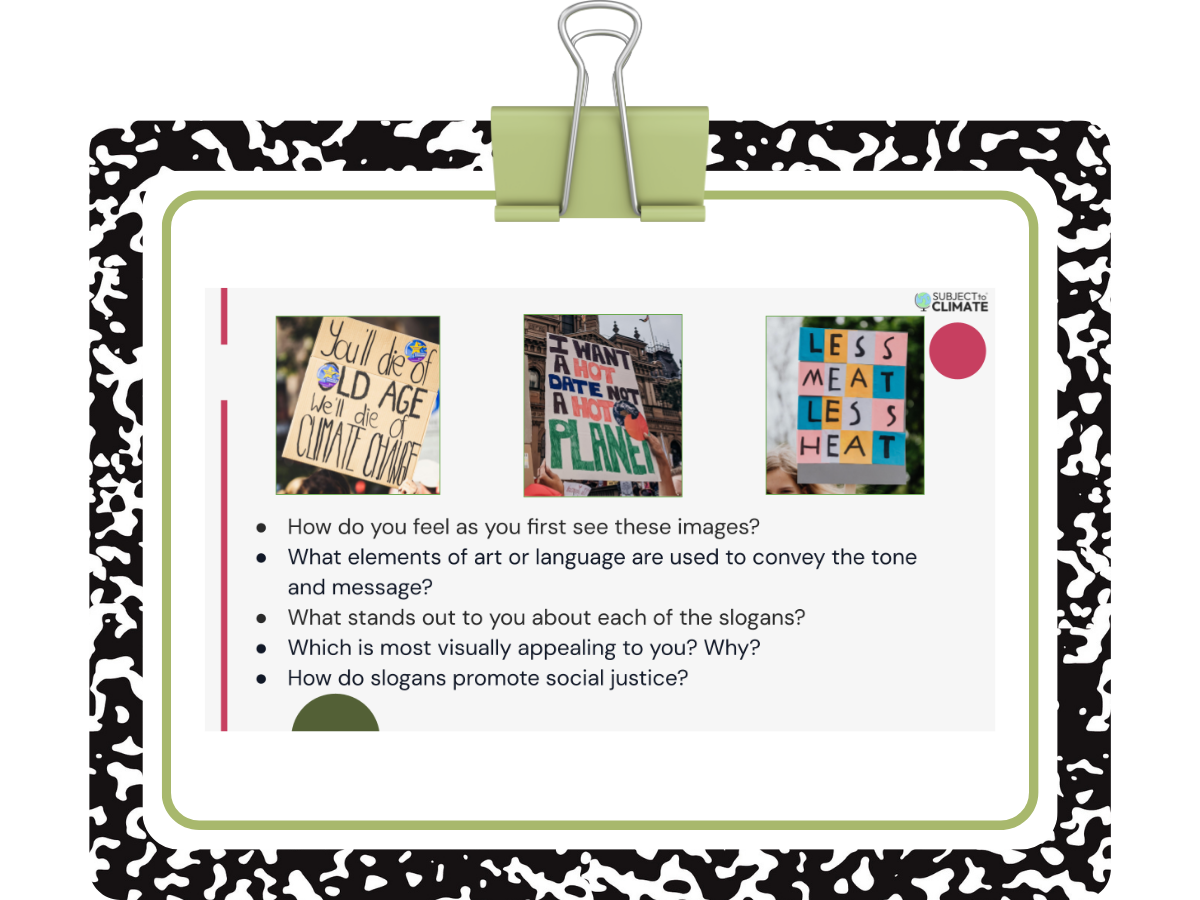
Slogans and Parallel Structures
Students evaluate three climate awareness slogans, watch videos on climate activism, and study how parallel structure makes language more powerful. They then create their own original climate slogans using four specific types of parallel structure, combining grammar instruction with environmental advocacy. This lesson works well in any ELA course that covers grammar in context.
Math Support
These back-to-school math activities connect core high school math standards to real-world climate and environmental data, helping students see that mathematics is a tool for understanding and responding to the world. Each resource is ready to use with little to no prep and fits naturally into existing algebra, geometry, or data analysis units.
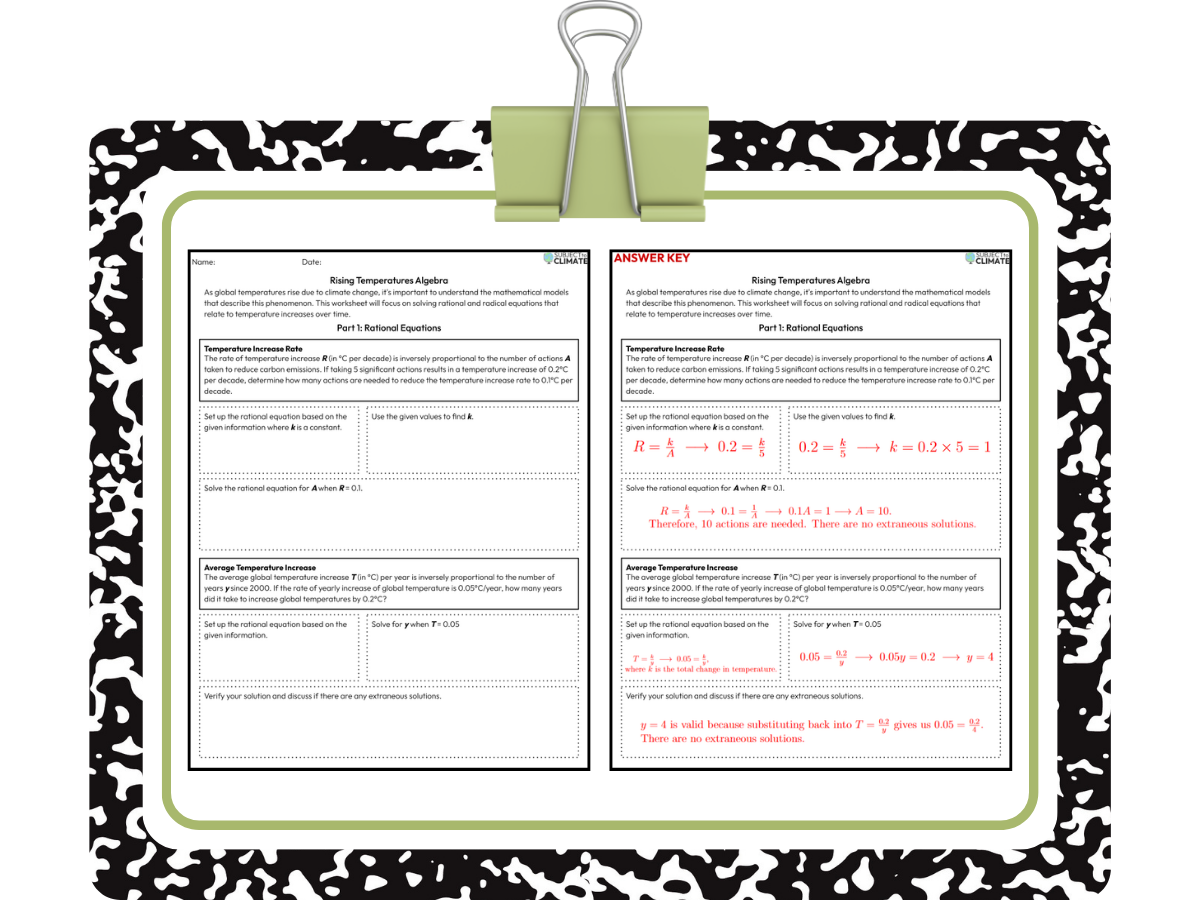
Algebra Worksheet
In this worksheet, students practice core algebra skills using data about rising temperatures and climate change, giving their math work a meaningful real-world context. Problems are grounded in actual climate data, helping students see mathematics as a tool for understanding environmental trends. This is a low-prep, standards-aligned activity that fits easily into any algebra unit.
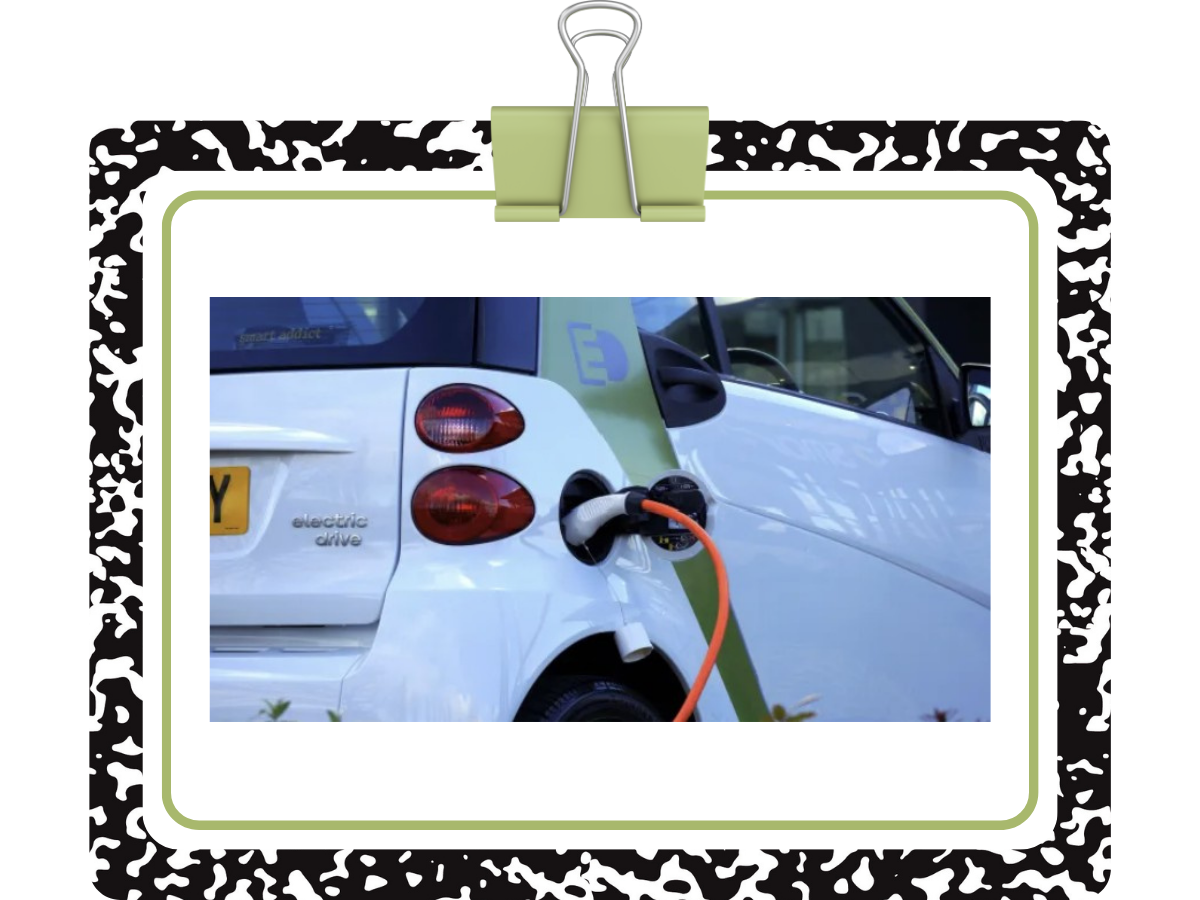
Substitution & Elimination
Students apply systems of equations to a real-world question: Is it more cost-effective and environmentally friendly to own an electric vehicle than a gas one? Using video, guided questions, and interactive graphing tools, students build linear equations and solve using both substitution and elimination. It is an ideal resource for algebra classes looking to connect math skills to sustainability.
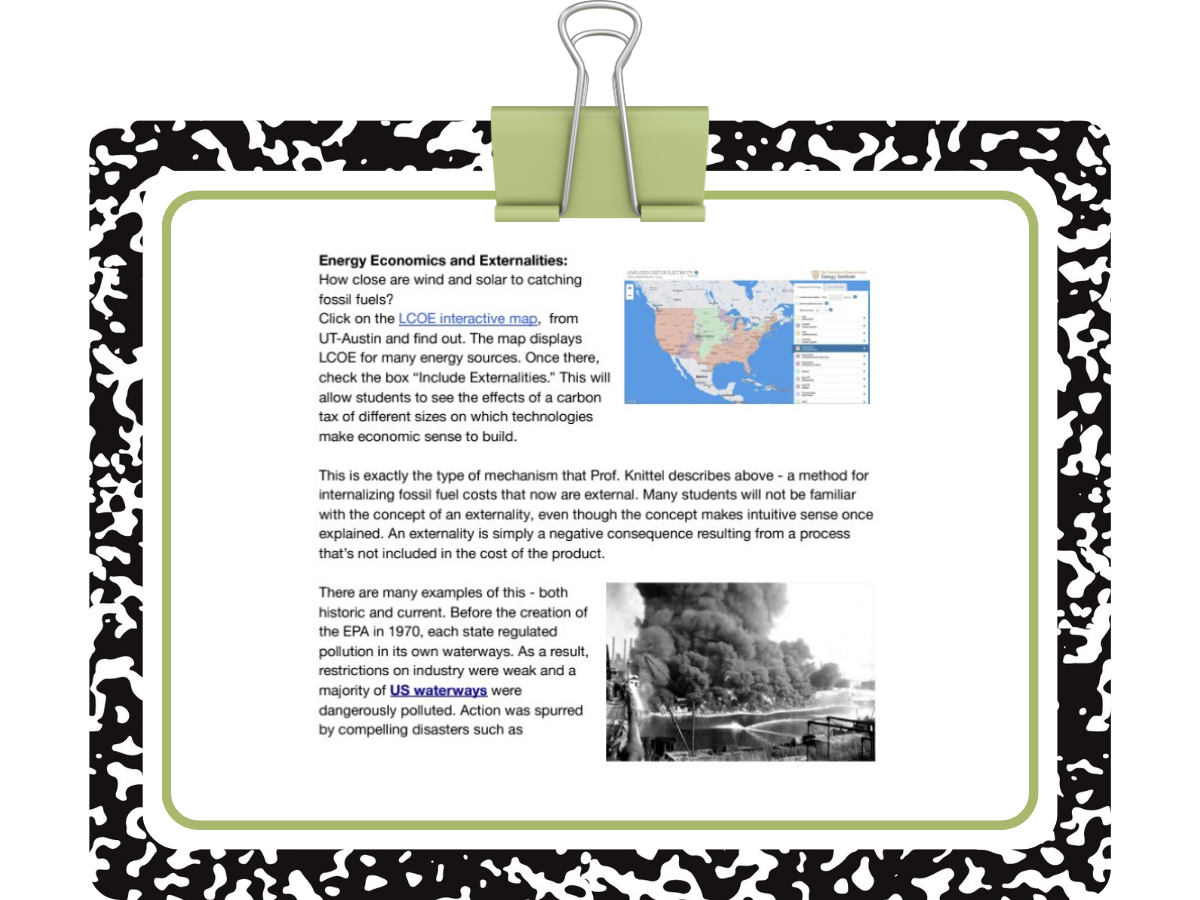
Algebra 2 & Physics
Students graph the dramatic decline in battery storage costs from 1991 to 2018, determine the best-fit curve to the data, and use their model to predict future costs. They then consider the economic and climate implications of affordable battery storage. This lesson works in Algebra 2, Statistics, or Physics and connects quantitative reasoning to real-world energy policy.
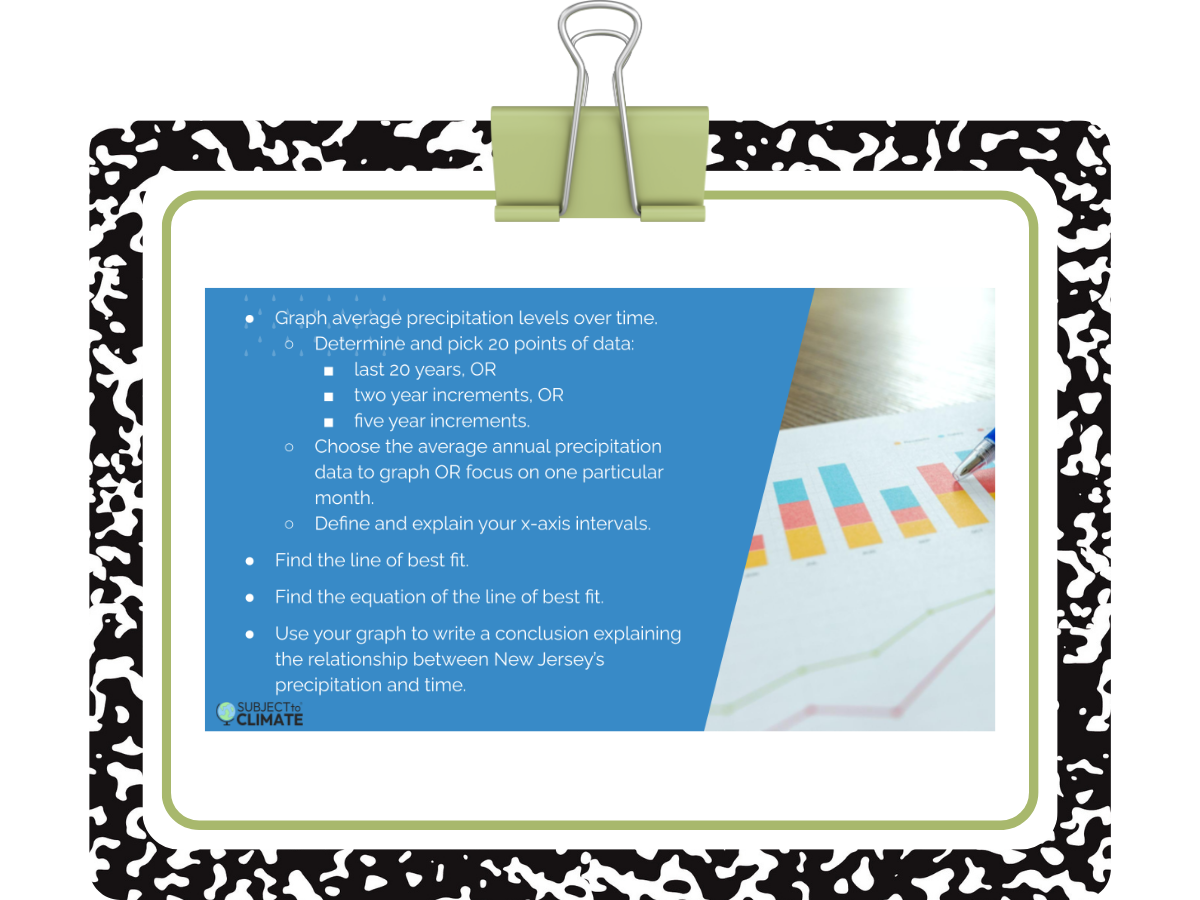
Graphing Lesson: Precipitation Data
Using real precipitation records, students create graphs, find the line of best fit, and determine the equation of the line to investigate how rainfall patterns have shifted over time. They then connect their analysis to a reading on precipitation and climate change and discuss what the data suggests about broader trends. This lesson fits into any algebra or statistics unit and builds strong data literacy.
More Guidance for Back to School
FAQ
- Do these resources require a lot of setup or prior knowledge of climate topics? No, everything in this guide is ready to use with little to no prep and is designed to fit naturally into the courses you are already teaching. You do not need a background in environmental science to use them, and many work just as well in ELA, math, economics, or advisory as they do in science.
- Are these resources aligned to academic standards? Yes, every resource in this guide is standards-aligned. Activities are designed to reinforce grade-appropriate skills across science, ELA, and math, with connections to argument writing, algebra, data analysis, scientific investigation, rhetorical analysis, and more.
- Are these resources appropriate for advanced or AP courses? Yes. Several resources are well-suited for advanced coursework, including the carbon removal technology research lesson, the systems of equations activity comparing electric and gas vehicles, and the rhetorical analysis lesson designed specifically for AP Language or argument-focused ELA courses.
- Should I use these resources in place of my existing lessons and curriculum? No, these resources are designed to complement and enhance what you are already teaching, not replace it. The climate and environmental connections are woven into core subject-area skills, so each resource slots naturally into your existing units and lesson sequences without requiring you to set aside your current curriculum.
Key Takeaways
- The first weeks set the tone for the whole year. As Edutopia reports, researchers found that elementary teachers who explicitly taught procedures and routines in the first three weeks of school had measurably higher student engagement for the rest of the year than teachers with less established routines.
- These easy activities for your first weeks won't teach routines for you, but because they're low-prep and ready to use, they free you up to focus your energy on the routine-building and community-setting that matter most in the first weeks.
- Resources span every high school subject, including STEM, ELA, and math, with climate and nature themes woven in to give you cross-curricular options that fit your existing schedule.
- You've got a full set of resources to launch a thoughtful, connected school year across every subject, with plenty of ways to help your students engage critically and creatively with the world around them. Keep exploring SubjectToClimate.org throughout the year for even more free, teacher-designed resources to build on this foundation. Here's to a great year of inquiry, discussion, and discovery!

Author: Yen Yen Chiu
Some Resources in this Guide Provided by Our Partners