Pride Month: 9 Articles for Students
What is Pride Month, and why does it matter in climate education? These nine articles offer a starting place for meaningful classroom discussion about LGBTQ+ experiences, history, and advocacy, with several focusing on how climate change disproportionately affects LGBTQ+ communities and why intersectionality is essential to understanding environmental justice. Whether you teach civics, health, or ELA, these resources support inclusive education by fitting organically into the concepts you are already covering, from civil rights to community organizing. Use them to build critical thinking skills, center LGBTQ+ voices, and strengthen representation in an authentic and accessible way.
Connecting Pride Month to Social Justice and Environmental Issues
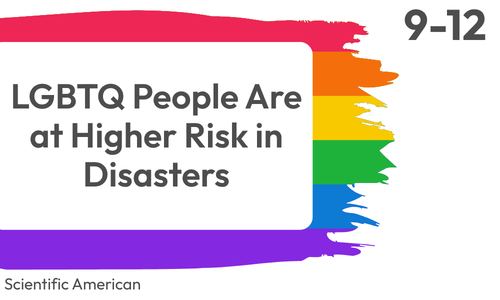
This article covers a FEMA report on the unique challenges LGBTQ+ people, racial minorities, and single parents face during natural disasters. It can help students understand how systemic inequalities affect disaster preparedness and recovery. Students learn that LGBTQ+ people have faced discrimination at emergency shelters, and that low-income households are often left without the resources or insurance needed to recover from a disaster.
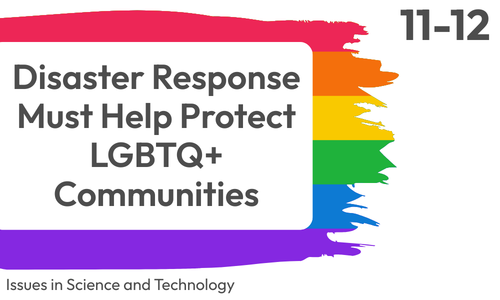
This article examines why LGBTQ+ individuals face heightened vulnerability during natural disasters, covering discrimination in emergency management and the history of inequitable disaster relief in the United States. It fits naturally into ELA, social studies, health, or civics classes as a ready-to-use reading on environmental justice and systemic inequality.
This article examines why LGBTQIA+ individuals face heightened vulnerability during climate disasters and may be excluded from response efforts, drawing on examples from Hurricane Katrina and the Indian Ocean Tsunami. It fits naturally into ELA, social studies, and civics classes as a ready-to-use reading on environmental justice and the importance of inclusive climate action.
This article profiles five LGBTQ+ climate and environmental activists, highlighting their work and how students can follow or engage with their efforts. It's a ready-to-use resource for ELA, social studies, or civics classes that puts diverse voices at the center of contemporary environmental action.
This brief article explores how climate change disproportionately affects LGBTQ+ people while also making the case that this community's history of building solidarity and advocating for rights uniquely positions them to lead climate action. It works well in ELA or civics classes as a concise, discussion-ready text connecting human rights and environmental justice.
This article explores the deep interconnectedness of environmental justice and LGBTQ+ rights movements, examining how queer communities face disproportionate climate impacts while their voices remain underrepresented. It's a strong choice for ELA or Social Studies classes looking for a text that challenges students to think critically about intersectional oppression and activism.
This article summarizes a peer-reviewed study on how LGBTQ+ individuals face greater environmental risks and discrimination in disaster relief, and why the environmental justice movement benefits from greater LGBTQ+ inclusion. It's an accessible entry point for ELA, health, or civics classes into scientific literature on climate vulnerability and equity.
This article examines why climate justice is especially critical for trans and queer communities, with particular attention to the compounding vulnerabilities faced by Black, Hispanic/Latinx, Indigenous, and low-income individuals. It's a ready-to-use text for ELA, science, or civics classes that puts intersectional climate advocacy front and center.
This news article traces the history of Pride Month from the 1969 Stonewall Riots to present-day celebrations, highlighting communities across the US hosting their first-ever Pride events in 2024. It's a quick, accessible text for ELA, social studies, or civics classes that connects historical civil rights milestones to contemporary community organizing.
Discussion Questions
Use these questions to open up classroom conversation before or after students read the articles:
1. What does it mean for a community to be disproportionately affected by climate change? Can you think of other groups who face similar vulnerabilities?
2. How does the history of the LGBTQ+ rights movement connect to broader conversations about civil rights and environmental justice?
3. Why is it important to include LGBTQ+ voices in climate advocacy and emergency response planning?
4. What does intersectionality mean to you, and how do you see it showing up in the articles you read?
To explore more climate and environmental justice resources for your classroom, visit SubjectToClimate.org. The site offers a growing library of vetted articles, lessons, and activities designed to help teachers bring these topics into any subject area. Whether you are just getting started or looking to expand your existing curriculum, SubjectToClimate has ready-to-use materials across subjects and grade levels.