The Reshuffling of Life on Earth
Provided by: MIT Climate Portal|Published on: August 15, 2026|Last updated: August 16, 2026
Grades: 9, 10, 11, 12, AP
Type: Podcasts
Subjects: Biology, Earth and Space Sciences
Authors: Ask MIT Climate Podcast
Location: North America > United States > New Hampshire
This resource has been reviewed by SubjectToClimate's climate scientists and verified for scientific accuracy and up-to-date information. Learn about our review process →
This resource has been reviewed by SubjectToClimate's climate scientists and verified for scientific accuracy and up-to-date information. Learn about our review process →
Synopsis
- In this 15-minute podcast episode, host Madison Goldberg and researchers Dr. Toni Lyn Morelli and Dr. Alexej Sirén explore how climate change is shifting where plant and animal species can survive.
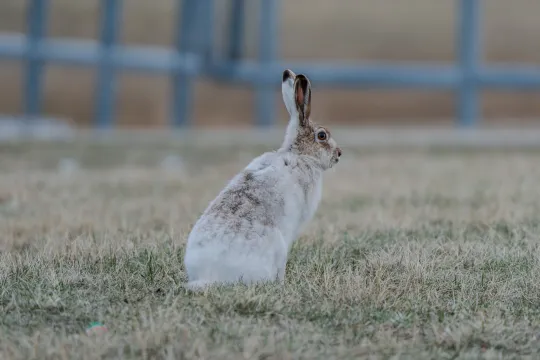
- It explains the general prediction that species move upslope, poleward, and deeper into water as the planet warms, then examines why only about half of observed cases follow that pattern.
- It also discusses how species movements affect ecosystems and people, and describes conservation strategies including climate change refugia, habitat connectivity, and public monitoring.
Teaching Materials
Classroom Implementation:
- This podcast works well as an individual listening assignment or a whole-class listen with pauses for discussion.
- Before listening, have students predict how they think animals and plants respond to a warming climate, then check their predictions against the episode's upslope, poleward, and deeper-water framework.
- Give students a printed transcript and ask them to annotate, with simple symbols or short notes, moments of surprise, wonder, or confusion.
Extensions:
- Introduce students to community-science databases mentioned in the episode and have them log a local species observation.
- Discuss how humans migrate as a result of climate-related disasters or changes and compare human behavior to animal and plant behavior.
Related Resources:
- Use this interactive map to visualize the possible migration movements of mammals, birds, and amphibians due to climate change.
- Watch this 3-minute video as an introduction of how climate change may affect human migration in the United States.
The podcast touches on the concept that higher elevations tend to be cooler. This is an important concept in weather and climate, as well as ecology. The speakers talk about how scientific research is not always straight forward. It is common for scientists to alter their hypotheses and conclusions as more research is done, especially when looking at complex systems such as animal and plant habitats and growth.
Teaching Tips
Standards
Resource Type and Format
Scientist Reviewed
This resource has been reviewed by SubjectToClimate's climate scientists and verified for scientific accuracy and up-to-date information. Our review process ensures that every resource in our library reflects the current state of climate science.
Learn about our review process →