
Temperature Detectives
Provided by: Paleontological Research Institution|Published on: February 26, 2025|Last updated: July 16, 2026
Grades: K, 1, 2, 3, 4, 5
Type: Lesson Plans
Subjects: Science
Authors: Paleontological Research Institution
Location: Earth
This resource has been reviewed by SubjectToClimate's climate scientists and verified for scientific accuracy and up-to-date information. Learn about our review process →
This resource has been reviewed by SubjectToClimate's climate scientists and verified for scientific accuracy and up-to-date information. Learn about our review process →
Synopsis
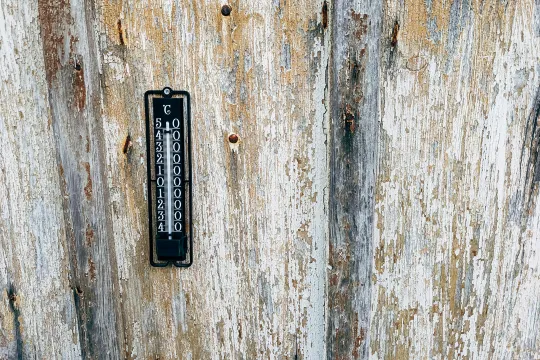
- In this 30-40-minute lesson from the Paleontological Research Institution, students will learn how to use thermometers to collect temperature data for an experiment about energy absorption on light and dark surfaces.
- Using the lesson's extension suggestions, students will learn about energy reflection, absorption, and emission, and how these are related to climate change and extreme heat.
Teaching Materials
Positives
- This activity has students moving around different locations, which will keep them actively engaged.
- The extension where students can discuss strategies to deal with extreme heat gives students relevant, real-world applications for what they have learned.
Prerequisites
- Students should know that heat is measured in degrees.
- Before going outside and breaking into data recording groups, students should understand expectations and safety measures for outdoor activities.
Differentiation & Implementation
- In addition to using the Climate Change and Extreme Heat extension, teachers can use this lesson as background to introduce the albedo effect and the feedback loop between glacial melt and climate change.
- Teachers can also use this lesson to talk about the urban heat island effect and extend the last discussion question into a design challenge for students to create a solution to extreme heat in cities and test a model. Teachers can use the video What Makes Cities So Hot? to support this topic.
- Using black and white as baselines, students can make predictions for how other colors will impact temperature in one location.
This hands-on approach to understanding how different environmental factors affect temperature will help students understand how to stay safe during extreme heat events, which are becoming more common in our changing climate. This resource is recommended for teaching.
Teaching Tips
Standards
Resource Type and Format
Scientist Reviewed
This resource has been reviewed by SubjectToClimate's climate scientists and verified for scientific accuracy and up-to-date information. Our review process ensures that every resource in our library reflects the current state of climate science.
Learn about our review process →