Go Fish!
Grades: K, 1, 2
Type: Lesson Plans
Subjects: Science, Social Studies, Mathematics
Authors: Population Education
Location: Earth
This resource has been reviewed by SubjectToClimate's climate scientists and verified for scientific accuracy and up-to-date information. Learn about our review process →
This resource has been reviewed by SubjectToClimate's climate scientists and verified for scientific accuracy and up-to-date information. Learn about our review process →
Synopsis
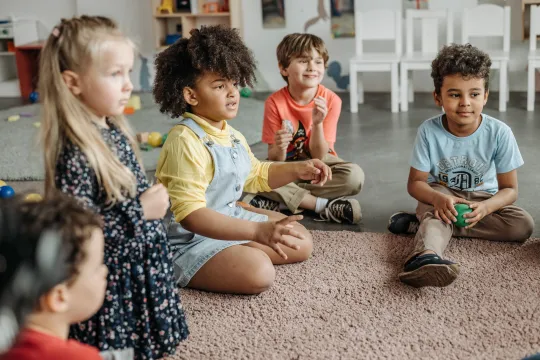
- This lesson teaches students about sharing resources, inequality, and community in a fun and tasty way.
- First, students will see how a resource can be "shared" in an unequal fashion, then students will generate strategies for how to share a finite resource with equity.
Teaching Materials
Positives
- This lesson is very engaging and will have students talking about the big ideas presented long after class ends.
- The PDF includes step-by-step instructions for conducting the activity, many discussion questions, and a way to measure student learning after the conclusion of the lesson.
- The video walks teachers through the procedures for the lesson.
Additional Prerequisites
- To download the lesson plan, you will need to enter your email address.
- For the activity, teachers will need 20 Goldfish crackers per student, napkins, snack baggies, and a serving bowl.
Differentiation
- Science classes could use this lesson while discussing Earth's finite resources and how to equitably allocate what is left.
- Because this lesson will be a touchstone of importance throughout the year, consider writing some of the answers to the discussion questions on a chart to display.
- Goldfish crackers are one option for this activity, but it can be done with any large quantity of small items, like marbles, small candies, pencils, or acorns.
- The lesson plan includes ideas for incorporating math concepts into the activity.
- Other related resources include these games that teach students about the environment, this math activity that deals with greenhouse gas, and this digital picture book about kids changing the world.
This resource shows a practical illustration for students to learn the basic concepts of resource distribution and allocation. This is ideal for the classroom.
Teaching Tips
Standards
Resource Type and Format
Scientist Reviewed
This resource has been reviewed by SubjectToClimate's climate scientists and verified for scientific accuracy and up-to-date information. Our review process ensures that every resource in our library reflects the current state of climate science.
Learn about our review process →