Protect Grasslands and Savannas
Grades: 9, 10, 11, 12, AP
Type: Articles/Websites
Subjects: Earth and Space Sciences
Authors: Project Drawdown
Location: Earth

This resource has been reviewed by SubjectToClimate's climate scientists and verified for scientific accuracy and up-to-date information. Learn about our review process →
This resource has been reviewed by SubjectToClimate's climate scientists and verified for scientific accuracy and up-to-date information. Learn about our review process →
Synopsis
- This article from Project Drawdown assesses savanna and grassland protection as a climate solution and quantifies the amount of carbon dioxide equivalent emissions that could be realistically avoided or sequestered.
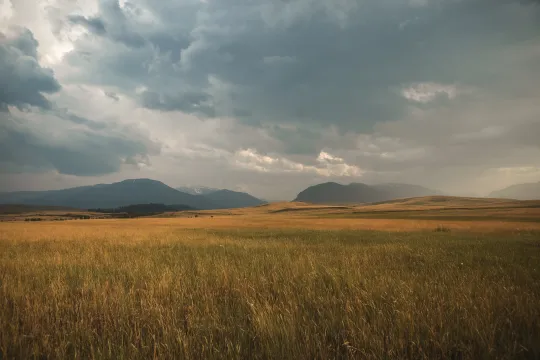
- The article also describes how grasslands serve as carbon sinks and how this important habitat is threatened by land conversions such as agriculture and development.
Teaching Materials
Positives
- This article serves as an excellent example of providing scientific evidence to defend a claim and explaining research methods.
- This reading will support learners in developing their scientific literacy as they read a brief technical text with domain-specific vocabulary, multiple units of measurement, and a concise tone.
Prerequisites
- Learners should be familiar with the unit gigaton, the unit in which carbon emissions are measured.
- Learners should understand concepts such as carbon sequestration, carbon sink, carbon emissions, and land conversion.
- This interactive table of solutions can be used to show students the rankings of solutions by scenario on the Drawdown website and may make it easier to understand the relative impact of grassland protection.
Differentiation & Implementation
- The information in this article provides the opportunity for interdisciplinary study in math, biology, and ecology by quantifying the different models and results of land protection.
- Consider having students discuss social and economic barriers to grassland protection and talk critically about the viability of this solution.
- To investigate other solutions to help reduce greenhouse gas levels check out the articles on forest protection and walkable cities.
- As an extension, students can identify major grassland habitats and species in their region and investigate whether or not they are legally protected or if they contain endangered or threatened species.
This is a brief overview of the impact that grasslands can have on greenhouse gas emissions. A solution to retaining these grasslands is presented along with a methodology, results, and discussion about the proposed solution to retain natural grasslands. This resource allows students the ability to think critically about what are viable solutions to climate change. The material is well sourced and encourages thoughtful discussion. This resource is recommended for teaching.
Teaching Tips
Standards
Resource Type and Format
Scientist Reviewed
This resource has been reviewed by SubjectToClimate's climate scientists and verified for scientific accuracy and up-to-date information. Our review process ensures that every resource in our library reflects the current state of climate science.
Learn about our review process →