30 Days Without Single-Use Plastics
Provided by: NowThis Earth|Published on: February 3, 2022|Last updated: July 16, 2026
Grades: 6, 7, 8, 9, 10, 11, 12
Type: Videos
Subjects: Biology, Earth and Space Sciences, Economics
Authors: NowThis Earth, One Small Step
Location: Earth, North America > United States > New York > New York

This resource has been reviewed by SubjectToClimate's climate scientists and verified for scientific accuracy and up-to-date information. Learn about our review process →
This resource has been reviewed by SubjectToClimate's climate scientists and verified for scientific accuracy and up-to-date information. Learn about our review process →
Synopsis
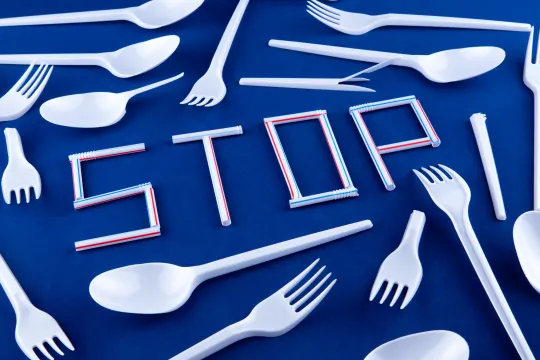
- This video from NowThis Earth follows a woman who chose to avoid single-use plastics for one month.
- Students will learn tips for how to avoid single-use plastic, challenges that might come up, and data on plastic consumption and waste from around the globe.
Teaching Materials
Positives
- The video begins with a brief history of plastic production and waste and ends with solutions to this global problem.
- Lucy's personal experience makes the video relatable, but there are still expert opinions and sourced data throughout the video.
Prerequisites
- There may be an ad before or during the video.
- Students should have a little knowledge of microplastics, plastic bag bans, and how single-use plastics can end up in our oceans and watersheds.
Differentiation & Implementation
- Students can try their own month of no single-use plastics and then compare and contrast their experiences with Lucy's.
- Students in civics classes can research more about the states with plastic bag bans and those that have even banned the bans.
- Other resources related to this topic are Why Plastic Pollution Is Even Worse Than You Think and Plastic Pollution: How Humans Are Turning the World into Plastic.
- An activity related to this topic is the Future in the Bag Community Action Guide.
This resource explores the history of plastic pollution between 1950-2015. It elaborates on the impact of single-use plastic on wildlife, the ocean, waterways, and the environment. It also underscores the difficulties in recycling plastic. This resource can challenge students to advocate for a plastic-free world.
Teaching Tips
Standards
Resource Type and Format
Scientist Reviewed
This resource has been reviewed by SubjectToClimate's climate scientists and verified for scientific accuracy and up-to-date information. Our review process ensures that every resource in our library reflects the current state of climate science.
Learn about our review process →