Whale Talk Study: Sperm Whales Communicate in Patterns Similar to Humans
May 20, 2026

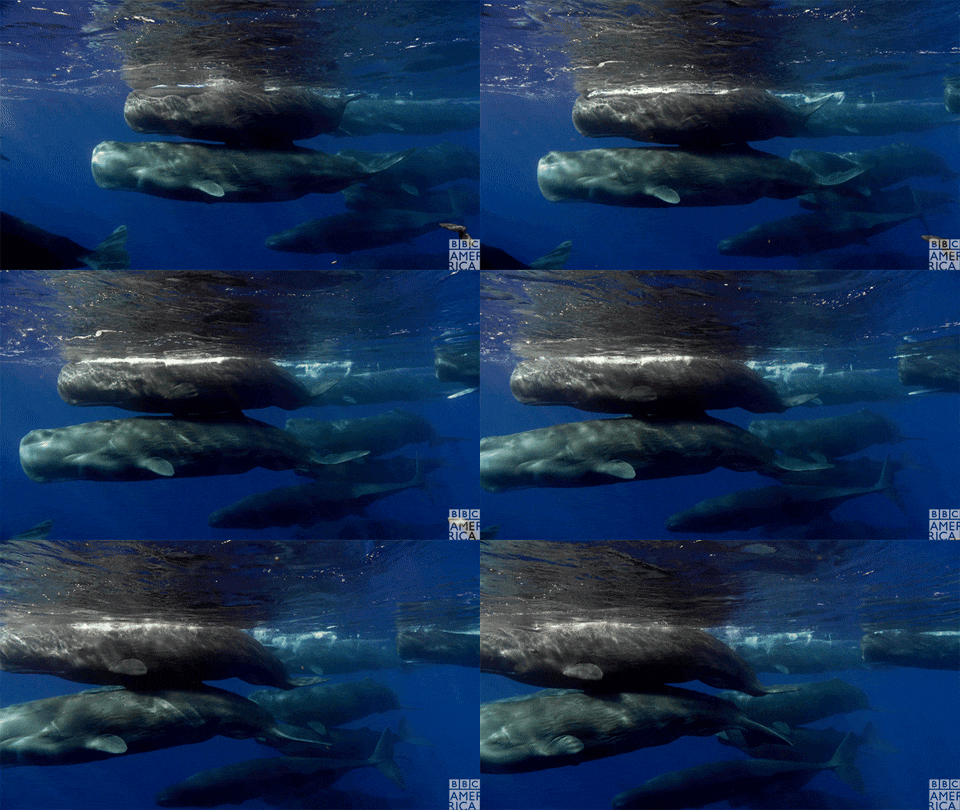
Sperm whales are the loudest animals on Earth. They can produce clicks so strong they can stun underwater prey. Yet they can also soften their “speech,” experts have learned. And when they do, surprising similarities to human speech patterns emerge.
“If you watch sperm whales, they put their heads right together and click into each other’s heads,” David Gruber told The Guardian. He's the founder of Project CETI (Cetacean Translation Initiative). Gruber compared it to wanting to sit next to someone to have a conversation rather than shouting from a long distance.
Project CETI has sought to make sense of how whales “talk” since 2020. Its latest breakthrough involved listening to audio recordings captured by tracking a pod of 15 sperm whales over the course of four years. The data set involves 3,948 files in total. Listening to each, marine biologists identified specific codas the whales shared with each other. The codas are distinct stretches of clicks.
The research team then used software to identify patterns. They found that sperm whales’ language was complex, rich, and strangely familiar. The whales were able to change the clicks to produce vowel-like sounds. And they seem to use the sounds much like humans do.
It’s far too early to make meaning from any of these “whale-words,” experts say. But learning patterns is a key early step.
“We’re not the only species with rich, communicative, communal, and cultural lives,” Gruber said.
Reflect: If scientists could someday understand animal communication, which animal would you most want to “talk” to and why?
Gif of sperm whales from Giphy courtesy of @bbcamerica.
News brought to you by 
Read More News Stories Today!