Western Snowpack Slump Fuels Fears of Drought, Wildfire-Filled Summer
April 17, 2026

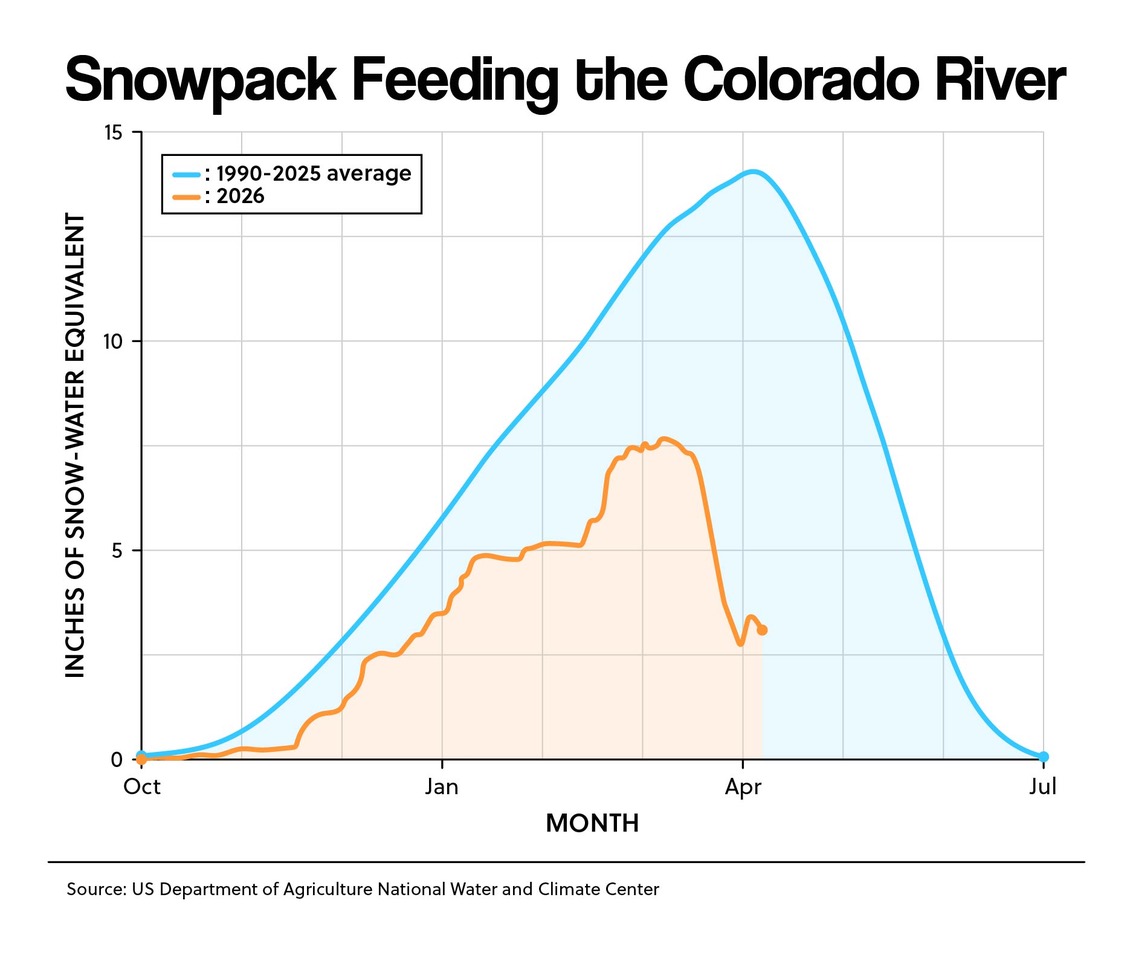
For centuries, people of the US West have relied on winter’s snowpack as a water supply during the hot, dry days of summer. A very mild winter and a record-breaking March heat wave have placed that pattern at risk.
The Colorado River Basin begins in Wyoming and Colorado. It stretches down through Arizona and into California. People living across the region depend on snow fall in the mountains of Colorado and Utah during the winter. As summer arrives, that snow slowly melts. It feeds rivers and farmland across seven states.
In an average year, 12-15 inches of snow blankets the sides of the Rocky Mountains. That's enough to offer a constant source of summer water for the basin. This year, the average snowpack in areas feeding the Colorado River is three inches. Even that is melting quickly.
“It’s going to be a seriously dry summer ahead,” Nels Bjarke told the New York Times (NYT). Bjarke is a scientist at the University of Colorado.
Experts point to climate change-fueled heat during the winter months as one cause for the shortage. Temperatures rarely dropped below freezing. That caused most of the precipitation to fall as rain. Then in March, a heat wave scorched a 12-state stretch in the West. New high temp records were set in dozens of cities. By April 1, Colorado River Basin snowpack levels stood at 23% of their median amounts.
The lack of snowpack has states on high alert for drought and wildfire risk. Some states are urging people to limit water usage.
“It’s going to challenge our historic water practices in the state,” Karla Nemeth told the NYT. She's the head of the California Department of Water Resources.
Reflect: What is one way you might reduce your water usage if you knew there would be less of it available?
News brought to you by 
Read More News Stories Today!