
Want to Make Food Healthy Again? Slow Down Climate Change, Studies Say
May 18, 2026

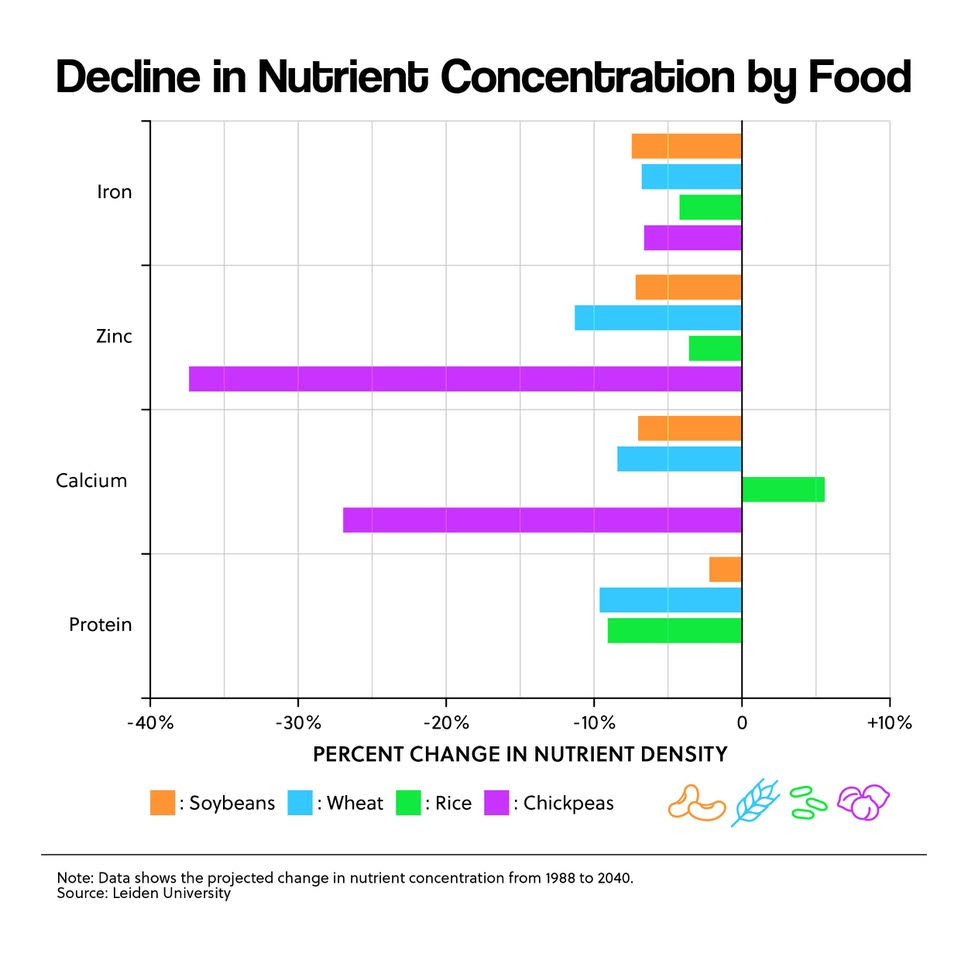
Our food used to be more healthy. And no, we’re not talking about the rise in ultra-processed stuff packaged in plastic. It's true that experts say that’s not helping. But the culprit for withering levels of vitamins and minerals in the fruits and veggies we eat is climate change.
“The diets we eat today have less nutritional density than what our grandparents ate, even if we eat exactly the same thing,” Kristie Ebi, a professor at the University of Washington’s Center for Health and the Global Environment, told The Washington Post.
Take zinc, for instance. The trace element is needed for vision health, blood clotting, and a functioning immune system — and that’s just for starters. In 1988, a bowl of chickpeas and rice would provide 22% of a person’s recommended daily dose of zinc. Today, a study by the Post found, it only provides 20%. If the trend keeps up, by 2040, it’ll be 17%.
The nutritional dropoff is seen in hundreds of crops, experts say. They blame climate change. The same carbon dioxide (CO2) that is fueling global warming is also making crops more efficient. Plants take in CO2 from the air. Its current high levels mean crops don’t have to work very hard to get it. That, in turn, means they don’t have to draw as much water and nutrients from the soil. The vitamins and minerals the plant would store in its fruit or seeds (AKA the parts that humans eat) instead get left in the ground.
“The plant is becoming more efficient, but it’s … at a price,” Lewis Ziska, a plant biologist at Columbia University, told the Post.
Reflect: What is one healthy food you eat often, and why do you think it is important for your body?
News brought to you by 
Read More News Stories Today!