Urban Sprawl: Families Leaving Cities for Far-Flung Suburbs
December 4, 2024

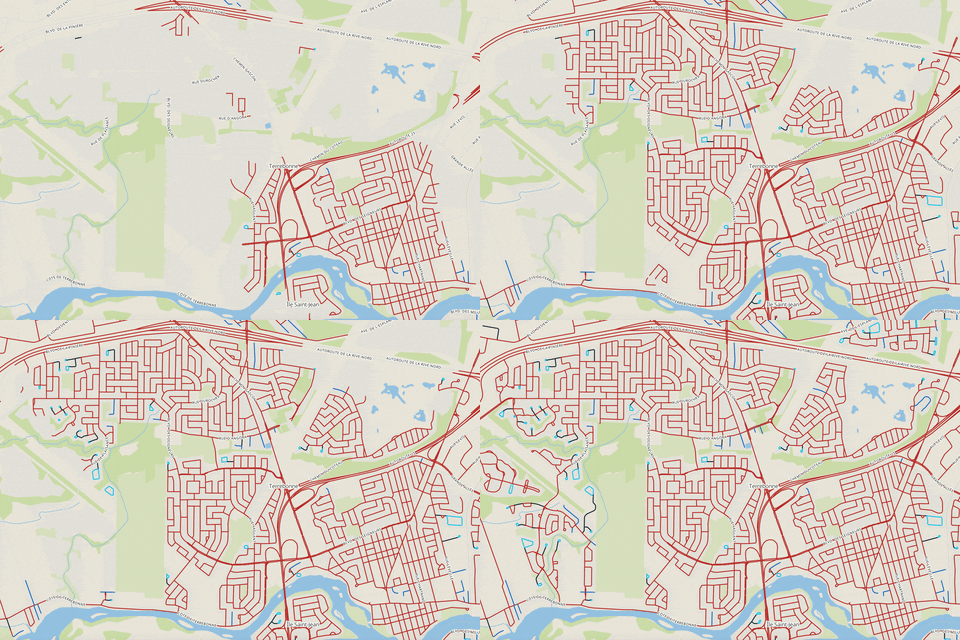
The rise of remote work and the expense of living near big cities is driving a mass movement of families to the so-called “exurbs:” the far outer regions of metropolitan areas.
In 2023, more people moved to Polk County, Florida, than any other US county, stated a recent report from the Census Bureau. Polk was once known mostly for its many citrus crops. Yet it saw an influx of roughly 30,000 new residents in 2023. Polk is now an “exurb,” or far-away suburb, of both Tampa and Orlando.
The trend of exurb growth is strong in the South. But it's not only happening there. Major cities like Chicago and Los Angeles have seen flight from their more inner regions to outer suburbs for a generation or more. These exurbs are now 50 or 60 miles from the nearest urban center.
For inner cities, the movement is troubling. Working families form the “backbone” of healthy communities, Biswa Das wrote in The Conversation. “Their presence positively affects city (projects), local economies, and overall quality of life,” Das wrote. Das is an associate professor of planning at Iowa State University.
Why are people moving to outer suburbs? Parents and others being able to work from home is one driving force. But Das cites other factors. The high cost of living and housing in cities are factors. So is a perceived decline of the quality of urban schools. Crime concerns are also a driving force. So are environmental and health factors.
Marisol Ortega lives in Haines City, Florida. She told The Associated Press that her commute to work in Orlando takes up to 90 minutes. “I love what I do, but then I love coming back home, and it’s more tranquil,” Ortega said.
Reflect: What factors do you think would influence someone’s decision to move to a new place?
Gif of urbanism map from GIPHY.
News brought to you by 
Read More News Stories Today!