
To Beat the Birds, A Butterfly Brings Illusory Wings
October 16, 2026

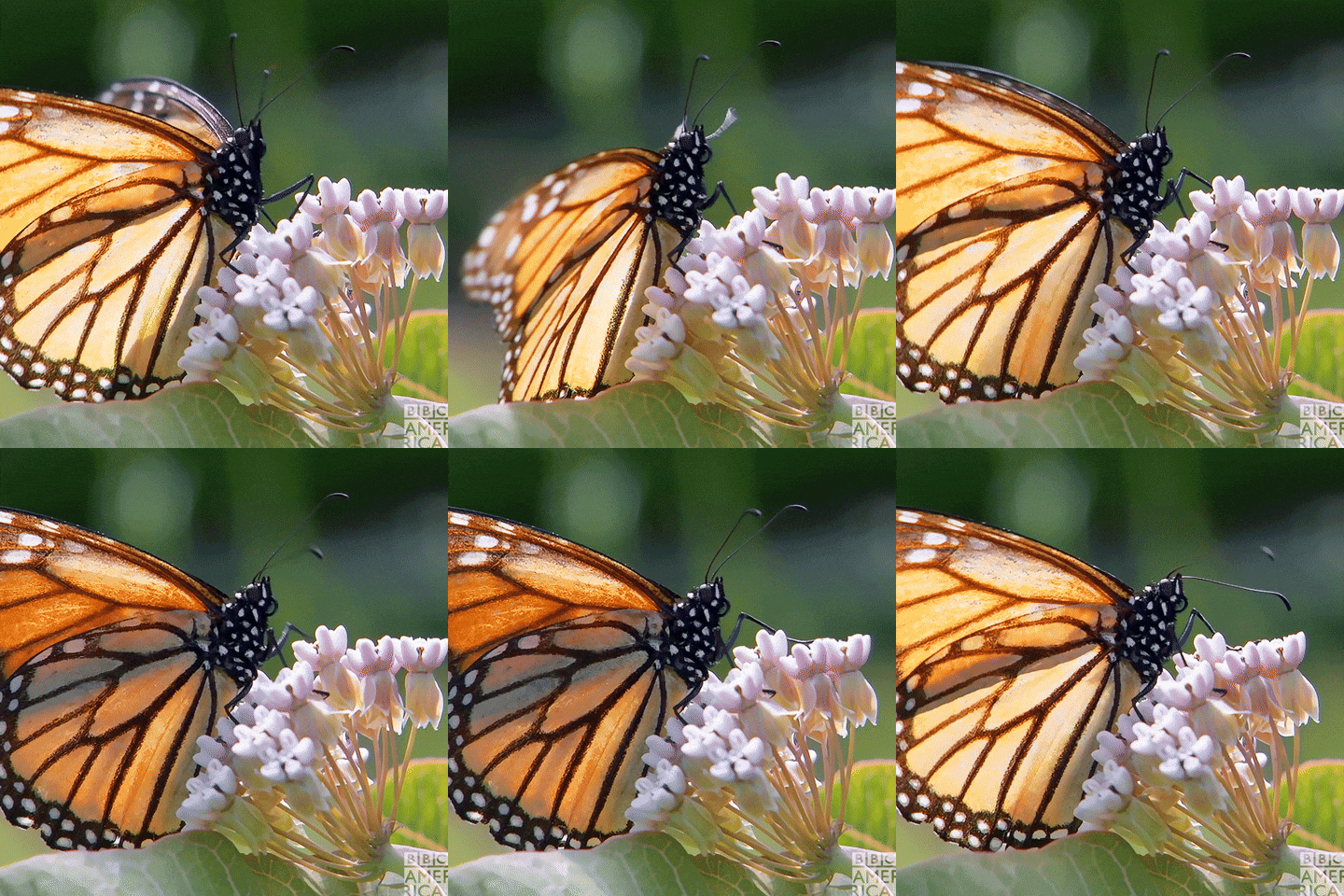
Butterflies should be predator-magnets. They fly slower than many of the birds and bugs that eat them. And they do so with bright wings that attract attention. Yet even the best hunters have trouble pinning them down. A new study reveals why. Butterflies are masters of illusion.
"The stripes and spots on many butterflies' wings interfere with the way visual systems try to guess the direction and speed of moving things," University of Exeter ecologist George Hancock said in a news release. The patterns give "false motion cues while hiding the butterfly's true heading," he added. Hancock is lead author of the study. The findings were published last month in the journal Nature.
Hancock’s team ran a number of tests on 400 butterflies. One test studied high-speed camera footage of butterfly flight at 1,000 frames per second. They also ran 50,000 simulations of pattern evolution and invited 100 volunteers to act as “predators.” Their task was to guess the flight path of the butterflies.
"It might seem strange that a butterfly would evolve to be so visible," Hancock said. "But our study reveals the wide variety of different patterns butterflies can use to create illusions that confuse predators."
To create their illusions, butterflies slap their wings together as they fly. Then they peel them apart in a unique way. All of it happens in a fraction of a second. The effect makes it look like a butterfly is moving downward, when it’s really going up. The trick even fooled the team’s computers at first. The team compared it to the swirling red-and-white stripes of a barber pole.
Hancock’s team thinks such tricks may be far more common in the wild than was once thought. And, they added, it opens a door for further research.
Reflect: How would you camouflage yourself if you wanted to blend into your favorite place?
Gif of butterfly from Giphy.
News brought to you by 
Read More News Stories Today!