Tick Bites Tick Up Again — Here's How to Protect Yourself
May 26, 2026

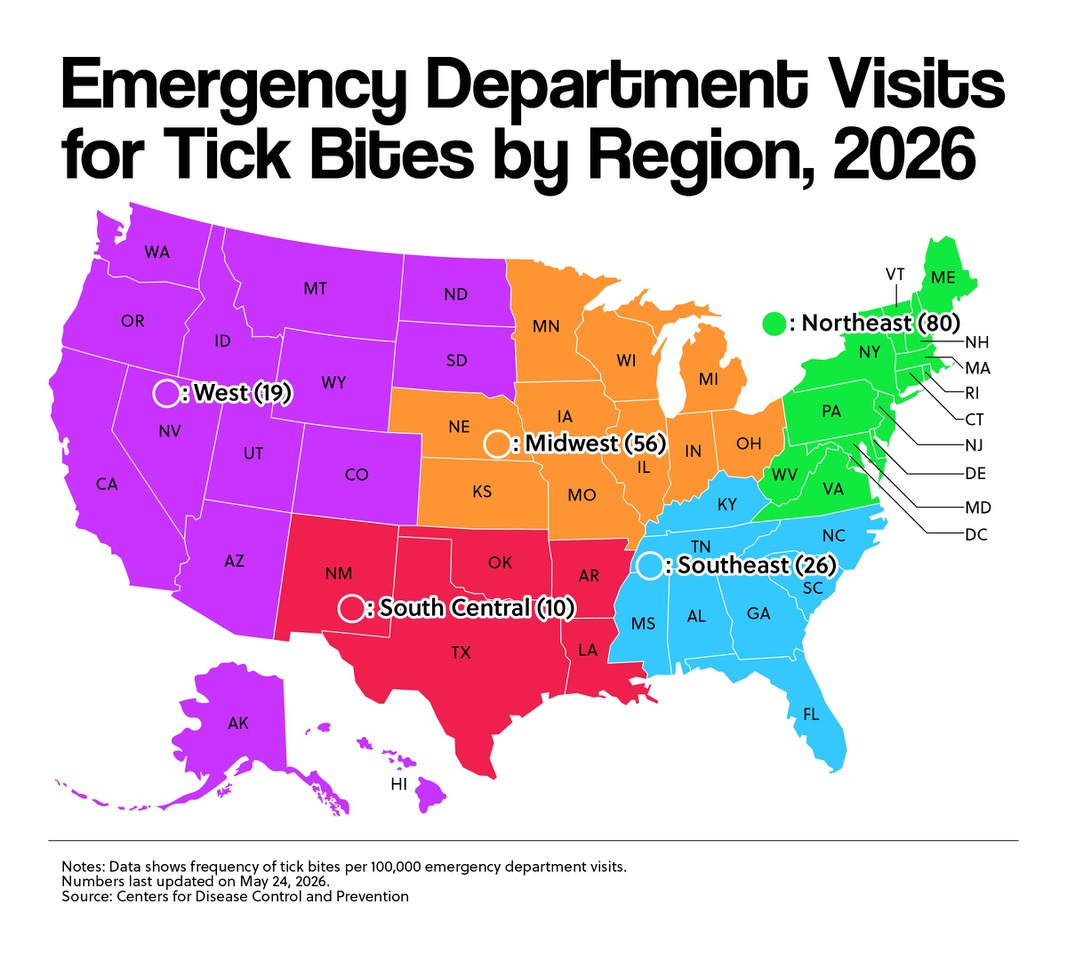
As the warmer days of summer arrive, you may be tempted to take a hike through the woods or play in the tall grasses of a field. If you do, experts say, be on the lookout for ticks.
Tick bites requiring emergency room visits in May are at their highest levels since 2017. That's according to the US Centers for Disease Control and Prevention (CDC). The tiny, eight-legged bloodsuckers love warm summers. As their numbers have multiplied in recent years, so too have humans’ chances of getting bit by them.
Ticks hang out on the ends of branches, in bushes, and on blades of grass. They hold up their legs to “quest” for a passing meal. Ticks transmit diseases via their saliva. The longer a tick remains lodged in someone’s skin, the greater the chance of passing an infection along.
Lyme disease and Rocky Mountain spotted fever are two of the most common tick-borne illnesses in the US. The tiny arachnids can spread others, too, though. If you are bitten, the CDC recommends quickly removing the tick with tweezers. Then you should monitor the bite area. If it reddens and swells, or you develop a fever, go see a doctor.
As usual, the best medicine is preventative. Experts suggest avoiding tall grasses, bushes, and low tree branches. You can wear bug sprays containing DEET if you are going in the woods. Afterwards, check your body and clothes for ticks. If you do spot a tick on your skin or in your hair, get it with those tweezers. You can also make use of the latest tick-tech. Phone apps are available to identify ticks and walk you through the removal process.
According to the CDC, an estimated 31 million people in the US are bitten by ticks each year.
Reflect: What are some ways people can stay safe while still enjoying time outdoors, and why is it important to pay attention to small risks?
News brought to you by 
Read More News Stories Today!