The First Moon Crew in a Half-Century Prepares for Lunar Flight
March 31, 2026

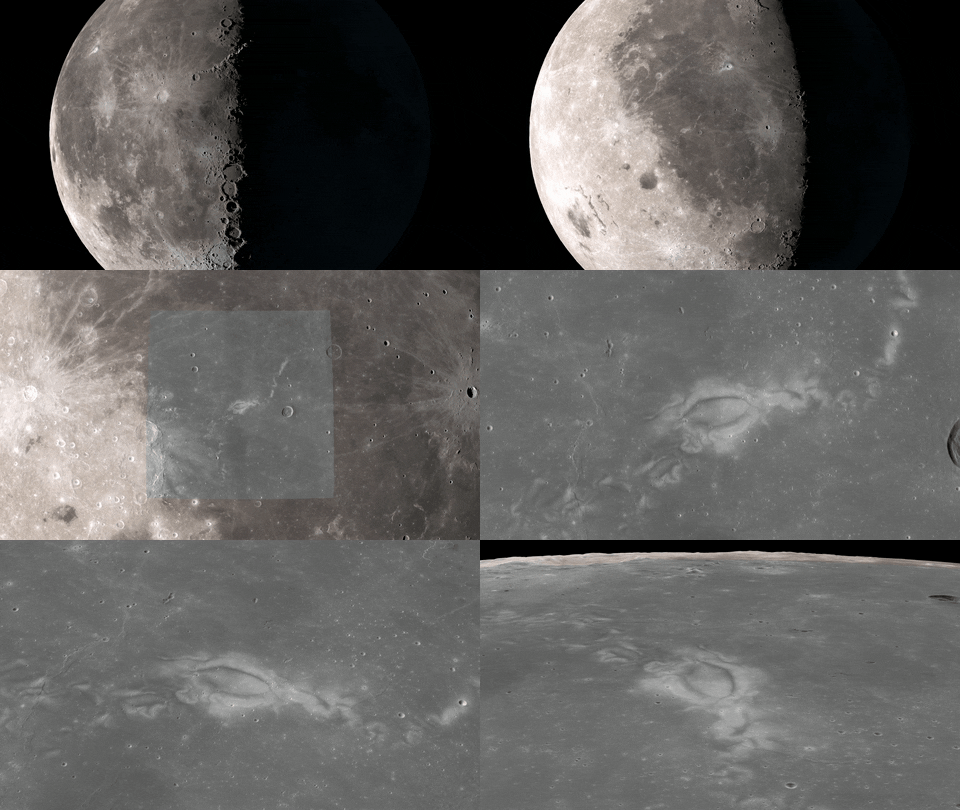
On December 21, 1968, astronauts Frank Borman, Jim Lovell, and Bill Anders launched the first space journey to orbit the moon. In April, if conditions are right, four others will attempt the same feat for the first time in more than 50 years.
This time, the first woman, first person of color, and first non-American are taking the ride. The mission is called Artemis. Artemis is named after a Greek goddess and twin sister of Apollo, after whom the first moon missions were named. The Artemis astronauts are:
Reid Wiseman: a US test pilot who joined NASA in 2009. He has flown to the International Space Station (ISS).
Victor Glover: also a test pilot and ISS veteran. He’s been with NASA since 2013. Glover is one of at least 18 Black astronauts in the program. He would be first to fly to the moon.
Christina Koch: an astronaut who has spent nearly a year on the ISS. She took part in the first all-female spacewalk.
Jeremy Hansen: a Canadian fighter pilot going on his first space mission. He will be the first non-American to leave low Earth orbit.
"We are leading the greatest adventure in human history," said NASA administrator Jared "Rook" Isaacman. "And it has only just begun."
Like Apollo 8, Artemis II is meant to be a dress rehearsal for a moon landing. Landing on the moon is expected sometime later this decade. Unlike the first NASA flight to orbit the moon, the Orion spacecraft is planning to circle it only once without entering lunar orbit. That one trip at 4,000 miles from the moon’s surface will take a full day. When Apollo 8 orbited the moon 10 times, each orbit at a distance of 60 miles from the surface took just two hours.
That means Artemis will fly farther from Earth than any other human mission.
Reflect: What does seeing new people break barriers in big achievements make you think about your own goals and what might be possible for you in the future?
Gif of the moon from Giphy courtesy of @nasagoddard.
News brought to you by 
Read More News Stories Today!