
The Environmental Pros and Conifers of Real and Fake Christmas Trees
December 11, 2024

Thought Question: What factors are most important to you when choosing something that could impact the environment?
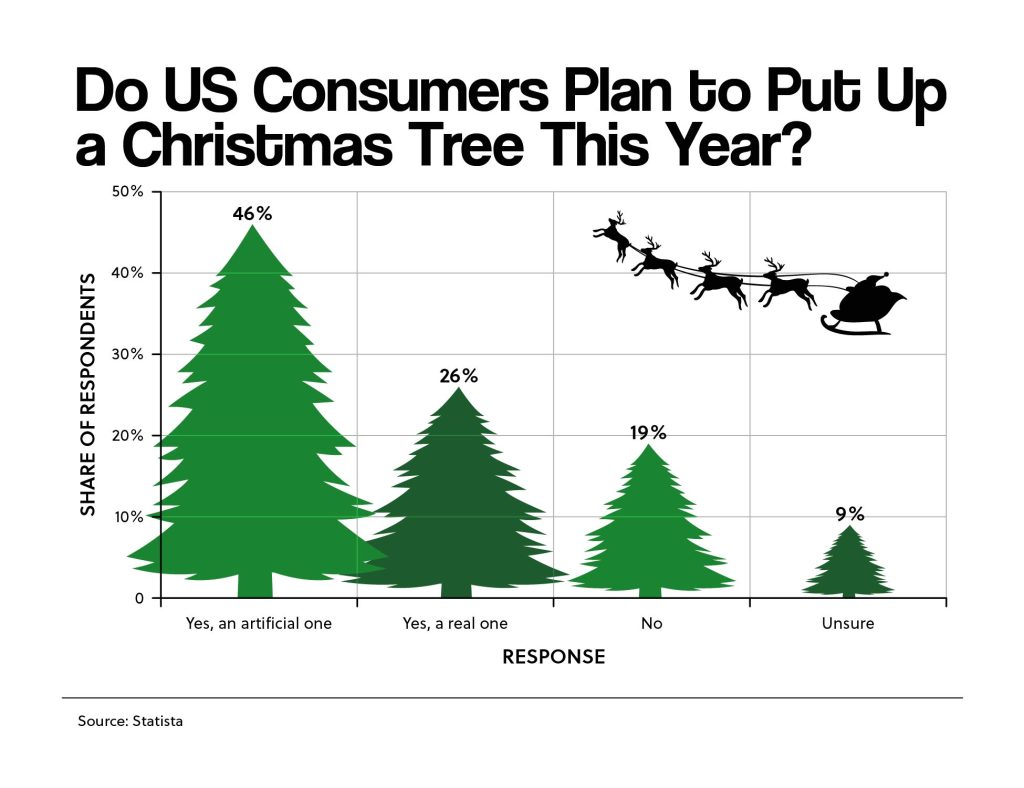
A November survey of US families done by the data analytics website Statista showed that 72% of US families intend to put up at least one Christmas tree this holiday season. Of those, 26% favored a real tree, while 46% said they’d opt for a fake tree this year. But which option is better for the environment?
For some, the choice is easy. One smells better. The other can last for many years. But if both get dropped in the garbage, each will end up in a landfill. The plastic tree will take hundreds of years to decompose. The natural one can break down into a methane-belching rot. Methane, experts say, is the second-worst greenhouse gas.
Supporters of fake trees say their environmental impact can be greatly reduced if they’re reused for many years. The impact of a fake tree reused over five years is less than five natural trees thrown away during the same time frame. That's according to the American Christmas Tree Association.
On the other hand, natural trees can help the environment after they have been displayed, experts say. That can be achieved by grinding them into mulch and storing their carbon in the ground. Or they can be used to line creek beds. Live trees can also be replanted, but they may not survive.
Real tree lovers say there's also an economic benefit to buying live trees. It supports tree farms and may push growers to plant more trees instead of selling their land to developers. Most fake trees are shipped from China on fossil-fuel powered ships.
News brought to you by 
Read More News Stories Today!