Summer Season Getting Longer, Arriving Faster, Study Finds
April 30, 2026

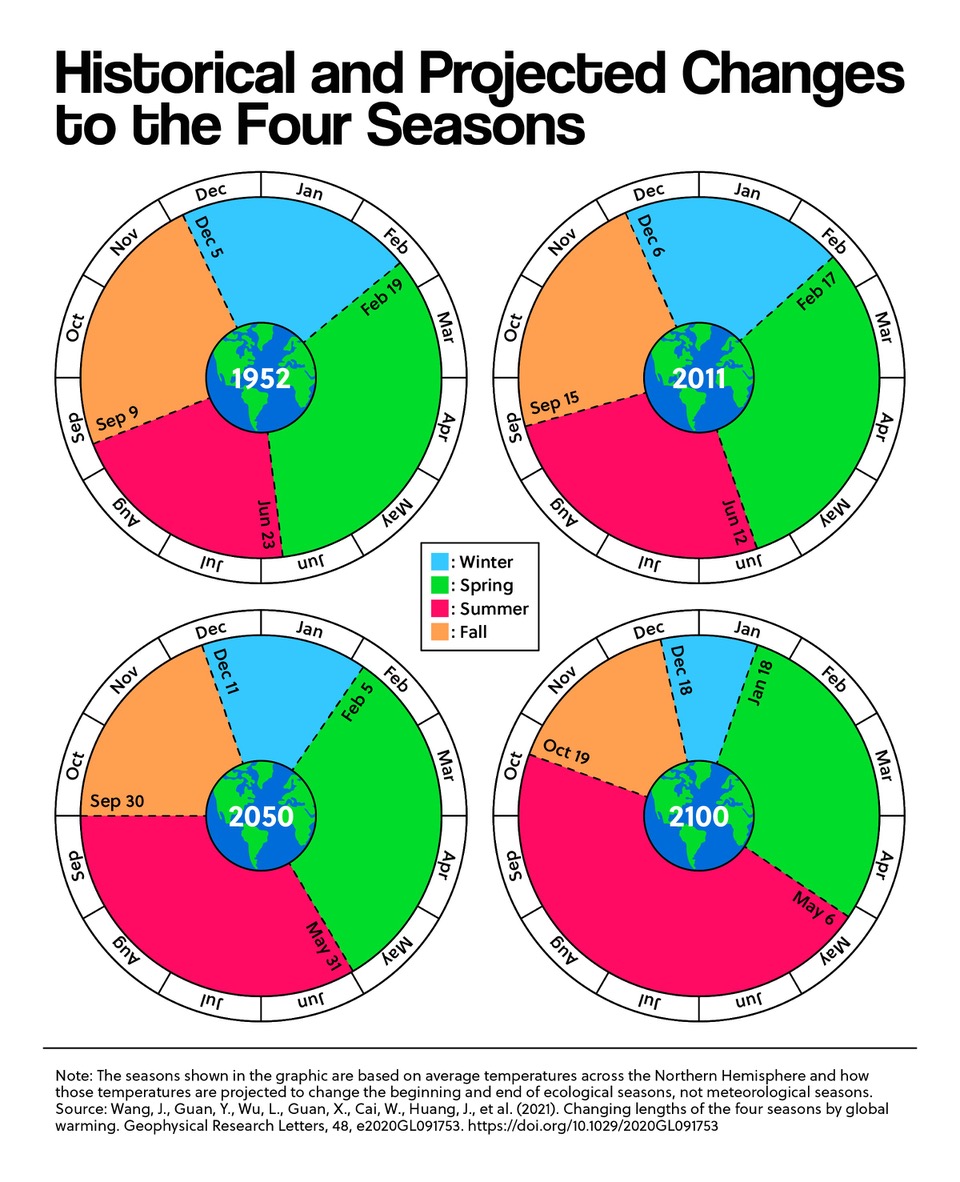
The summer season is starting sooner and lasting longer than it has in past decades in North America and Europe. That's thanks to rising temperatures caused by climate change, a new study has found.
Researchers looking at global weather found that summer is about 30 days longer than in the 1960s. Indeed, since 1990, inland regions have been adding more than six extra days of summer heat per decade.
Former research had found that summer is starting sooner in midaltitude regions of the globe. But the new study estimated that this rate is up to 57% faster than those calculations.
Researchers at the University of British Columbia in Canada performed the new study. They used data on global temps from 1961 through 2023. They also used 2024 data in order to look at the full Southern Hemisphere. Their findings were published in the journal Environmental Research Letters. The study covered land, coastlines, and open oceans. Prior research had focused almost solely on land temperatures. They compared temperatures from 1961 through 1990 to those from 1991 through 2023.
The study also looked at 10 urban regions. It found that Sydney, Australia gained an extra 15 days of summer. In the US, Minneapolis has added nine days. Tokyo, meanwhile, gained five.
The research found that rising summer heat is now growing nearly three times faster than the first baseline time span of 1961 to 1990. Summer is starting and ending more abruptly, too. The shift disrupts nature systems and human actions. That's because there's less time to adjust to changing seasons.
The shift from spring to summer, and from summer to fall, is getting sharper, the study's authors wrote. They noted this leaves less time for systems that rely on these shifts to adjust. They added that this could lead to additional flooding in the spring as snow accumulations melt faster.
Reflect: What changes in seasons or weather have stood out to you, and what impact have they had on your daily life?
News brought to you by 
Read More News Stories Today!