Study: Artificial Light is Making Earth Much Brighter
April 27, 2026

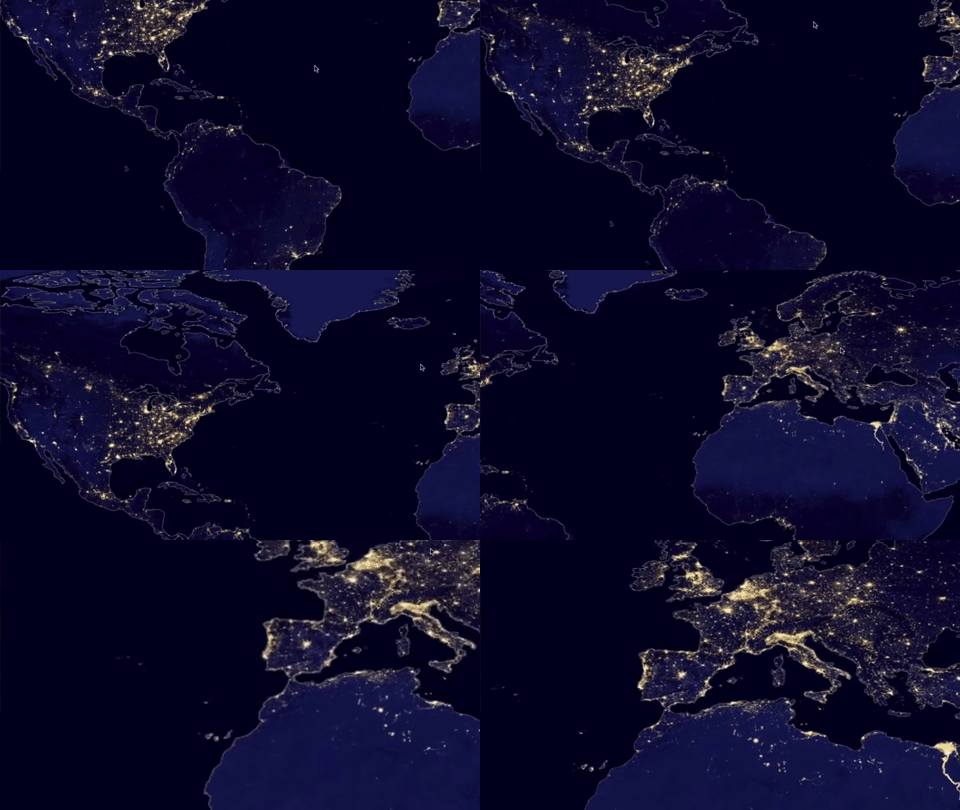
If aliens are real, and they zoom past our planet from time to time, they may notice it sparkles more than it used to. Artificial light is making the planet brighter, according to a new study.
Global light emissions on Earth grew faster than the planet’s population between 2014 and 2022. Emissions grew by 16% while the population grew by 10% in that same timeframe. That's according to an international research team. The team was led by Zhe Zhu. He's a scientist at the University of Connecticut. The team's findings were published in the journal Nature.
The team called the findings “a powerful testament to human presence."
Zhu’s team relied on 1.16 million satellite photos processed by NASA. It tracks human-produced light across the Earth. The planet has been getting brighter since natural night skies covered a pre-industrial Earth. From the International Space Station, Las Vegas looks like a bright, clearly outlined island of light. It stands out amid a huge, unlit desert. It is 115 times brighter than the natural night sky. That's according to a 2021 report. Houston is 76 times brighter.
Zhu’s study, though, showed that Earth’s increasing brightness is not true of all places. Some areas grew much brighter. But others dimmed. In the US, some areas saw light emission increases of 34%. Others declined by 18%. The West Coast grew brighter due to population growth. But parts of the East Coast and Midwest grew dimmer. The research team attributed this to people moving, declines in manufacturing, and the use of more energy-efficient lighting programs.
The study found that the most growth in night-time brightness occurred in Asia, especially in China and India.
Reflect: How might the everyday choices you make change the environment around you over time?
Gif of the Earth lighting up from Giphy courtesy of @nasa.
News brought to you by 
Read More News Stories Today!