Squeaky Sneakers? Here Comes The Science!
February 27, 2026

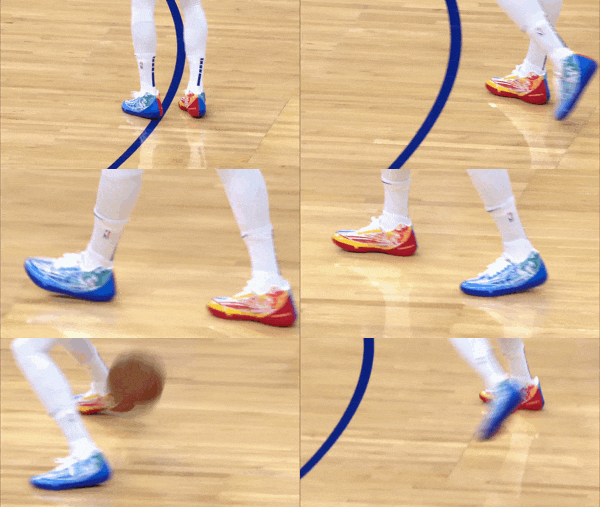
Attend an NBA game, and you’re likely to see a lot of intense basketball action. As the players leap, pivot, and sprint, you’ll also hear thousands of sneaker squeaks. That sound stood out to materials scientist Adel Djellouli.
“This squeaking sound when players are sliding on the floor is omnipresent,” Djellouli told The Associated Press (AP). “It’s always there, right?”
Djellouli works at Harvard University. He took his experience at an NBA game back to his lab. He wanted to know the source of that shrill sound. Was it the sneaker? Or maybe the basketball court itself? Perhaps some combination of the two?
To replicate the signature squeak, Djellouli and his team slid sneakers over glass plates thousands of times. They recorded the sound. They compared it to noises that came from a court. When they had a match, they used high-speed cameras to record what was happening to the glass and the shoe underneath an athlete’s footfall.
It turns out that sneakers may be more aptly named “squeakers.” The sound came from the sole of the shoe. It grips and slides along the floor in constant, tiny patterns of friction. Those little waves of motion force the sole to change shape thousands of times per second. That produces a sound of a certain frequency.
“That squeaking is basically your shoe rippling, or creating wrinkles that travel super fast. They repeat at a high frequency, and this is why you get that squeaky noise,” Djellouli told the AP. Scientists note that better understanding friction, even if it’s from a basketball shoe, can provide insight into a range of bigger questions. They can even help us understand the movement of the Earth’s tectonic plates.
Djellouli’s team published their findings in the journal Nature.
Reflect: If you could turn any everyday sound into a science experiment, what sound would you choose and why?
Gif of basketball sneakers from Giphy.
News brought to you by 
Read More News Stories Today!