Space Hummus? Scientists Grow World's First Moon Legume
March 26, 2026

As billionaires Elon Musk and Jeff Bezos spend lots of money to advance space exploration programs, scientists have set their sights on settling humans on celestial bodies beyond Earth. The closest and most logical choice is the moon. Among the questions we have to answer before we get there: What do people on the moon eat?
Our earliest answer is chickpeas.
Soil scientists at Texas A&M University have managed to get chickpeas to germinate and grow in simulated moon soil. They published their findings this month in the journal Scientific Reports. Growing food with moon soil is a process that has stumped scientists in the past. Moon dirt generally lacks nutrients. It stinks at capturing water. And it’s full of metals that are poisonous to plants.
"To have (arable) soil, you have to have two things: organic matter and microorganisms," Jess Atkin told ABC News. He's a co-author of the report. "And the moon doesn't have either of those things."
Getting their chickpeas to grow required mixing simulated moon dirt with a few key ingredients. The first was worm poop. The second was fungus. Yum, right?
The worm poop is a fertilizer. It supplies the necessary nutrients. Astronauts often use worms in space. That's because worms can eat waste and leftover food, transforming it into compost. The fungus grows through the soil, helping to hold it together. It also helps the soil retain water and absorb some of the harmful metals.
Atkin’s team still needs to test the chickpeas over several generations. They want to see how much metal the chickpeas absorb and if they’re edible. But if successful, the first dish enjoyed on the moon might just be a plate full of falafel.
Reflect: If you had to grow your own food in a place with limited resources, what creative ideas would you come up with to make it possible?
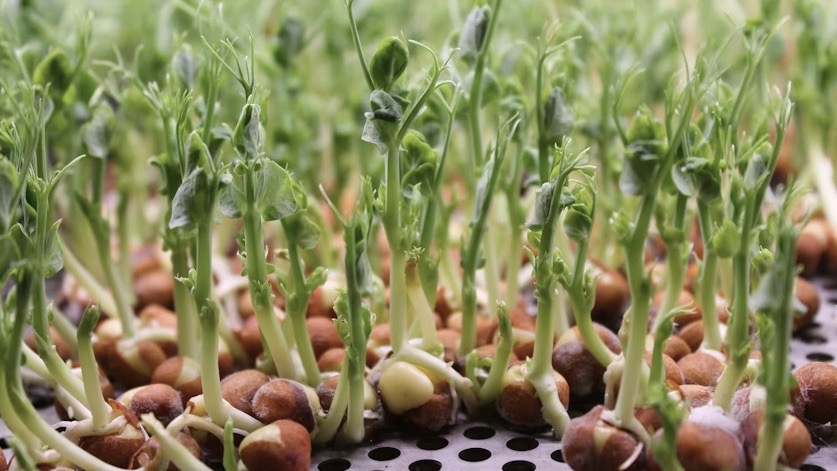
Photo of chickpea sprouts from Unsplash courtesy of Bori Balogh.
News brought to you by 
Read More News Stories Today!