Scientists: Massive Iceberg Arrives With Possible Gifts for Island Wildlife
March 12, 2025

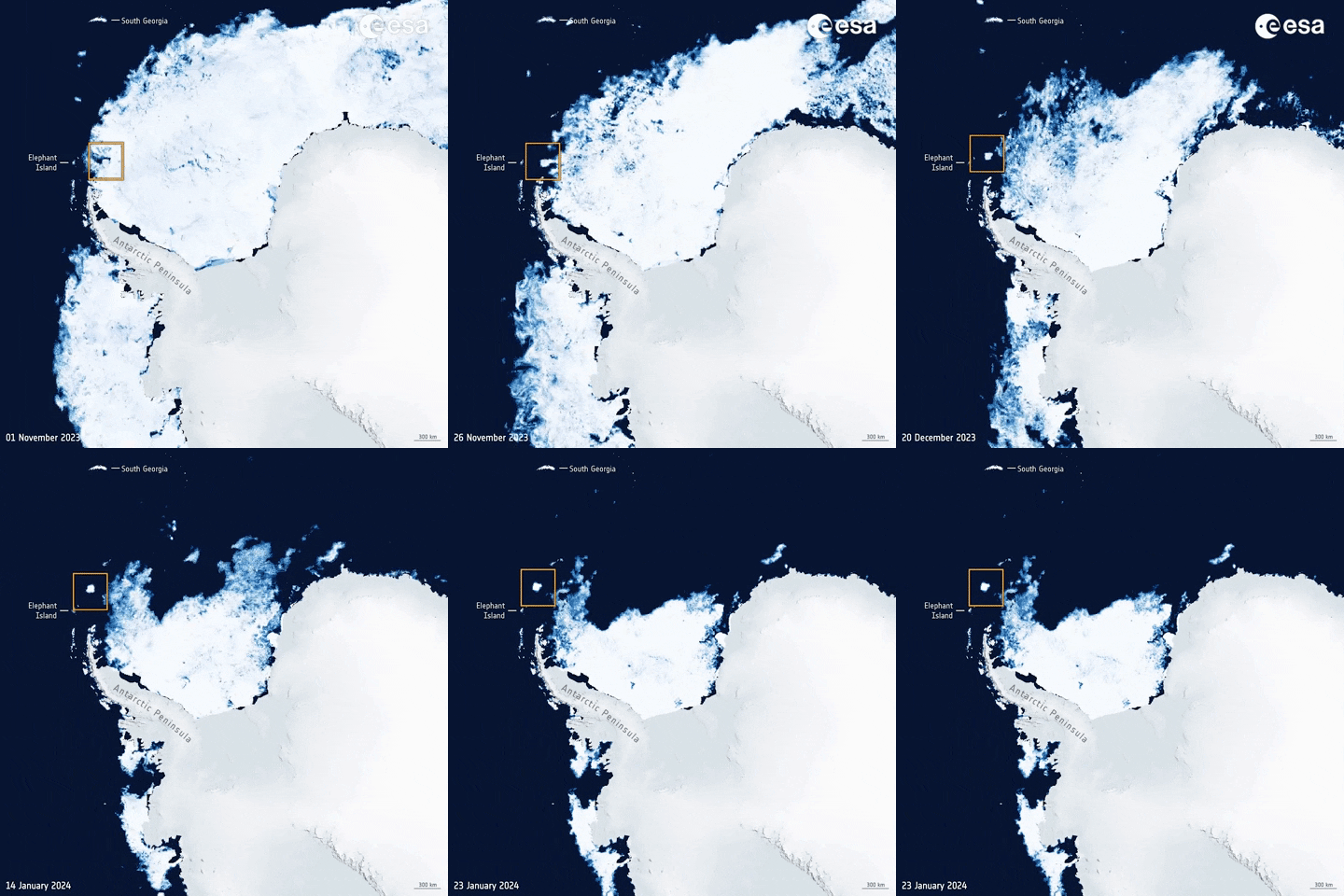
A rogue runaway iceberg roughly the size of Rhode Island has run aground near South Georgia Island. It dodged a crash with the thin strip of land east of Argentina. Instead of bringing disaster, it could be a gift, scientists say.
A23a is the world’s largest iceberg. It planted itself 45 miles off the island on March 1. It was far enough away to avoid interfering with the local penguins and seals as they feed their offspring, the British Antarctic Survey (BAS) said. And it could help the island's diverse fauna — at least for now.
“Nutrients stirred up by the grounding (of A23a) and from its melt may boost food availability for the whole regional ecosystem, including for charismatic penguins and seals," expert Andrew Meijers told The Guardian. Meijer's a BAS oceanographer.
Yet, the iceberg will keep melting over time in the warmer waters of the South Atlantic. If it breaks into smaller pieces? That could disrupt wildlife and commercial shipping, scientists say.
A23a had been grounded off Antarctica for 34 years. That's after calving from an ice shelf in 1986. It was an event not likely due to climate change. A23a started moving again in the Weddell Sea in 2020. It floated through "iceberg alley." Its speed was a “ripping” pace of 1.3 miles an hour, Mejiers told Sky News. The iceberg became stuck for a time again last year. This happened when it banked near the South Orkney Islands.
Mejiers, who has visited the iceberg, described it in a BAS statement as a "towering wall emerging from the ocean, stretching from horizon to horizon."
Reflect: If you could explore any natural wonder in the world, what would it be and why?
Gif A23a iceberg from GIPHY.
News brought to you by 
Read More News Stories Today!