Pollen to Pack a Punch in 2026 US 'Allergy Capitals'
March 25, 2026

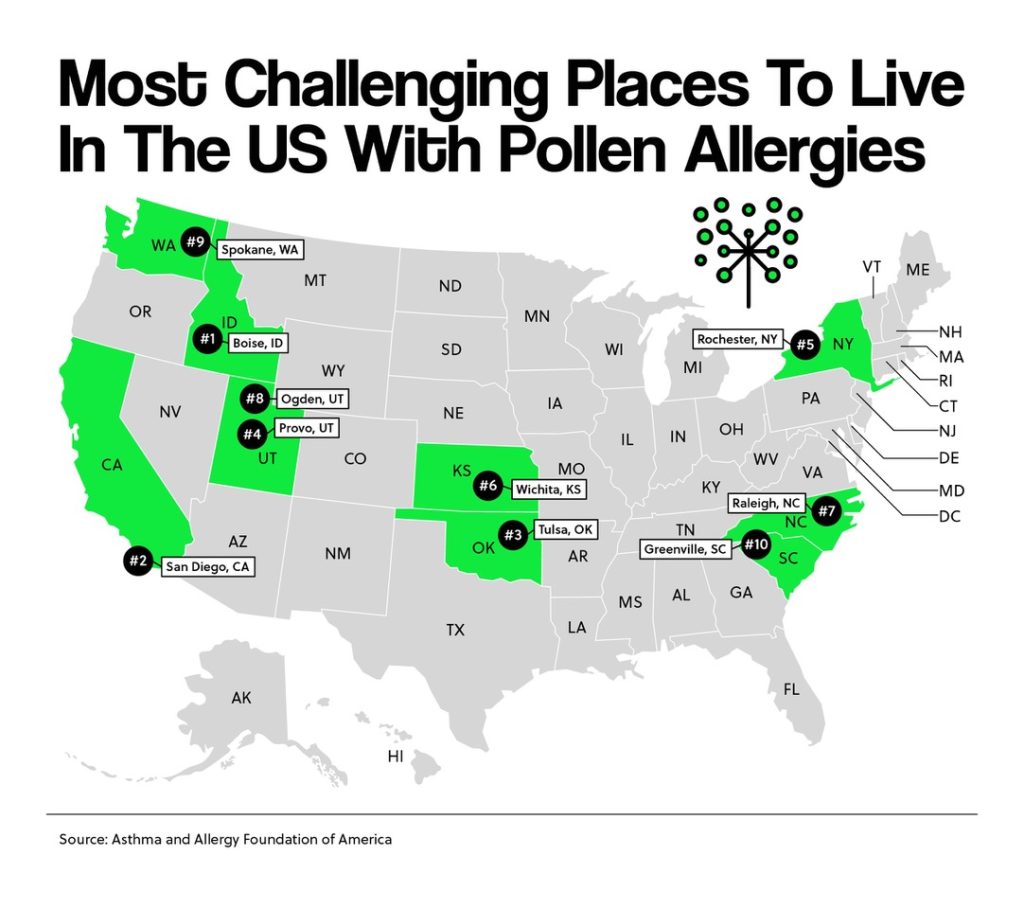
Baseball fans, outdoor lovers, and green thumbers welcomed the start of spring on March 20. But another group — those who suffer seasonal allergies — may have been dreading the day. And if they live in one of the Asthma and Allergy Foundation of America’s (AAFA) 10 worst cities for allergies in 2026? They might want to think about buying a good air filter (if not moving cities).
The AAFA’s yearly list of US cities plagued the most by pollen takes into account more than just the amount of pollen in the air. It also looks at how many antihistamines, or allergy meds, the average person in the city has to take to combat the sniffles. It even tracks data on the number of board-certified allergy doctors. The fewer doctors there are to help treat allergies, the worse a city scored.
Based on data from last year, the AAFA projects a shakeup this year. It's due largely to heat waves and storms spawned by climate change.
“The 2026 rankings show the direct impact of severe weather on pollen (count),” the AAFA’s report said. “Places that used to be better than average are … at the top of the list.”
The full list is as follows:
1 - Boise, ID
2 - San Diego, CA
3 - Tulsa, OK
4 - Provo, UT
5 - Rochester, NY
6 - Wichita, KS
7 - Raleigh, NC
8 - Ogden, UT
9 - Spokane, WA
10 - Greenville, SC
If people plagued by seasonal allergies in any of the above cities are looking for a sinus-saving vacation, they could book a trip to one of the three best towns on AAFA’s scale. Houston ranks first. New York City ranks second. San Antonio is third.
Reflect: In what ways do allergies or seasonal changes affect your daily life?
News brought to you by 
Read More News Stories Today!