
Monkeyflower Survived California Drought by Changing Its Genetics, Study Finds
March 31, 2026

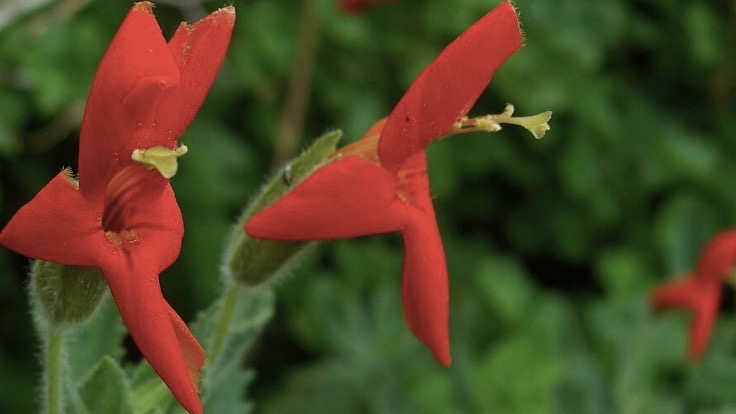
From 2000 to January of this year, California experienced its worst  drought in more than 1,200 years. Scientists say climate change is at least partly to blame. The megadrought killed more than 100 million trees in the state. Many populations of plants and flowers that typically are drought-resistant have been lost as well.
But one bright spot has now emerged: the scarlet monkeyflower found a way to survive.
A research team spent eight years studying this wildflower. Its scientific name is Mimulus cardinalis. The monkeyflower is an herb pollinated by hummingbirds. It can grow up to 3 feet tall and 3 feet wide. The team learned that it survived the drought by using a form of rapid evolution. That is, it quickly changed its genetics to adapt to getting less water. Experts said they had seen this happen in a lab. But this is the first time it’s been documented in the wild.
The research team tracked monkeyflower numbers in the wild and then sequenced the flowers’ genomes to reveal genetic shifts. The team first observed the scarlet monkeyflower numbers were in decline. But then, they "found evidence of a rapid evolution across the genome,” Daniel Anstett told CNN. He's an expert on plant science at Cornell University. Anstett's team then linked the changes in the flower's genes to its ability "to recover and to not go extinct."
Anstett is the lead author of the study on the findings. It was published earlier this month in the journal Science.
Experts call this “evolutionary rescue.” They view it as a hopeful sign that some wild plants may evolve swiftly enough to survive the impact of climate change.
Thought Question: If something in your daily life suddenly became much harder, what would you do to adjust and keep going?
Photo of the scarlet monkeyflower from Wikimedia Commons courtesy of Jason Hollinger.
News brought to you by 
Read More News Stories Today!