Magnitude 7.7 Earthquake Strikes Myanmar and Thailand; at least 1,600 dead
March 31, 2025

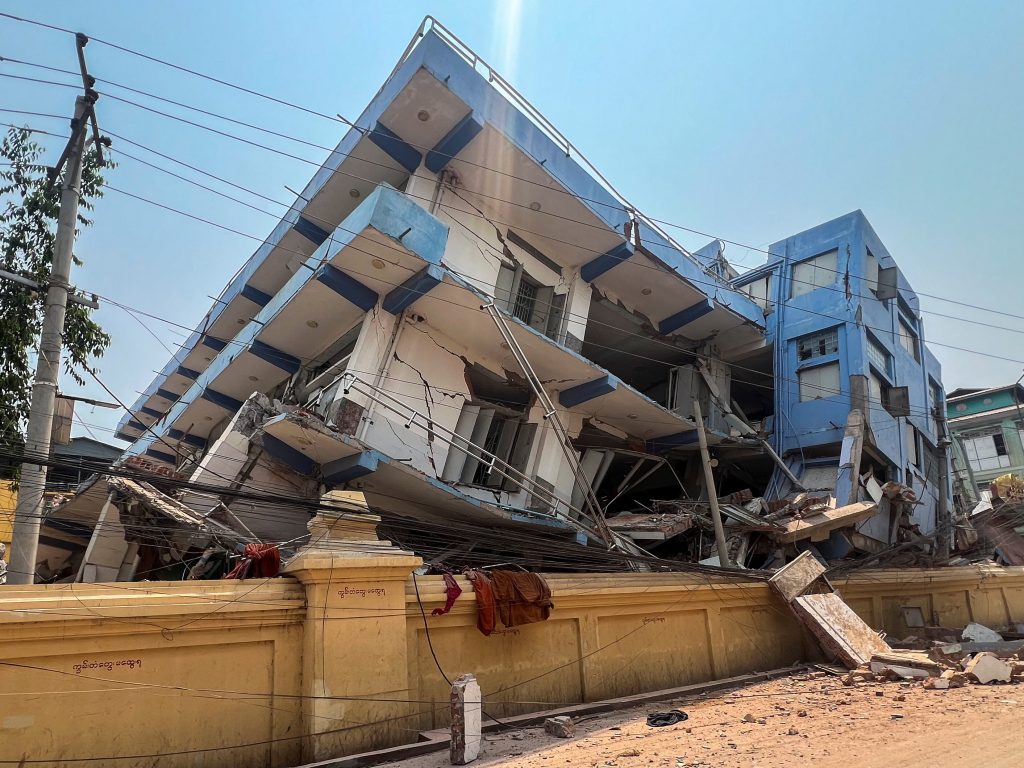
A powerful earthquake struck central Myanmar Friday afternoon. It toppled buildings, split apart streets, and started fires. At least 1,600 people have died in the disaster. Many people are still trapped in the rubble.
The quake slammed the area 10 miles from the town of Sagaing. It buried parts of nearby Mandalay, the Southeast Asian country’s second-largest city. Tremors were felt as far as China and Thailand. A building in Bangkok, Thailand’s capital, collapsed. At least 18 people were reported dead in the collapse. Dozens are still missing.
Aftershocks shook the region around Mandalay over the weekend, making rescue efforts more difficult. Adding to the challenge is Myanmar’s political strife. It is ruled by a military junta. It has been in power since a 2021 coup. The junta seized on the quake’s chaos to bomb rebel groups in affected towns.
Tom Andrews is a United Nations human rights envoy to Myanmar. He spoke out against the junta's attacks.
“Anyone who has influence on the military needs to step up the pressure and make it very clear that this is not acceptable,” Andrews told the BBC. “I’m calling upon the junta to just stop, stop any of its military operations.”
One of the forces that opposes the junta is the National Unity Government. It announced a two-week pause in its own operations. It invited foreign aid into the devastated region. Russia has already sent 120 workers. China pledged $13.8 million in aid. The US promised to send help as well.
The 7.7 magnitude quake was the strongest ever recorded in Myanmar. Earthquakes are measured on a 0-10 scale; a 7.7 is considered “major.”
Reflect: If you were drafting your government’s response plan for a major disaster, what actions would you prioritize?
Photo of earthquake destruction in Myanmar from Reuters.
News brought to you by 
Read More News Stories Today!