In Conservation Victory, 8 Once-Extinct Crested Ibises Fly to Freedom
June 10, 2026

Thought Question: Why do you think people work for years to protect endangered species?
Jacques Cousteau, the famous explorer, is widely credited with saying: “When we return wild animals to nature, we merely return them to what is already theirs, for (humans) cannot give wild animals freedom, they can only take it away.”
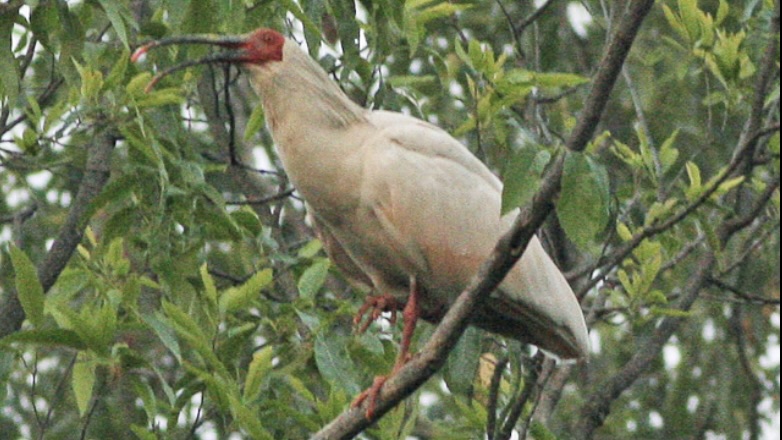
Such is the case for eight captive-born crested ibises. They were recently released on the Noto Peninsula in Japan. It's where the species was listed as extinct decades ago. In 1981, the species plunged to only seven of these long-beaked birds with colorful feathers. Habitat loss, hunting, and pesticide use caused the plunge. The birds have since bounced back to roughly 9,000 through captive breeding programs.
The birds’ release is widely seen as a win for conservation. It's also seen as a “symbol of postdisaster reconstruction,” said Crown Prince Akishino. The region was wrecked by a 2024 earthquake. It killed 732 people. It also damaged 200,000 buildings. The prince and his wife, Crown Princess Kiko, are both members of Japan’s ceremonial royal family. The two joined local elementary school children in releasing the birds at a May 31 event.
“I’m happy that our dream of seeing crested ibises fly in the sky over Noto has come true for the first time in about (50 years),” Ishikawa regional Governor Yoshiyuki Yamano told the crowd.
The crowd cheered as the birds took to the sky.
The birds were raised through a breeding program at Sado Island. It is 243 miles away. There is a conservation center on the island. On Sado, 10 more of these birds are being prepared for release.
Yoshio Muramato spent seven decades of his life trying to help save these birds. He is 101 years old. For him, the release was extremely gratifying.
“I feel refreshed,” he told The Japan Times. “I hope they will settle down in Noto.”
Photo of Japanese Crested Ibis from Wikimedia Commons.
News brought to you by 
Read More News Stories Today!