Headed to the Beach? What You Need to Know About Rip Currents
June 22, 2026

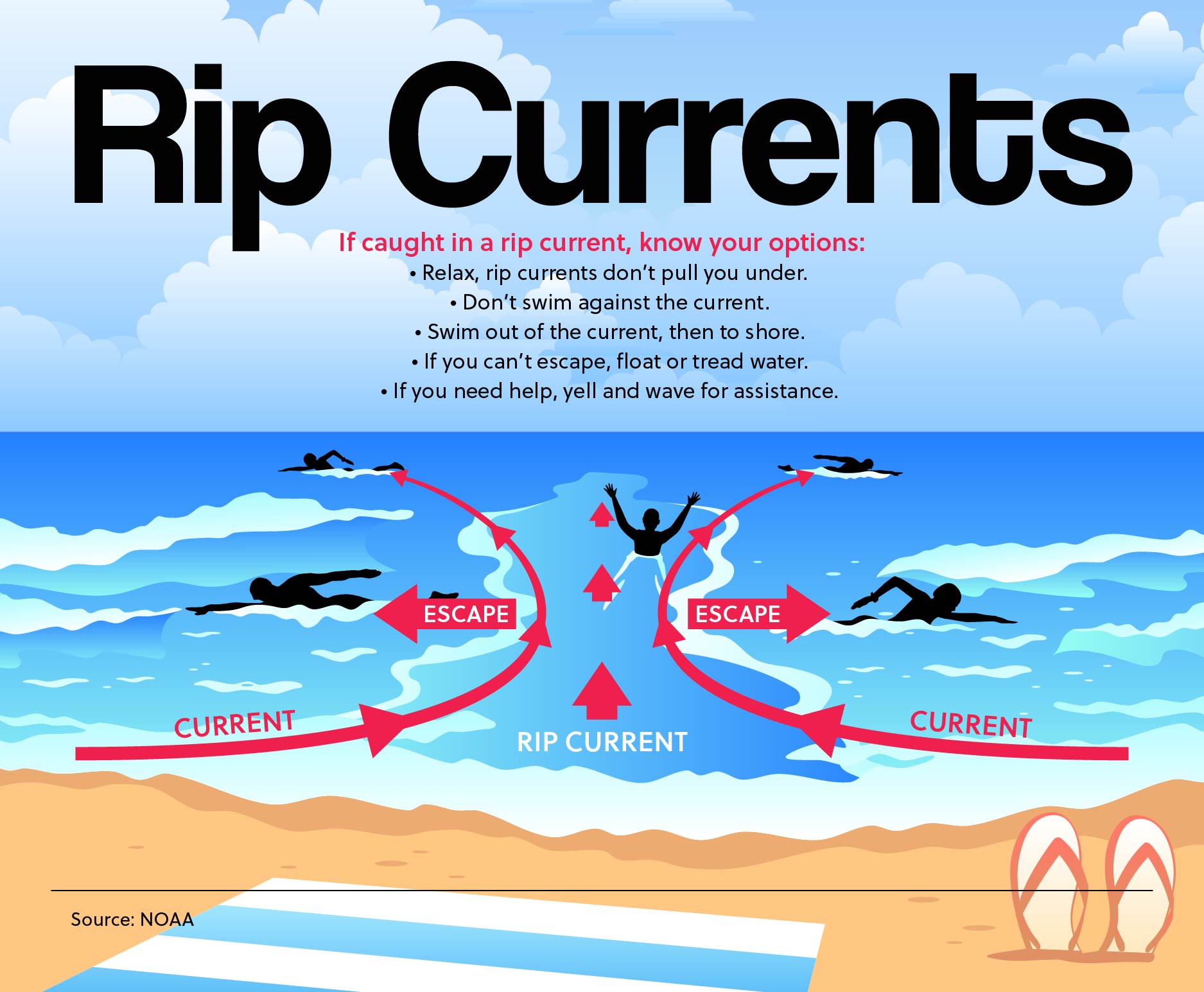
The quick thinking of a Louisiana man saved the lives of three swimmers this month. Jordan Matthew, 22, dove into the waters of Elmer’s Island Beach to save the two women and a boy. Because he knew how to navigate rip currents, he was able to guide them safely to shore.
"They thought they were going to die," Matthew told Nola.com.
Though the family was saved, fatal encounters with rip currents are not uncommon. That’s especially true during the summer swim season. At least 28 people have died in such surf drownings in the US already this year, according to the National Weather Service.
Rip currents are very strong, narrow flows of rapidly moving water that appear between breaking waves. They can quickly tug swimmers away from the shore at rates of eight feet per second. Even the best swimmers can get into trouble in rip currents.
“If you’re caught in one and you try to swim straight in, you’re not going to be able to,” Daniel Barnickel told The Associated Press (AP). Barnickel is with Palm Beach County Ocean Rescue.
Yet panicked swimmers often make that mistake. They try to swim against the current. But they become fatigued as they’re pushed further away from shore. Water safety experts advise swimmers who get caught in them to remain calm and try to swim parallel to the beach. Once out of the rip current, follow the waves into the shore, they say.
It’s possible to spot rip currents from the shore. Along with breaks in the waves, their surface can appear still, sometimes a darker color or foamy. The sight of foam or floating objects moving quickly away from the shore instead of towards it is an obvious sign of trouble.
Barnickel told the AP that beachgoers should “never swim alone. And always make sure that there’s an adult. And make sure that you don’t overestimate your abilities. Know your limits.”
Reflect: What are some important safety tips for enjoying activities in natural bodies of water like oceans or lakes?
News brought to you by 
Read More News Stories Today!