Finally, A Bit of Good News for Monarch Butterflies
March 27, 2026

The last fifty years have not been good for North America’s monarch butterflies. Environmental and human factors have caused their numbers to drop sharply. But experts say there’s still hope if one knows where to look.
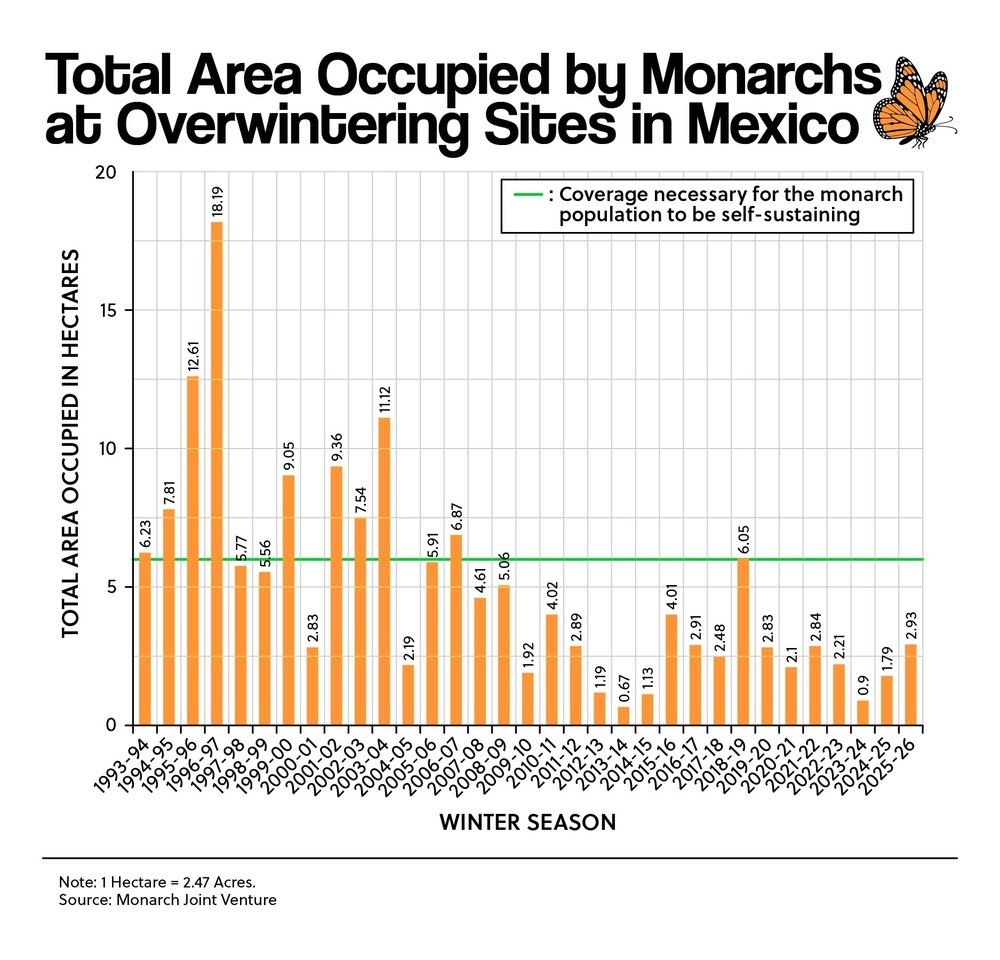
Insect experts who track the monarch’s yearly migrations from the US and Canada to Mexico have noted the steep decline in butterfly numbers. They do so by measuring the total acres of trees covered by monarchs in the forests of central Mexico. Monarchs migrate south in the fall. They all land upon the same patch of forest to survive winter in Mexico’s warmer climate.
Fifty years ago, one could expect to see a thick blanket of tens of millions of black-and-orange butterflies hanging from the branches of at least 21 full acres of trees. That number has dropped well below the size experts say is needed for sustaining the butterflies as a species. That figure is 15 acres. In 2024, there were only 2.2 acres’ worth of butterflies. In 2025, it was 4.4 acres. This winter, experts have counted 7.2 acres.
“We are in a period of relative stability," Karen Oberhauser told Yale Environment 360. She's a monarch expert. "The population has stopped declining."
Even with the upturn, experts have stressed the need for new laws to protect monarchs. Herbicide use in the 1990s killed lots of milkweed. Milkweed is a monarch caterpillar's only food source. The Biden administration proposed making the butterflies a protected species in 2024. President Trump delayed those plans indefinitely. Several environmental groups have sued to push the protections through. Those cases are ongoing.
Reflect: What do you think people can do to help protect animals or environments that are at risk?
News brought to you by 
Read More News Stories Today!