
Feb 28 'Planetary Parade' Features Six of Earth's Neighbors in Night Sky
February 27, 2026

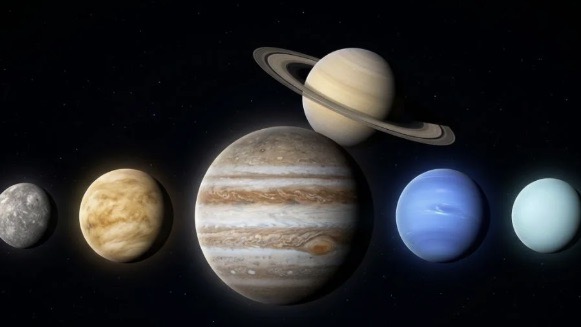
Skywatchers can enjoy a rare treat Saturday night. A "planetary parade" of six of Earth’s neighbors in the solar system will be visible all at once. It will take proper planning and a bit of luck to see it, though, experts say.
If the skies are clear enough, those with a western view that isn't blocked by objects will be able to see Jupiter, Mercury, Saturn, and Venus rising in a diagonal line on the horizon. They will appear between 30 minutes to an hour after sunset. Viewers will likely need a small telescope to see Neptune and Uranus. To see the dimmer planets, experts advise against looking for them near cities. The light pollution from cities can block the view.
Sara Mazrouei has a simple tip for telling the difference between a star and a planet in the night sky. “If it’s twinkling, it’s a star. If it is not twinkling, it’s a planet,” she told The Associated Press. Mazrouei is a scientist with Humber Polytechnic in Toronto.
Mercury, Venus, Neptune, and Saturn will appear soon after sunset. They will rise upward from the horizon’s lowest point in the west. Uranus will appear dimly. It may not be visible at all without the help of a telescope. It will come into view further south but higher in the sky. It will be just below the Pleiades (aka Seven Sisters) in the constellation Taurus. Jupiter is forecast to shine very brightly. It will be seen in the constellation Gemini.
Planetary alignments with at least five planets can happen as often as once a year. Alignments of all eight planets in the solar system are much rarer. The last one of those occurred on New Year’s Day in 1665. The next one is forecast to take place in the year 2492.
Reflect: How would seeing something rare in the sky make you feel, and what questions might it make you curious to learn more about?
Photo of an illustration of February 28 planetary parade from NASA.
News brought to you by 
Read More News Stories Today!