Cambodian Cave Mission Unveils New Snake, Gecko Species
April 24, 2026

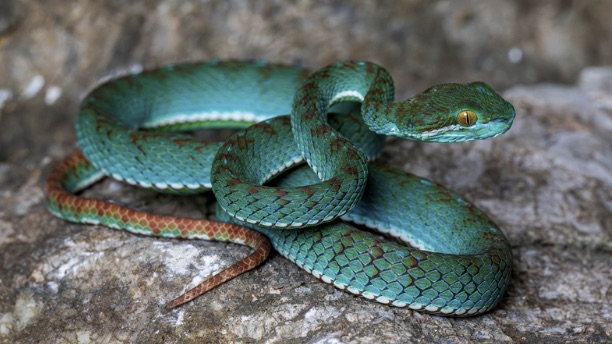
A turquoise pit viper and a leaf-toed gecko are among the new species discovered by a two-year expedition into Cambodia’s limestone cave systems.
Known as karsts, the cave-covered cliffs are isolated. That allows pockets of unique species to evolve and develop.
"Many of these creatures are, in effect, trapped," researchers with Fauna & Flora wrote in a statement. It's the global conservation group that sponsored the expedition. "Today, each of those miniature karst havens contains species that are found nowhere else in the world."
In total, the two-year expedition logged 11 new species. None are more vivid than the unnamed pit viper they found. Its blue scales and triangular head are “spectacular,” according to the research team. They noted the snake is likely “highly venomous.” The team also found a gecko on the other end of the color spectrum. It is a new species of sticky-toed lizard that blended in with cave walls with dull, brown scales.
The caves also held dozens of very rare species. They include bats, pangolins, and macaques. The caves host a wide range of insects as well. All of them are at risk, experts say. That's because the karsts are under threat by humans. They want to use the limestone for building.
Biologist Pablo Sinovas pointed out to CNN that if a species is found only in one area and that area is destroyed, it can lead to its extinction. He's a member of the Fauna & Flora team. He noted extinction can happen before a species has even been found or described. That's why he says the work to protect the karsts is so important. To do so, the Fauna & Flora team are working with the government.
Reflect: Why might it be important to protect places that most people may never see?
Photo of newly-discovered pit viper courtesy Phyroum Chourn / Fauna & Flora.
News brought to you by 
Read More News Stories Today!