Artemis II Crew Achieves Space Travel Distance Record During Lunar Flyby
April 7, 2026

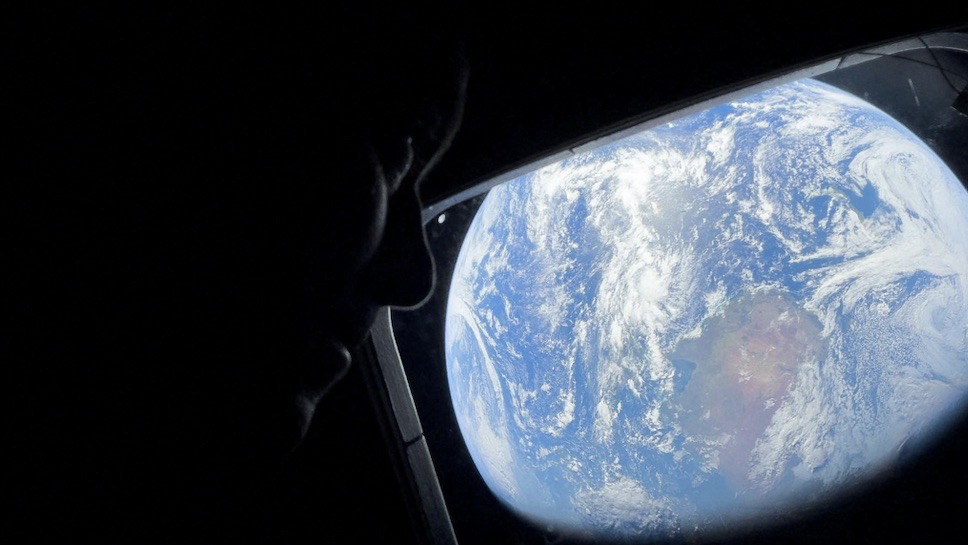
Last night, four astronauts boldly went where no human has gone before. They traveled deeper into space than any real-life star sailors ever had in the first trip around the  moon in more than 50 years.
The quartet includes the first Black American, Canadian, and woman to venture outside of Earth’s orbit. They traveled 252,756 miles away from it Monday. That's roughly 4,000 miles farther than the record set by the 1970 Apollo 13 mission. They achieved this feat shortly before 2:00pm. They then set a new record five hours later. It was during a 40-minute radio broadcast blackout as the spacecraft drifted out of reach of communication satellites.
“Welcome to my old neighborhood,” said the late Apollo 13 astronaut Jim Lovell. He spoke in a pre-recorded message sent from Earth. “It's a historic day and I know how busy you'll be, but don't forget to enjoy the view.” Lovell died in August.
The crew consists of Reid Wiseman, Victor Glover, Christina Koch, and Jeremy Hansen. They witnessed a sight seen by few other astronauts. They saw a rare solar eclipse from the so-called dark side of the moon. It's the side we on Earth can never see. That's because the moon is tidally locked to the planet. The Artemis crew orbited farther from the lunar surface than previous flights. So that gave them the widest views of the moon’s far side ever seen by humans. They even saw landforms and craters examined only by robots before. At this distance, Hansen said, the moon looks like a basketball held at arms length.
Prior to the flight, Koch said she and her shipmates weren't inclined to boast about the journey. But she said breaking the distance record is a significant marker in the history of space travel.
Reflect: What would it feel like to travel farther than anyone before you and see places no one has seen with their own eyes?
Photo of NASA astronaut and Artemis II Commander Reid Wiseman peering out the spacecraft's main cabin windows and looking back at Earth, from Reuters.
News brought to you by 
Read More News Stories Today!