A Year of Discovery: More than 1,100 New Species Identified in World's Oceans
June 15, 2026

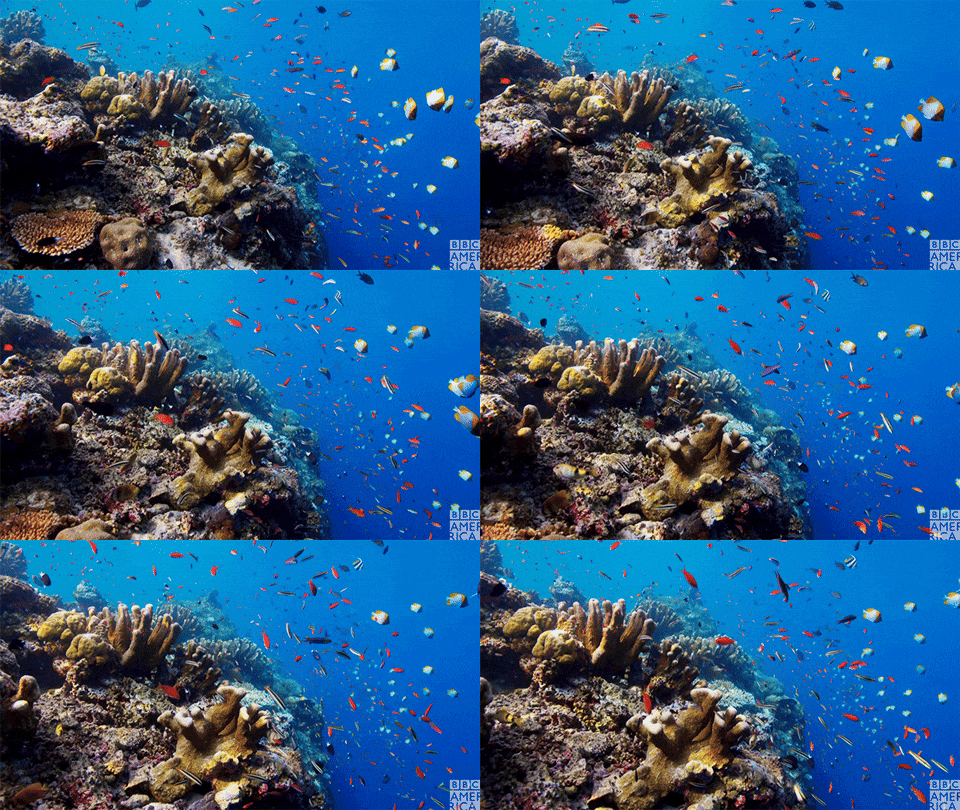
From ghost sharks to glass worms, death ball sponges to blue octopuses, the past year has been a banner one for marine biologists finding new species.
The Ocean Census Alliance (OCA) hosts a website. Scientists can record their findings there. In total, researchers named 1,121 new ocean species between April 2025 and March 2026. That's 54% more than the previous year.
“With many species at risk of disappearing before they are even documented, we are in a race against time ...,” Michelle Taylor said in a press release. Old technology couldn't keep up with the pace of exploration. That led to hundreds of species not being identified. “We are now breaking that bottleneck,” Taylor said. She is OCA’s head of science.
Biologists think we’ve only logged 10% of the species that live in Earth's waters. As we delve deeper, our chance of seeing new species improves. Perhaps of equal importance, scientists are taking a harder look at their own collections. More than half (728) of the new species were “found” after researchers took a second look at specimens stored in labs or museums. They corrected assumptions made by peers who lacked access to DNA testing, high-powered microscopes, and other modern tech.
The work of finding species, Ocean Census officials argue, is a vital step in keeping Earth’s fragile ecosystems alive and thriving.
“We spend billions searching for life on Mars or going to the dark side of the moon,” OCA director Oliver Steeds said in a prepared statement. Steeds pointed out that finding most life "on our own planet — in our own ocean — costs a fraction of that. The question is not whether we can afford to do this. It is whether we can afford not to.”
Reflect: What is something you think people should spend more time learning about or protecting, and why is it important to you?
GIF of ocean life courtesy @bbcearth on GIPHY.
News brought to you by 
Read More News Stories Today!