
3,524 Feet and Falling: Lake Powell Water Level Sinks Toward Crisis
July 22, 2026

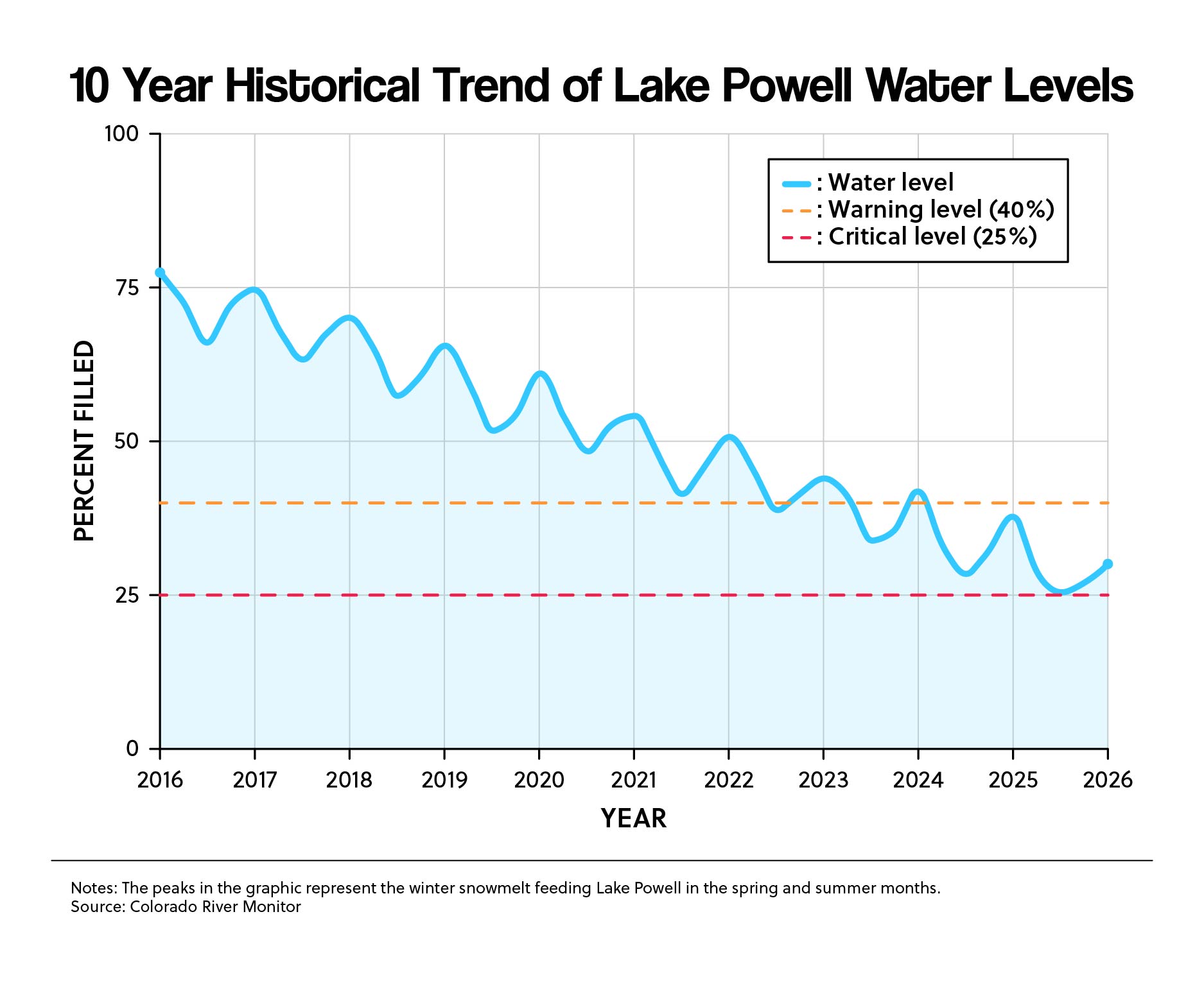
Over 40 million people in the western US rely on the Colorado River for water. Six million people depend on one of its major dams for power. But drought and overuse are draining the river to very low levels. It has left both groups at risk of losing access to vital resources.
At the center of water experts’ concerns is Lake Powell. It's a man-made reservoir. It was formed by flooding Glen Canyon via the Glen Canyon Dam. It's the second-largest water reserve in the US. At full levels, it holds 24,322,000 acre-feet of water. That's enough to fill the same number of eight-lane swimming pools. To keep its level up, the lake needs runoff from winter snows in the mountains. But record heat waves and a prolonged drought left the Colorado River with record low snowpack this year. Right now, the reservoir stands at just 6.37 million acre-feet.
“In the 21st century, the ultimate cause of the problem is declining runoff,” Jack Schmidt told The Guardian. “There’s less water in the system. It’s caused by a warming climate, period.” Schmidt is director of Utah State University’s Center for Colorado River Studies.
To produce power, the hydroelectric plant at the Glen Canyon Dam needs enough water to keep Lake Powell’s surface at 3,490 feet above sea level. At this time, it stands at only 3,524 feet. Experts predict that it will reach so-called “dead pool” status by March. If this happens, they warn, affected regions will need to make hard choices.
“We have control over how bad it gets,” water policy expert Sarah Porter told The Guardian. “But the only thing we can do to keep it from getting bad is to take less water out.”
Reflect: When a problem feels bigger than anything you can personally fix, how do you decide what's still worth doing on your end?
News brought to you by 
Read More News Stories Today!