Why Wind Power Ships May Be the Future of Transportation
Provided by: Undecided with Matt Ferrell|Published on: May 23, 2022|Last updated: July 16, 2026
Grades: 9, 10, 11, 12, AP
Type: Videos
Subjects: Physics, Economics, History, Engineering
Authors: Undecided with Matt Ferrell
Location: Earth

This resource has been reviewed by SubjectToClimate's climate scientists and verified for scientific accuracy and up-to-date information. Learn about our review process →
This resource has been reviewed by SubjectToClimate's climate scientists and verified for scientific accuracy and up-to-date information. Learn about our review process →
Synopsis
- In this video, host Matt Ferrell examines the potential for wind power ships to decarbonize shipping.
- Students will learn about the potential of wind propulsion technology for reducing carbon emissions for shipping, such as the use of rotor sails and wingsails.
Teaching Materials
Positives
- This video is a great addition to any physics or engineering class to teach about the real-life applications of Newton's third law and renewable energy technologies.
- The video describes some exciting and innovative new technologies for wind power that are currently in development.
- The video description provides a link to the full transcript and sources.
Additional Prerequisites
- The video may begin with an ad.
- There are two ads in the video. They occur from 5:15 to 6:29, and from 12:33 to 13:03.
- This resource discusses some fairly complex topics and uses advanced vocabulary, including decarbonizing and neutralizing carbon emissions, the Magnus effect (a fluid dynamics principle), biofuels, and lift, drag, and thrust forces.
Differentiation
- Science or engineering classes could use this video as part of a research project about types of renewable energies.
- Physics classes could use the video to discuss applications of the concepts of thrust and drag.
- History or economics classes could focus on the part of the video that examines the history of the shipping industry and how it has changed based on resource availability and globalization.
- Other related resources include this course about clean energy sources, this lesson in which students can build their own wind turbine, and this game about wind patterns.
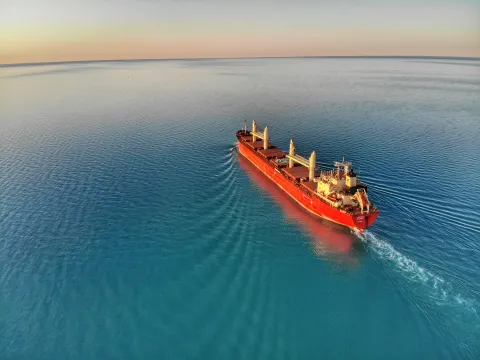
This resource is a 13-minute video that looks at the potential, and current status, of wind-powered boats that can be used for shipping materials around the globe. While wind power was the only option for sailing hundreds of years ago, fossil-fuel power has become the predominant means of shipping. New technologies, including rotor and wingsail technologies, are currently being tested and have the potential to reduce greenhouse gas and other emissions from the shipping industry. This is a technology-and prototype-oriented resource and is recommended for teaching.
Teaching Tips
Standards
Resource Type and Format
Scientist Reviewed
This resource has been reviewed by SubjectToClimate's climate scientists and verified for scientific accuracy and up-to-date information. Our review process ensures that every resource in our library reflects the current state of climate science.
Learn about our review process →