Why Beef Is the Worst Food for the Climate
Provided by: Vox|Published on: April 27, 2021|Last updated: July 16, 2026
Grades: 6, 7, 8, 9, 10, 11, 12
Type: Videos
Subjects: Earth and Space Sciences
Authors: Vox
Location: Earth
This resource has been reviewed by SubjectToClimate's climate scientists and verified for scientific accuracy and up-to-date information. Learn about our review process →
This resource has been reviewed by SubjectToClimate's climate scientists and verified for scientific accuracy and up-to-date information. Learn about our review process →
Synopsis
- This short video discusses greenhouse gas emissions related to common foods in the human diet, explaining why some foods have a greater climate impact than others.
- It explains how land use changes, enteric fermentation, farming processes, and distribution can all lead to greenhouse gas emissions.
- The video leads the viewer to consider how changing their food choices could help reduce emissions.
Teaching Materials
Positives
- This video uses a simple bar graph to help students visually compare the emissions associated with different foods.
- This video is a great way to introduce how consumer choice can influence climate change.
Additional Prerequisites
- Students should be able to read bar graphs.
- Students should already be familiar with the greenhouse effect, types of greenhouse gases, their differing capacity to trap heat, and sources of these emissions.
Differentiation
- Teachers can pause the video to check that students understand how each bar of the graph is broken up into different parts (land use changes, farming process, distribution, and animal feed). Classes can discuss ways that food products differ in their proportion of each of the categories.
- Teachers may need to pause the video to further clarify the concept of enteric fermentation.
- Students can create a visual representation of the explanation for why beef is one of the worst foods for greenhouse gas emissions.
- For further engagement, students can research the greenhouse gas emissions of their favorite foods using the Environmental Impacts of Food Data Explorer.
- Cross-curricular connections can be made with health classes by having students identify foods that are both good for your body and the climate.
- Additional resources that may be helpful include the and video How to Change your Diet to Fight Climate Change and the lesson The Carbon Footprint of Food.
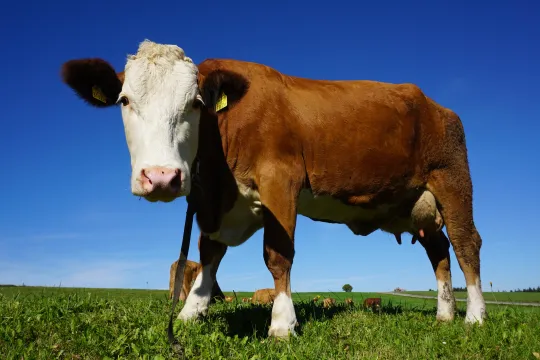
It is an objective fact that the production of beef is harmful to the climate. This Vox video explores how this is true and why there is such a disparity between carbon emissions for beef production and other forms of food. This resource is recommended for teaching.
Teaching Tips
Standards
Resource Type and Format
Scientist Reviewed
This resource has been reviewed by SubjectToClimate's climate scientists and verified for scientific accuracy and up-to-date information. Our review process ensures that every resource in our library reflects the current state of climate science.
Learn about our review process →