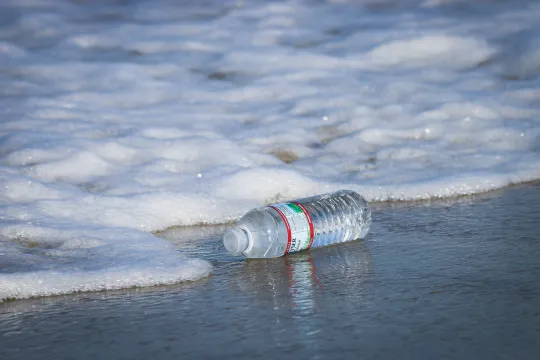
Why 99% of Ocean Plastic Pollution is "Missing"
Provided by: Vox|Published on: April 27, 2021|Last updated: July 16, 2026
Grades: 6, 7, 8, 9, 10, 11, 12
Type: Videos
Subjects: Science
Authors: Vox
Location: Earth
This resource has been reviewed by SubjectToClimate's climate scientists and verified for scientific accuracy and up-to-date information. Learn about our review process →
This resource has been reviewed by SubjectToClimate's climate scientists and verified for scientific accuracy and up-to-date information. Learn about our review process →
Synopsis
- This video from Vox describes the reservoirs of plastic in the ocean: garbage patches, coastlines, seafloor microplastics, and seafloor macroplastics.
- Viewers are left with actions they can take to address the global oceanic plastic problem such as beach clean-ups, recycling and reducing the use of plastic.
Teaching Materials
Positives
- This video uncovers an enormous environmental challenge that is not always visibly apparent to individuals, especially those who live far from coastlines.
- The video provides nice graphs and images to help students understand the marine plastic debris problem.
- Scientific methods for measuring ocean plastic are described, and solutions to mitigate plastic pollution are discussed.
Prerequisites
- Students should be familiar with the concepts of macro- and micro- to understand the plastic pollution issue.
- Students should be reminded that plastic production and use is a recent phenomenon of the past century.
Differentiation & Implementation
- Even if students do not live near a coastline, they can consider how their plastic may end up in the ocean. Having students complete a plastic use audit can be helpful for them to understand their individual impact.
- Consider having students make predictions before watching the video about where and in what form oceanic plastic is found.
- Students can also explore the resource, Why We Need to Stop Plastic Pollution in Our Oceans for Good.
This resource is a 9-minute video that examines the fate of plastic pollution in our oceans. The resource examines the types of pollution found in the Pacific Ocean Garbage Patch and looks at differences between microplastic and macroplastic pollution. The resource concludes with some actions we all can take to reduce plastic pollution. This resource is recommended for teaching.
Teaching Tips
Standards
Resource Type and Format
Scientist Reviewed
This resource has been reviewed by SubjectToClimate's climate scientists and verified for scientific accuracy and up-to-date information. Our review process ensures that every resource in our library reflects the current state of climate science.
Learn about our review process →