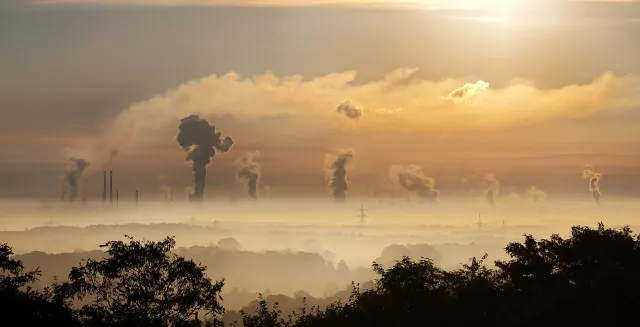
What's in the Air You Breathe?
Provided by: TED-Ed|Published on: June 21, 2022|Last updated: July 16, 2026
Grades: 6, 7, 8, 9, 10, 11, 12
Type: Articles/Websites
Subjects: Chemistry, Earth and Space Sciences, Health
Authors: Amy Hrdina, Jesse Kroll
Location: Earth
This resource has been reviewed by SubjectToClimate's climate scientists and verified for scientific accuracy and up-to-date information. Learn about our review process →
This resource has been reviewed by SubjectToClimate's climate scientists and verified for scientific accuracy and up-to-date information. Learn about our review process →
Synopsis
- This video describes molecules and compounds found in the air, both naturally occurring and toxic manufactured pollutants.
- Students will learn about the difference between primary and secondary pollutants, where they come from, and how they are formed.
- The resource also includes comprehension questions and links to additional resources.
Teaching Materials
Positives
- This animated video explains somewhat complex concepts with easy-to-understand visuals, making the resource appropriate for a wide range of audiences.
- The interactive quiz helps students check their understanding and receive immediate feedback.
- The Dig Deeper section includes additional resources and links, including a map showing real-time air quality in locations around the world and a link to another TED-Ed lesson about the science of smog.
Additional Prerequisites
- For students to participate in the quiz in the Think section, they must enter their names (their responses are shared with TED-Ed). This is only allowed for students who are 13 years of age or older.
Differentiation
- Chemistry classes could take this lesson further by learning more about the specific chemical reactions that take place in the atmosphere to produce secondary pollutants, including sulfur oxides that react to become sulfates and eventually, sulfurous smog.
- The Discuss section offers a guided discussion question that could be used for a small group or whole-class discussion.
- Additional resources on this topic include this video about reducing air pollutants, this experiment on the level of ozone in the air, and this lesson about air pollution in California.
This video resource breaks down what exactly is in the air that we breathe. This resource is recommended for teaching.
Teaching Tips
Standards
Resource Type and Format
Scientist Reviewed
This resource has been reviewed by SubjectToClimate's climate scientists and verified for scientific accuracy and up-to-date information. Our review process ensures that every resource in our library reflects the current state of climate science.
Learn about our review process →