What Happens When Biodegradable Bags Meet Microbes
Provided by: Tinkercast|Published on: May 14, 2026|Last updated: July 16, 2026
Grades: 5, 6
Type: Podcasts
Subjects: Science
Authors: Tinkercast, Wow in the World
Location: Earth
This resource has been reviewed by SubjectToClimate's climate scientists and verified for scientific accuracy and up-to-date information. Learn about our review process →
This resource has been reviewed by SubjectToClimate's climate scientists and verified for scientific accuracy and up-to-date information. Learn about our review process →
Synopsis
- In this 21-minute podcast episode, characters Guy and Mindy talk about the invention of biodegradable plastic bags.
- Students will learn how microbes break down these bags and the importance of reducing the use of single-use plastic.
- The resource also includes graphic organizers for students, a guided experiment comparing how paper and plastic break down, and resources for students to create their own experiment and design challenge.
Teaching Materials
Positives
- Students will love the goofy characters in the podcast episode.
- Students will also love hearing kids share cool facts at the end of the show.
Prerequisites
- The main part of the episode ends at about 15 minutes, with the remainder of the episode reserved for audio recordings of listeners sharing fun facts.
- The introduction of this episode gives the impression that reusing plastic bags is less sustainable than purchasing a reusable one at the store. This is not necessarily the case, and teachers may want to explain to students that reusing something they already have can be more sustainable than buying a new plastic-free version.
- For the guided experiment, students will need two bowls, water, paper, plastic, and 2 28oz cans of tomatoes.
Differentiation & Implementation
- Teachers can have students define the words biodegradable and single-use to demonstrate their understanding of these vocabulary terms.
- It may benefit students to see images of microbes, so they can better visualize how they break down the bags.
- Teachers may want to print out the Wonder template for students to jot down their "wows" and "wonders" as they listen.
- The episode references the Great Pacific Garbage Patch. Teachers can extend this reference by following this podcast episode and activity with this lesson on the garbage patch.
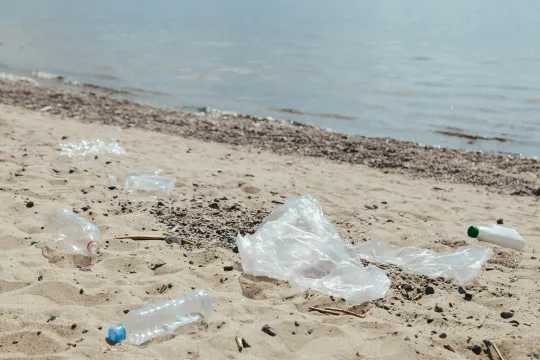
This podcast episode explores how biodegradable plastic bags work and why they are a better alternative than plastic bags. Students will get to hear and learn about the process of microbes breaking down the biodegradable bags in ocean water. The information presented is accurate, and this resource is recommended for teaching.
Teaching Tips
Standards
Resource Type and Format
Scientist Reviewed
This resource has been reviewed by SubjectToClimate's climate scientists and verified for scientific accuracy and up-to-date information. Our review process ensures that every resource in our library reflects the current state of climate science.
Learn about our review process →