Water to Watt
Provided by: Cool.org|Published on: September 20, 2026|Last updated: September 24, 2026
Grades: 4, 5, 6
Type: Lesson Plans
Subjects: Engineering
Authors: Cool.org
Location: Oceania
This resource has been reviewed by SubjectToClimate's climate scientists and verified for scientific accuracy and up-to-date information. Learn about our review process →
This resource has been reviewed by SubjectToClimate's climate scientists and verified for scientific accuracy and up-to-date information. Learn about our review process →
Synopsis
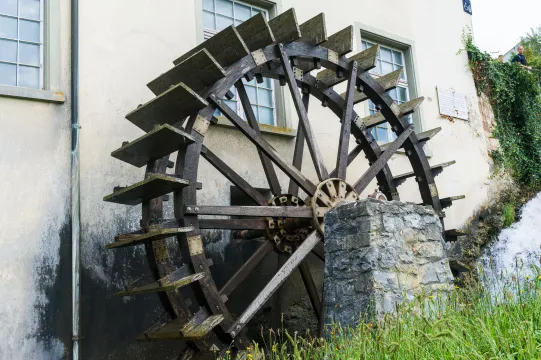
- This lesson explores hydropower as a renewable energy source.
- Students build and test a model water wheel as an engineering challenge, consider the drawbacks and benefits of hydropower, and design a labelled poster of a hydropower station that includes a related STEM career over the roughly 60-minute lesson.
- Though this lesson was made for students in Australia, teachers worldwide can implement this lesson by substituting their own national data.
Teaching Materials
Preparation:
- A free cool.org account is required to access the full lesson and its companion materials.
Prerequisites:
- Ensure students are familiar with renewable energy concepts and the term kinetic energy.
- Though this is the third lesson in the unit, students do not necessarily need to have completed the preceding lessons.
- Consider introducing students to different kinds of circuits before teaching this lesson.
Materials:
- A small ball of plasticine or modeling clay
- 6 icy-pole (popsicle) sticks
- 1 skewer
- Thin card
- Sticky tape
- Scissors
Extensions:
- Have students investigate a local or regional hydropower facility and identify one environmental benefit and one environmental challenge of hydropower.
Sustainable Development Goals Connections:
- Connect this resource to SDG 7, Affordable and Clean Energy, and SDG 13, Climate Action.
Scientist's Note:
- This resource counters one-sided claims about hydropower by featuring a balanced analysis of the benefits and potential environmental impacts of hydropower generation.
Teaching Tips
Standards
Resource Type and Format
Scientist Reviewed
This resource has been reviewed by SubjectToClimate's climate scientists and verified for scientific accuracy and up-to-date information. Our review process ensures that every resource in our library reflects the current state of climate science.
Learn about our review process →