These 11 Sinking Cities Could Disappear by 2100
Provided by: World Economic Forum|Published on: April 27, 2021|Last updated: July 16, 2026
Grades: 6, 7, 8, 9, 10, 11, 12
Type: Articles/Websites
Subjects: Earth and Space Sciences, Civics, Geography
Authors: World Economic Forum
Location: Earth, North America, North America > United States, North America > United States > Florida, North America > United States > Louisiana, North America > United States > Texas

This resource has been reviewed by SubjectToClimate's climate scientists and verified for scientific accuracy and up-to-date information. Learn about our review process →
This resource has been reviewed by SubjectToClimate's climate scientists and verified for scientific accuracy and up-to-date information. Learn about our review process →
Synopsis
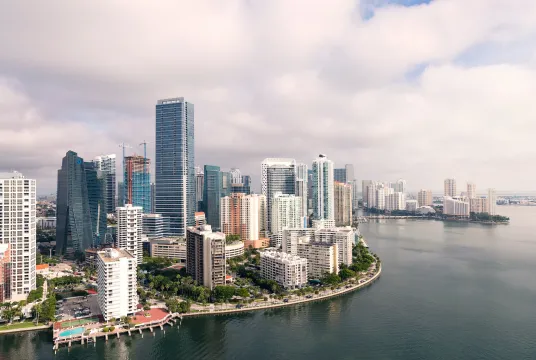
- This article highlights 11 cities around the world that are under threat of sinking and disappearing due to sea level rise and groundwater pumping, including Houston, New Orleans, and Miami.
- The article also mentions the cities of Venice, Lagos, Jakarta, Dhaka, Bangkok, Rotterdam, and Alexandria.
Teaching Materials
Positives
- Students will learn that cities are sinking in many parts of the world.
- The article links to many interesting articles about what governments are doing to help remedy the problem of sea level rise and sinking cities.
Additional Prerequisites
- Students should have an understanding of plate tectonics and the different causes of sea level rise.
- The first link in the section on Bangkok does not work.
Differentiation
- In pairs or small groups, students could focus on one of the cities from the article and read the linked articles to gain more insight into the situation. Students could present their findings to the class.
- The article can be used as a starting point for students to research and develop solutions to climate issues related to the sinking of coastal cities.
Eleven Cities are under threat of disappearing. They are currently undergoing sinking from subsidence, shifting plate tectonics, and continuous groundwater extraction. The resource is valid to teach students about ways to take urgent climate action and to advocate for the reduction of extraction of groundwater and other activities causing sea levels to rise abruptly.
Teaching Tips
Standards
Resource Type and Format
Scientist Reviewed
This resource has been reviewed by SubjectToClimate's climate scientists and verified for scientific accuracy and up-to-date information. Our review process ensures that every resource in our library reflects the current state of climate science.
Learn about our review process →