The "Bald Eagle Success Story" of Central NY
Provided by: Audubon|Published on: April 2, 2024|Last updated: July 16, 2026
Grades: 6-AP
Type: Articles/Websites
Subjects: Biology, Career Skills
Authors: Sharon Bruce
Location: Earth, North America, North America > United States, North America > United States > New York

This resource has been reviewed by SubjectToClimate's climate scientists and verified for scientific accuracy and up-to-date information. Learn about our review process →
This resource has been reviewed by SubjectToClimate's climate scientists and verified for scientific accuracy and up-to-date information. Learn about our review process →
Synopsis
- This article examines the success story of the endangered Black Tern in the Montezuma Wetlands Complex near Syracuse, New York.
- Students will learn about the ongoing habitat restoration, which assists in the population growth of the Black Tern and other marsh species of conservation concern.
Teaching Materials
Positives
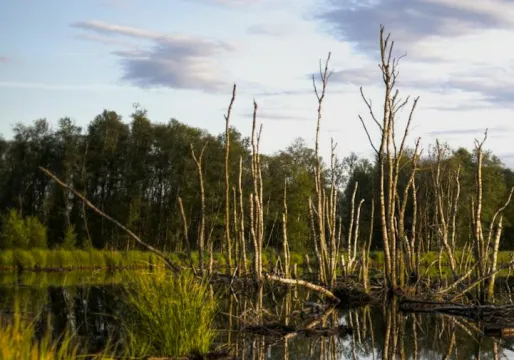
- The article includes photographs clearly illustrating the habitat of the Black Terns.
- The article highlights the science career of a biologist as one in which a person can be outside and work in nature.
Additional Prerequisites
- Students should have a basic understanding of the various causes of a species becoming endangered.
- Vocabulary is somewhat rigorous, so a definition list or graphic organizer will be helpful.
Differentiation
- English teachers can have students read the article and conduct further research about local endangered species as preparation for an academic paragraph.
- Science teachers can have students investigate habitat degradation at the local level, as well as climate solutions designed to improve those habitats.
- There are links to related articles at the bottom of the webpage so teachers can create a mini-unit based on the content.
- Science teachers can discuss the importance of maintaining native species and the problems with invasive species.
This resource discusses Black Terns in the Montezuma Wetlands Complex in central NY. The article covers conservation efforts, invasive species, and how and why the Black Tern population has nested in the wetlands again. The information presented is accurate, and this resource is recommended for teaching.
Teaching Tips
Standards
Resource Type and Format
Scientist Reviewed
This resource has been reviewed by SubjectToClimate's climate scientists and verified for scientific accuracy and up-to-date information. Our review process ensures that every resource in our library reflects the current state of climate science.
Learn about our review process →