Scientists Follow Rare Leatherback Sea Turtle
Provided by: Mongabay|Published on: July 23, 2026|Last updated: July 27, 2026
Grades: 6, 7, 8, 9, 10, 11, 12
Type: Articles/Websites
Subjects: Biology
Authors: Bobby Bascomb
Location: South America

This resource has been reviewed by SubjectToClimate's climate scientists and verified for scientific accuracy and up-to-date information. Learn about our review process →
This resource has been reviewed by SubjectToClimate's climate scientists and verified for scientific accuracy and up-to-date information. Learn about our review process →
Synopsis
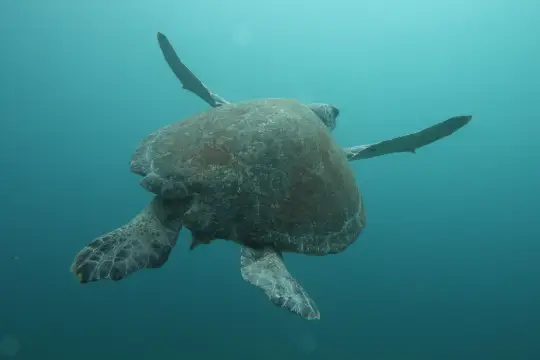
- This short article describes how a research team attached a satellite tag to a leatherback sea turtle at the southern edge of the critically endangered population's nesting range.
- Students learn how the tag transmits the turtle's location each time she surfaces, how her tracked migration can help researchers advise fishers, and why healthy leatherback populations support fisheries.
Teaching Materials
Classroom Implementation:
- The article should take 3-4 minutes to read, making it well-suited for a warm up or do now activity.
- Ask students how satellite tracking data can turn into concrete conservation actions, and what limitations tracking a single animal might have.
- Discuss why protecting leatherback sea turtles has additional benefits for humans.
- Use a word bank for unfamiliar words such as bycatch, nesting range, and endangered.
Extensions:
- Review real tracking data of leatherback sea turtles in the Caribbean using this website.
- Then, discuss why turtles exhibit these patterns and why there is variation within the species.
Climate Change Connections:
- While the article does not explicitly mention the impacts of climate change on the leatherback sea turtle population, studies show that warming oceans are shifting leatherback nesting and foraging grounds and skewing hatchling sex ratios.
This article describes the tagging and tracking of one endangered leatherback sea turtle. While human impacts on turtle populations are mentioned at length, no discussion of how climate change impacts turtle populations is included. That said, this resource does detail important work in marine conservation and is recommended for teaching.
Teaching Tips
Standards
Resource Type and Format
Scientist Reviewed
This resource has been reviewed by SubjectToClimate's climate scientists and verified for scientific accuracy and up-to-date information. Our review process ensures that every resource in our library reflects the current state of climate science.
Learn about our review process →