Sanctuaries of Silence
Provided by: Global Oneness Project|Published on: April 27, 2021|Last updated: July 16, 2026
Grades: 9, 10, 11, 12
Type: Videos
Subjects: Earth and Space Sciences, Health
Authors: Adam Loften, Emmanuel Vaughan-Lee
Location: North America > United States > Washington

This resource has been reviewed by SubjectToClimate's climate scientists and verified for scientific accuracy and up-to-date information. Learn about our review process →
This resource has been reviewed by SubjectToClimate's climate scientists and verified for scientific accuracy and up-to-date information. Learn about our review process →
Synopsis
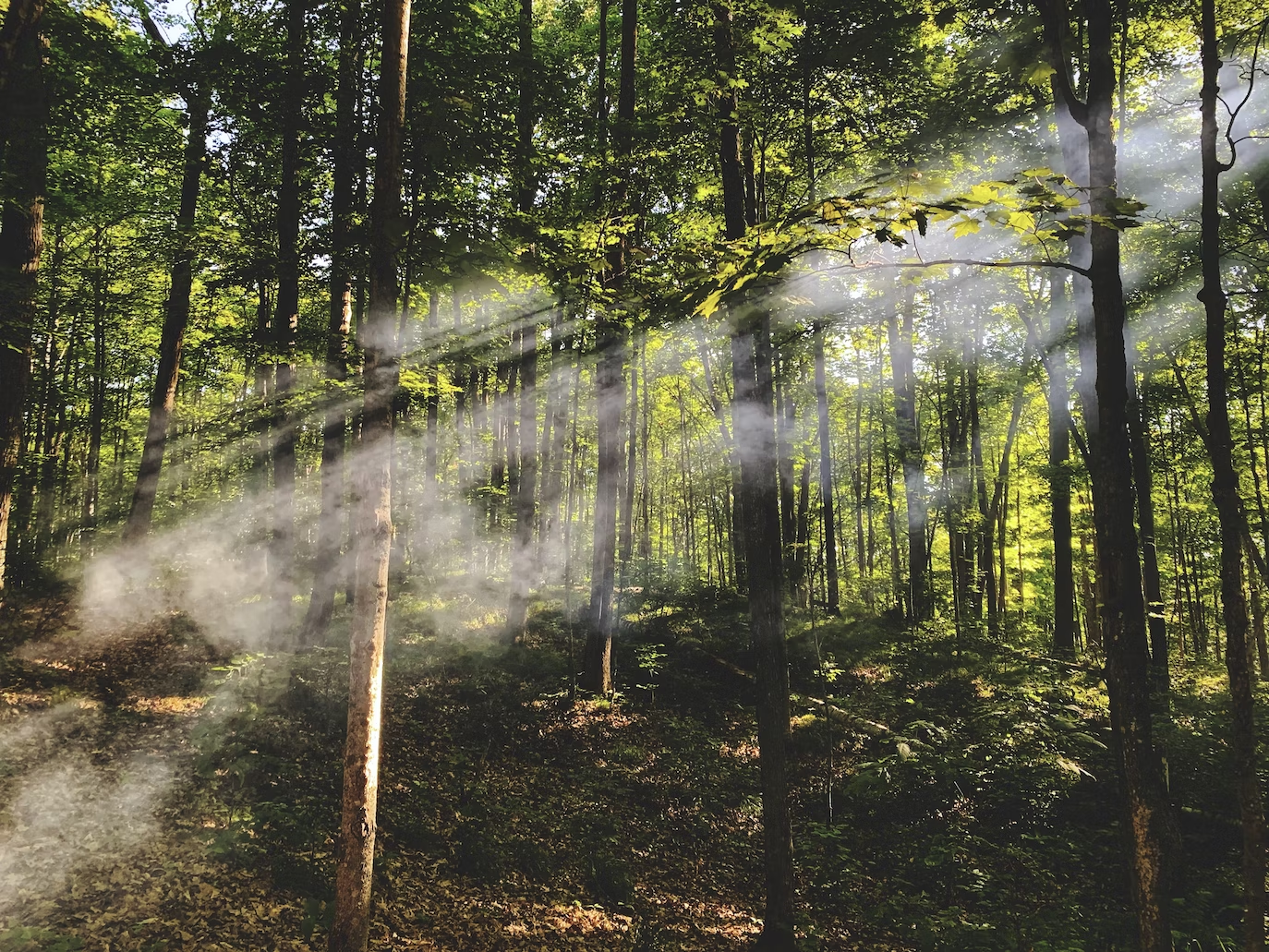
- In this 360° video from the Global Oneness Project, acoustic ecologist Gordon Hempton takes us on a journey to the Hoh Rain Forest in Washington State to experience silence, escape the noise pollution of modern life, and connect with the land.
- Students can experience the difference between noisy city streets and the comparatively silent Hoh Rain Forest.
Teaching Materials
Positives
- Students have the opportunity to disconnect from everything, get calm, and explore the value of silence and the effects of noise pollution on humans.
- Through this interactive video, students will understand that nature speaks to them. This experience will connect them with themselves and to the natural world.
- This video describes the problem of silence being on the verge of extinction and encourages students to take action.
Prerequisites
- A 60-minute lesson plan is available for 9th-12th grade. It can be downloaded in English or Spanish. It includes conversation cards organized around four themes: connection to place, effects of modernization, human connection to the environment, and listening.
- If you click and drag on the embedded YouTube video, you are able to see a 360° view.
Differentiation & Implementation
- This video can be used for a lesson on noise pollution and mental health.
- The teacher can ask students to sit on the floor in a meditation position, relax, and put on their headphones to watch the video and enjoy the experience.
- High school students can engage in a discussion where they share how they feel after watching the video.
- In science class, this resource can be used to encourage students to investigate solutions to noise pollution and silence extinction.
- Students can make connections to biology and discuss the effects of noise pollution on the human body after conducting an investigation about it.
- Other resources on this topic include Benefits of Urban Trees and Green Spaces - Good for People, the Community, and the Country.
This is no specific science in this resource to verify, but it is a compelling resource. Noise pollution is very common, and there are few places on Earth to escape total noise pollution. This interactive video examines this in depth. This resource is recommended for teaching. I highly recommend the use of headphones if they are available.
Teaching Tips
Standards
Resource Type and Format
Scientist Reviewed
This resource has been reviewed by SubjectToClimate's climate scientists and verified for scientific accuracy and up-to-date information. Our review process ensures that every resource in our library reflects the current state of climate science.
Learn about our review process →