
"Replanting Resilience"
Provided by: Jill Pelto Gallery|Published on: June 6, 2023|Last updated: July 16, 2026
Grades: 6, 7, 8, 9, 10, 11, 12
Type: Artwork
Subjects: Biology, Visual and Performing Arts
Authors: Jill Pelto Gallery
Location: North America, North America > United States, North America > United States > Maine, North America > United States > Massachusetts, North America > United States > New Hampshire
This resource has been reviewed by SubjectToClimate's climate scientists and verified for scientific accuracy and up-to-date information. Learn about our review process →
This resource has been reviewed by SubjectToClimate's climate scientists and verified for scientific accuracy and up-to-date information. Learn about our review process →
Synopsis
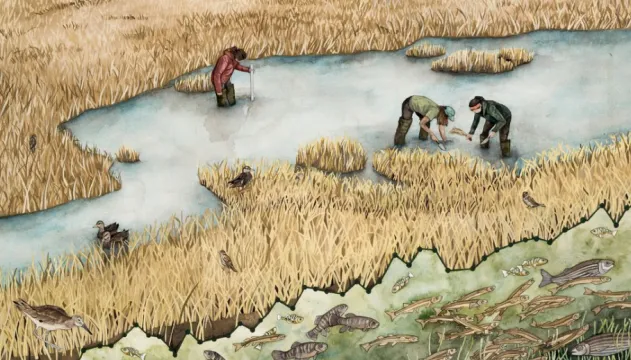
- This colorful pair of paintings by Jill Pelto incorporates three line graphs depicting changing environmental conditions, increasing support for environmental protection, and restoration efforts in the Gulf of Maine.
- Students will see that art can be a useful tool to convey ideas about science and data.
Teaching Materials
Positives
- This resource provides a hopeful perspective, displaying how people can come together and take action to make a difference.
- This piece takes scientific data and blends it with artwork for a meaningful multidisciplinary resource for students' exploration.
Additional Prerequisites
- It may be helpful to show students on a map where the Great Marsh and National Wildlife Refuge in Maine, Massachusetts, and New Hampshire are located.
- This resource provides references for the data presented.
Differentiation
- This resource could supplement another lesson exploring the impacts of sea level rise or climate change policy.
- Have students analyze and compare the data represented in this Jill Pelto watercolor painting that also explores effects of rising temperatures and human activities in the Gulf of Maine.
- Give students the opportunity to explore the data references listed at the bottom of the resource.
- Art classes could take time to learn more about Jill Pelto, her artistic methods, and what fuels the content of her artwork.
- Pair students up to have them analyze the data represented in the art, discussing the line graphs and what specific trends they notice.
- In groups, have students do a deeper dive into the specific actions people have taken to restore the Great Marsh, such as replanting marsh grass and monitoring sea level rise.
This artwork conveys climate change impacts. This resource could be helpful in explaining that art also conveys a message and how, through art, knowledge can be passed on. This resource is recommended for teaching.
Teaching Tips
Standards
Resource Type and Format
Scientist Reviewed
This resource has been reviewed by SubjectToClimate's climate scientists and verified for scientific accuracy and up-to-date information. Our review process ensures that every resource in our library reflects the current state of climate science.
Learn about our review process →