Pollinators
Provided by: The Climate Initiative|Published on: August 10, 2023|Last updated: July 16, 2026
Grades: 6, 7, 8, 9, 10, 11, 12
Type: Articles/Websites
Subjects: Biology, Earth and Space Sciences, Economics
Authors: The Climate Initiative
Location: Earth, North America, North America > United States, North America > United States > Maine

This resource has been reviewed by SubjectToClimate's climate scientists and verified for scientific accuracy and up-to-date information. Learn about our review process →
This resource has been reviewed by SubjectToClimate's climate scientists and verified for scientific accuracy and up-to-date information. Learn about our review process →
Synopsis
- This article explores the importance of pollinators in food production, why the amount of pollinators is drastically declining around the world, and how climate change is making life harder for pollinators.
- Students will learn that pollinators are responsible for a third of all food production, the number of worldwide pollinators is decreasing because of habitat destruction, pollution, and other man-made factors, and climate change is throwing off the timing between pollinators and the plants they pollinate.
Teaching Materials
Positives
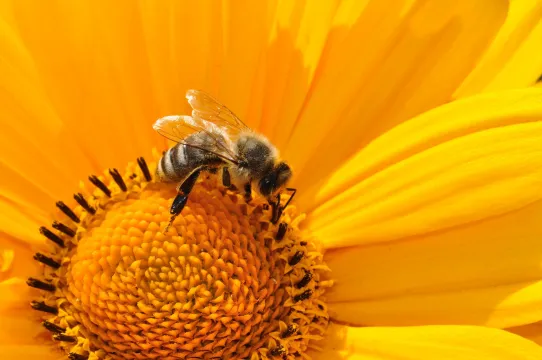
- This article provides beautiful images and links the decline in pollinators to the economy.
- The "Quick Facts" section presents important statistics in an eye-catching way.
Additional Prerequisites
- Students should understand what a food chain is and how important plants are to all living things.
- Students should be familiar with climate change is and how humans are contributing to it.
Differentiation
- This article could enhance a lesson about ecosystems, food webs, food production, sustainable or organic farming methods, or the importance of pollinators to plants.
- This article could support a classroom discussion on how biodiversity is crucial for human populations.
- This article could supplement a classroom discussion on how insects are viewed within America's cultural context and how important they are from an ecological perspective.
- With middle school students, it may be useful to define some words before they dive into the reading.
This resource from The Climate Initiative highlights the rapid decline of pollinators, including insects like bees, flies, moths, butterflies, and beetles, which play a crucial role in pollinating plants and ensuring food production. The decline is attributed to various factors, such as habitat loss, pollution, pesticides, and invasive species. The effects of this decline are far-reaching, as pollinators are essential for the functioning of ecosystems and human food systems. Climate change and warmer weather are also impacting the timing of blooming plants, further affecting the relationship between pollinators and plants. The preservation of pollinators is vital for maintaining ecological balance and securing our food supply. This resource would be a great addition to a classroom discussion about the importance of pollinators and how climate change can and will effect them.
Teaching Tips
Standards
Resource Type and Format
Scientist Reviewed
This resource has been reviewed by SubjectToClimate's climate scientists and verified for scientific accuracy and up-to-date information. Our review process ensures that every resource in our library reflects the current state of climate science.
Learn about our review process →