Polar Ice in a Warming World
Provided by: MIT Climate Portal|Published on: July 23, 2026|Last updated: July 24, 2026
Grades: 6, 7, 8, 9, 10, 11, 12
Type: Podcasts
Subjects: Earth and Space Sciences
Authors: Ask MIT Climate Podcast
Location: Polar Regions
This resource has been reviewed by SubjectToClimate's climate scientists and verified for scientific accuracy and up-to-date information. Learn about our review process →
This resource has been reviewed by SubjectToClimate's climate scientists and verified for scientific accuracy and up-to-date information. Learn about our review process →
Synopsis
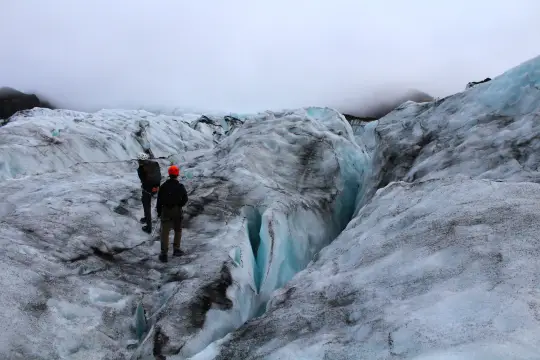
- In this 15-minute podcast episode, polar glaciologist Dr. Sarah Das describes her research on the Greenland and Antarctic ice sheets and explains how both are now losing mass, how scientists measure that loss, and how melting ice contributes to sea level rise.
- Students hear how warming disrupts sea ice, permafrost, and the lives of Arctic communities, learn about supraglacial lakes that suddenly drain through the Greenland ice sheet, and consider why slowing the pace of change buys time for people to adapt.
Teaching Materials
Classroom Implementation:
- Decide whether to listen to and/or read (using the transcript) the episode.
- Provide students with a printed or projected world map so they can identify the regions mentioned in the podcast.
- Pause after the segment on Arctic communities to discuss how changes in sea ice and thawing permafrost affect food access, travel, and infrastructure for Indigenous peoples in Alaska, Canada, and beyond.
Literacy Connections:
- Assign the transcript alongside the audio for students who benefit from following printed text while listening, or translate the transcript for English language learners.
- Using the transcript, have students underline any words they do not know and review key vocabulary using the seven steps protocol.
Extensions:
- Have students diagram how energy flow and ice loss link the ice sheets to global sea level, and explain the runaway retreat process described for Antarctica's glaciers.
- Compare Arctic and Antarctic glaciers to understand how melting sea ice versus land ice differently affects global sea levels and climate.
This podcast episode features an interview with Dr. Das, a glaciologist who studies ice at the Earth's poles. In the episode, she discusses the impacts of climate change and global warming on ice in the Arctic and in Antarctica. She also explains how these impacts on ice further affect the people and environment in those regions. Dr. Das also shares stories from her research projects and fieldwork, which provide more context for the impacts she discusses and illustrate what a research scientist does. The information presented is accurate, and this resource is recommended for teaching.
Teaching Tips
Standards
Resource Type and Format
Scientist Reviewed
This resource has been reviewed by SubjectToClimate's climate scientists and verified for scientific accuracy and up-to-date information. Our review process ensures that every resource in our library reflects the current state of climate science.
Learn about our review process →