Polar Climates
Provided by: CK-12|Published on: April 27, 2021|Last updated: July 16, 2026
Grades: 6, 7, 8
Type: Videos
Subjects: Earth and Space Sciences, Geography
Authors: CK-12
Location: North America, Polar Regions
This resource has been reviewed by SubjectToClimate's climate scientists and verified for scientific accuracy and up-to-date information. Learn about our review process →
This resource has been reviewed by SubjectToClimate's climate scientists and verified for scientific accuracy and up-to-date information. Learn about our review process →
Synopsis
- In this interactive textbook lesson, students will discover different types of polar climates, where they occur on Earth, and the types of organisms that can survive in very cold polar climates.
- Students will learn terminologies, such as permafrost, tundra, ice caps, and alpine.
Teaching Materials
Positives
- Students can work at their own pace through this self-guided textbook lesson, interacting with useful questions throughout.
- Figures and graphics are included to illustrate the text.
- Students can check their understanding by taking an interactive quiz at the end of the lesson.
Additional Prerequisites
- Students must sign in to access some interactive features.
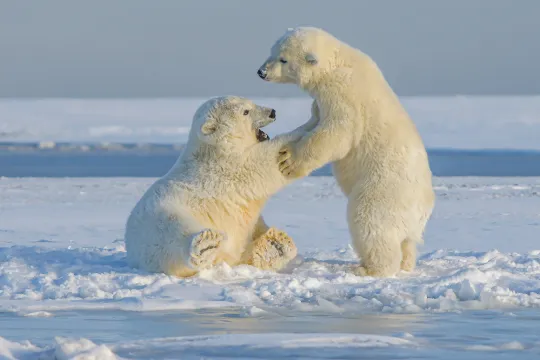
- The video at the end of the lesson is an audio file with just one image of polar bears accompanying the audio. Some students may have a hard time focusing on just listening to the audio, so turning on subtitles may help.
Differentiation
- In biology classes, students could choose a plant or animal that lives in a polar region and make a slideshow presentation to explain how the organism survives in such extreme conditions.
- Students could use this interactive data resource from NASA to learn how climate change is affecting ice sheets in polar regions.
The resource highlights polar climates and their features. Very few animals like caribou, polar bears, and plants like mosses easily adapt to this climate. This resource is recommended for teaching.
Teaching Tips
Standards
Resource Type and Format
Scientist Reviewed
This resource has been reviewed by SubjectToClimate's climate scientists and verified for scientific accuracy and up-to-date information. Our review process ensures that every resource in our library reflects the current state of climate science.
Learn about our review process →