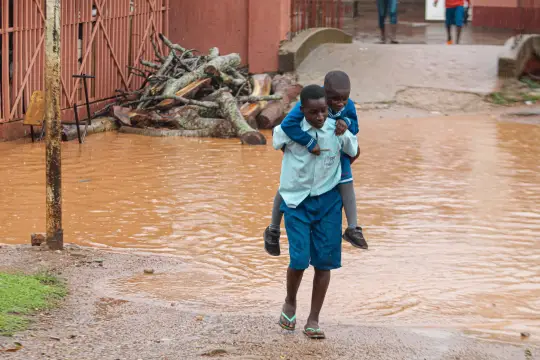
This article examines how the city of Kigali, Rwanda, is restoring and reshaping degraded wetlands as a nature-based response to worsening flooding driven by climate change and rapid urban growth.
It explains how wetlands act as natural sponges that soak up rain, slow floods, filter pollutants, and store carbon, and traces the city's plan to link restored sites into a connected system of parks, wildlife corridors, and stormwater channels.
Students also encounter the tensions the project raises, including the loss of farming and grazing land and possible gentrification.
Preview the vocabulary of nature-based solutions, wetlands, restoration, and resilience so students can follow the article's argument.
Have students map the causes of Kigali's flooding (deforested hillsides, impermeable concrete, degraded wetlands, more intense rainfall) and connect each to a proposed intervention described in the text.
Extensions:
Use the article and the following questions to prompt a discussion about the tensions of restoring wetlands for flood protection:
Kigali's Master Plan 2050 could displace more than 14,000 farming households from wetland areas they've relied on for generations. Whose needs should take priority when environmental restoration and human livelihoods conflict, and how might the city balance both?
One expert warns that emphasizing conservation and tourism over agriculture risks creating "spaces of exclusion," while a resettled farmer said his life actually improved after relocating. What does this contrast suggest about how the impact of restoration projects might vary from person to person?
Nyandungu Eco-Park now charges an entry fee and no longer allows farming, fishing, or grazing that once took place there. Is it fair to fence off and monetize a space that communities depended on for food and income, even if it now benefits the wider city through flood control and biodiversity? Why or why not?
An architect in the article raises concerns about gentrification, noting that restored wetlands could raise property values near former informal settlements. Is increased property value always a positive outcome of environmental restoration, or can it create new problems? Explain your reasoning.
The article suggests wetland restoration alone will not solve Kigali's flooding without also addressing deforestation on surrounding hillsides. Why might a single solution, like restoring wetlands, be insufficient to address a complex problem like urban flooding, and what does this imply about how cities should approach climate resilience?
Scientist Notes
Teaching Tips
Standards
Resource Type and Format
Related Teaching Resources
All resources can be used for your educational purposes with proper attribution to the content provider.