Pika Models + Climate Change
Provided by: Bay Area E-STEM Institute|Published on: November 27, 2023|Last updated: July 16, 2026
Grades: 3-12
Type: Lesson Plans
Subjects: Biology, Earth and Space Sciences
Authors: Bay Area E-STEM Institute
Location: Asia, North America, North America > United States, North America > United States > California, North America > United States > Colorado, North America > United States > Idaho, North America > United States > Montana, North America > United States > Oregon, North America > United States > Oregon > Southern Oregon, North America > United States > Washington, North America > United States > Wyoming
This resource has been reviewed by SubjectToClimate's climate scientists and verified for scientific accuracy and up-to-date information. Learn about our review process →
This resource has been reviewed by SubjectToClimate's climate scientists and verified for scientific accuracy and up-to-date information. Learn about our review process →
Synopsis
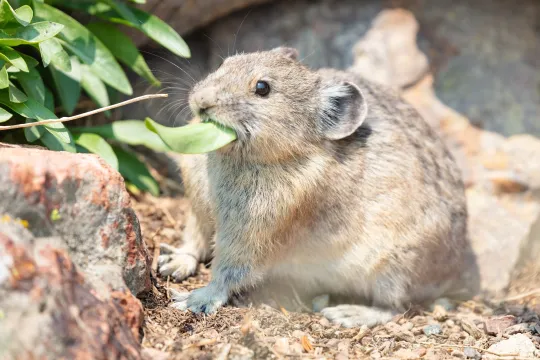
- In this lesson, students will examine the Pacific Northwest where American pikas live, how they communicate, and how climate change impacts them.
- This resource includes one version of the lesson for grades 3-8 and one for high school students.
- Students will watch videos about the American pika, engage in an outdoor activity that reveals what it's like to be a pika, and create educational models about their ecological importance.
Teaching Materials
Positives
- There are many hands-on activities and different visualizations for all kinds of learners.
- This lesson encourages students to think deeply about biodiversity.
Additional Prerequisites
- It may benefit students to know how to calculate a triangle's area.
- This lesson requires access to an outdoor space with plenty of room.
- The links to A Short Guide to Sierra Nevada Predators & Prey, the Field Journaling lesson plan, the U.S. Fish and Wildlife Service, and the Sagebrush Ecosystems diagram may not load.
Differentiation
- This lesson has extension resources that can enrich students' understanding of pikas.
- After learning that increasing temperatures due to increased carbon emissions are reducing the pika population, students can discuss which human activities are causing harm to ecosystems worldwide and solutions to decrease the human impact.
- Students can discuss the ecological importance of biodiversity and keystone species.
- This lesson can enhance a classroom discussion on other species threatened by climate change.
- Some students may benefit from guided notes while reading the fact sheet or watching the videos.
This resource is from the CLEAN collection. “The CLEAN collection is hand-picked and rigorously reviewed for scientific accuracy and classroom effectiveness.”
Teaching Tips
Standards
Resource Type and Format
Scientist Reviewed
This resource has been reviewed by SubjectToClimate's climate scientists and verified for scientific accuracy and up-to-date information. Our review process ensures that every resource in our library reflects the current state of climate science.
Learn about our review process →