Oregon Field Guide - Salmon People: Fighting for a Way of Life
Provided by: Oregon Public Broadcasting|Published on: July 24, 2023|Last updated: July 16, 2026
Grades: 6, 7, 8, 9, 10, 11, 12
Type: Videos
Subjects: Social Studies, Biology
Authors: Oregon Public Broadcasting, PBS
Location: North America, North America > United States, North America > United States > Oregon
This resource has been reviewed by SubjectToClimate's climate scientists and verified for scientific accuracy and up-to-date information. Learn about our review process →
This resource has been reviewed by SubjectToClimate's climate scientists and verified for scientific accuracy and up-to-date information. Learn about our review process →
Synopsis
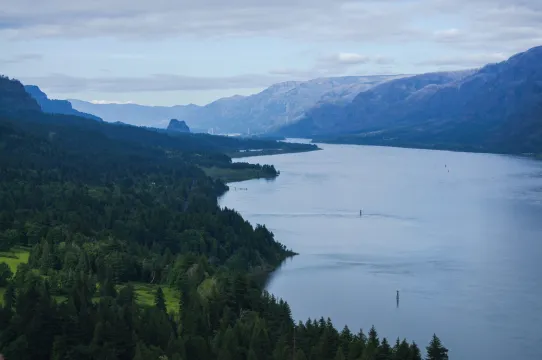
- This 26-minute video tells the story of a Native American family along the Columbia River and describes their struggles with declining salmon populations due to dams, overfishing, and climate change.
- The video also discusses a United States treaty that allows the tribes along the Columbia River to fish the salmon forever in exchange for land that was taken from them in the late 1800s, however, the declining salmon populations are compromising the tribes' way of life.
Teaching Materials
Positives
- Part of the video is from the point of view of a child learning how to fish, so students may relate to this.
- Native American wisdom about protecting the environment in a sustainable way is featured in stories about a coyote stealing too many fish, leaving none for those downstream.
- Themes of environmental justice are woven throughout the video as the narrators discuss the treaty which was forced upon the tribes in the late 1800s and the fact that it is not being upheld today.
Additional Prerequisites
- Students should be familiar with the life cycle of a migrating fish.
- Students should be familiar with Native American sovereignty in the United States.
Differentiation
- Before watching the video, ask students why they think rivers may be of great importance to Native American tribes and predict how climate change may be affecting them.
- After watching the video, classrooms could research which Native American tribes are closest to their school and what natural resources are culturally important to the tribes.
- Have students discuss how climate change is affecting the livelihoods of fisherman and whether it is affecting the income of other professions in their community.
- This video is excellent for any classroom that is discussing environmental justice, Native Americans and the environment, or the effects of climate change on aquatic ecosystems.
This ~30 minute video from Oregon Public Broadcasting covers the Way-Kan-Ush-Pum, the salmon people, who make their living off the Columbia River during salmon season. These tribal people have lived and fought for decades to protect the Columbia River and their way of life. There is a discussion of the processes that have damaged the river, the access tribal people have to the salmon, and that they rely on salmon for their sustenance and their ceremonies. The salmon people are now seeing another threat to their way of life, climate change. This video would be a great addition to a classroom discussion about climate change and the real life effects it has on people and their livelihoods. This resource is recommended for teaching.
Teaching Tips
Standards
Resource Type and Format
Scientist Reviewed
This resource has been reviewed by SubjectToClimate's climate scientists and verified for scientific accuracy and up-to-date information. Our review process ensures that every resource in our library reflects the current state of climate science.
Learn about our review process →