
How Does Air Temperature Shape a Place?
Provided by: Crash Course|Published on: April 27, 2021|Last updated: July 16, 2026
Grades: 6, 7, 8, 9, 10, 11, 12
Type: Videos
Subjects: Earth and Space Sciences, Geography
Authors: Crash Course
Location: Asia, Earth, North America, North America > United States > Arizona, Polar Regions

This resource has been reviewed by SubjectToClimate's climate scientists and verified for scientific accuracy and up-to-date information. Learn about our review process →
This resource has been reviewed by SubjectToClimate's climate scientists and verified for scientific accuracy and up-to-date information. Learn about our review process →
Synopsis
- This Crash Course video examines how latitude, distance from an ocean, elevation, and population density can impact the temperature of a location and how some cities, like Phoenix, Arizona, will need to respond to extreme heat.
- Topics discussed include cultural impacts, urban development, location within a continent, and the specific heat of both land and water.
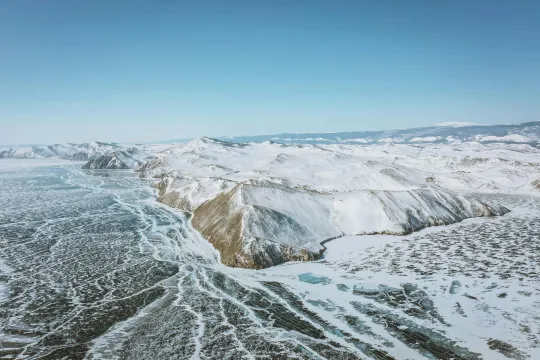
- The video also explains why places like Siberia are very cold.
Teaching Materials
Positives
- The pace of this video allows the viewer to stay engaged for its duration.
- The narrator is effective at connecting geography, earth science, and biology concepts.
- There are many useful visuals in the video that can be explored more intently.
Prerequisites
- It would be helpful for students to know what an isotherm is and what it measures.
- To deepen context for students, cover the topics of specific heat, the relationship between insolation and latitude, visible versus infrared radiation, and the albedo effect either before or after viewing.
Differentiation & Implementation
- Equity issues abound as the planet warms. One example is the differential heating of rural and non-rural areas. Invite students to consider groups of people facing greater risks as the planet warms.
- Siberia and melting polar ice caps are central topics in this video. Challenge students to dig deeper into how changes in both of these locations are contributing to climate tipping points.
- The video suggests that the color of surfaces impacts the absorption of radiation. Ask them to test this out for themselves. This is a quick, low-material activity that can be ideal for students who prefer to move and test ideas.
Overall, this is a great resource from Crash Course and offers a detailed explanation of what drives temperature differences for a specific location. Toward the end of the video, the narrator says, "Phoenix is the fastest-warming city in the United States." While it cannot be specifically verified that Phoenix is the fastest, it certainly is one of the fastest-warming areas in the United States. Despite that, this resource is recommended for teaching.
Teaching Tips
Standards
Resource Type and Format
Scientist Reviewed
This resource has been reviewed by SubjectToClimate's climate scientists and verified for scientific accuracy and up-to-date information. Our review process ensures that every resource in our library reflects the current state of climate science.
Learn about our review process →