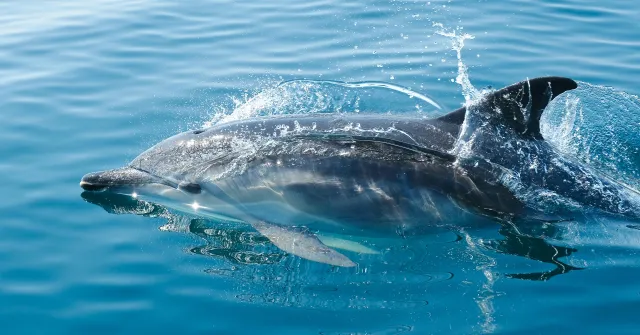
For China's Marine Life The New Hope Begins in Hong Kong's Waters
Provided by: Mission Blue|Published on: September 13, 2022|Last updated: July 16, 2026
Grades: 6, 7, 8, 9, 10, 11, 12
Type: Articles/Websites
Subjects: Biology, Civics, English Language Arts
Authors: Mission Blue
Location: Asia
This resource has been reviewed by SubjectToClimate's climate scientists and verified for scientific accuracy and up-to-date information. Learn about our review process →
This resource has been reviewed by SubjectToClimate's climate scientists and verified for scientific accuracy and up-to-date information. Learn about our review process →
Synopsis
- This article explains how Hong Kong's waters have been called a Hope Spot because of the commitment to conservation and wildlife protection.
- Students will learn about the steps that are being taken to conserve the ecosystem, the collaboration between stakeholders, and their plans for the future.
Teaching Materials
Positives
- This article is informative and has many opportunities for cross-curricular implementation.
- This resource would fit well in a text set provided for student learning or research.
Additional Prerequisites
- Students should be fluent readers of non-fiction.
- Students should understand the importance of biodiversity to an ecosystem.
Differentiation
- Cross-curricular connections can be made in language arts classes working on non-fiction reading strategies or social studies classes discussing the civic responsibilities of governments and individuals.
- After reading, have students identify three key concepts from the article and discuss their thinking around them with a group or as a class.
- As an extension, consider having students research other ecosystems that have been impacted by human activity and what can be done to help them.
- Teachers can allow students time to look at images of any species they are unfamiliar with or research organizations they haven't heard of.
- Other resources related to these topics include this video about human impact on biodiversity, this interactive map on global biodiversity hotspots, and this video about protecting species and various efforts to conserve biodiversity.
The resource spotlights the impacts of human activities on marine resources and biodiversity in the southern ocean of Hong Kong covering about 41,700 hectares. It draws attention to the importance of advocating for marine resources conservation and taking action to protect these Hope Spots globally. The resource is void of scientific misconceptions and is recommended for teaching.
Teaching Tips
Standards
Resource Type and Format
Scientist Reviewed
This resource has been reviewed by SubjectToClimate's climate scientists and verified for scientific accuracy and up-to-date information. Our review process ensures that every resource in our library reflects the current state of climate science.
Learn about our review process →